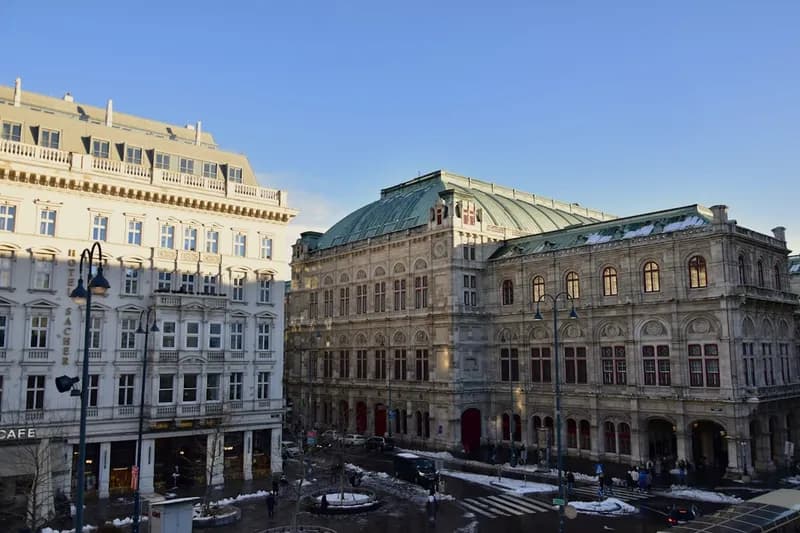
Vienna has one of the best public-transport systems in the world, and the compact old town is a joy to walk — so getting around is easy and cheap. This guide covers everything: how to get in from the airport on the S7 and CAT trains, how the five-line U-Bahn metro and the extensive trams and buses work (and why the Ring trams double as a sightseeing tour), which ticket or pass is best value, and when a taxi or ride-hailing app makes sense, all with real routes, prices and practical advice.
Vienna transport explained
1.Vienna Airport (VIE) to the city
Vienna International Airport (Flughafen Wien-Schwechat, VIE) sits about 18 kilometres south-east of the city centre and is exceptionally well connected, giving arriving visitors several good options at very different prices. The best-value and most popular choice for most travellers is the S7 S-Bahn suburban train, which runs frequently to the central Wien Mitte station in about 25 minutes for just €4.30 (or free if you already hold a validated Vienna transport pass covering the outer zone, plus a small supplement) — cheap, simple and only a little slower than the premium option. That premium option is the City Airport Train (CAT), a dedicated non-stop service to Wien Mitte in 16 minutes, but at €14.90 it costs more than three times as much for a saving of under ten minutes, so it is rarely worth it unless speed is critical. Regular Railjet and other mainline trains also link the airport directly to Wien Hauptbahnhof (the main station) in around 15 minutes for €4.30, handy if your accommodation is near there. The Vienna Airport Lines buses serve several city hubs (including Morzinplatz/Schwedenplatz and Westbahnhof) for around €9.50, useful if a stop is close to your hotel. Taxis and pre-booked transfers charge roughly €35–45 to the centre and suit groups, late arrivals or heavy luggage; use the official ranks or licensed operators. Whichever you choose, the journey into town is quick and easy. For most visitors, the frequent S7 train offers the best combination of speed, simplicity and low cost, making the premium CAT largely unnecessary.
Hours
Trains ~05:00–24:00; buses and taxis frequent
Price
S7 train €4.30; City Airport Train (CAT) €14.90; Railjet €4.30; airport bus €9.50; taxi ~€35–45
Getting there
S7 or CAT to Wien Mitte (16–25 min); Railjet to Hauptbahnhof; Vienna Airport Lines buses to several hubs
Insider tip: The regular S7 suburban train is the cheapest link and only slightly slower than the pricey CAT — both reach the centre in well under half an hour.
2.The U-Bahn (Metro)
Vienna's U-Bahn is one of the best metro systems in Europe — clean, safe, punctual, frequent and wonderfully easy to use — and it is the backbone of getting around the city. There are five lines (numbered U1, U2, U3, U4 and U6; there is no U5 yet, though one is under construction), colour-coded and well signposted in English as well as German, and between them they cover the whole city efficiently, with useful interchanges at hubs like Karlsplatz, Stephansplatz, Schwedenplatz and Westbahnhof. Trains run roughly every two to five minutes at peak times and every five to ten off-peak, from around 5am to midnight daily, and — a great bonus for visitors — the metro runs all night long on Fridays, Saturdays and the nights before public holidays, making late nights out easy. Ticketing is refreshingly simple and integrated across the metro, trams, buses and S-Bahn within the core zone: a single ticket costs €2.40 and lets you travel in one direction with any changes, while for visitors the time-based passes are far better value — 24-hour (€8), 48-hour (€14.10) and 72-hour (€17.10) passes give unlimited travel, and the excellent-value weekly ticket (€17.10, valid Monday to the following Monday) can be cheaper still if your stay aligns. The Vienna City Card and the various tourist passes also bundle transport. Crucially, you must buy and, for single/print tickets, validate your ticket before boarding (at machines, in the app, or from tobacconists), as the system is honour-based with roving inspectors and steep fines for fare-dodging. Download the WienMobil or an app like Google Maps for real-time routing. Fast, comprehensive and easy, the U-Bahn combined with the trams will get you almost anywhere you want to go.
Hours
~05:00–24:00 daily; 24-hour service Fri, Sat & before holidays
Price
Single €2.40; 24h €8; 48h €14.10; 72h €17.10; weekly (Mon–Mon) €17.10; Vienna City Card options
Getting there
Lines U1, U2, U3, U4 and U6 (there is no U5 yet) cross the city; interchange at Karlsplatz, Stephansplatz and others
Insider tip: Five clean, frequent lines run all night at weekends — a single ticket is €2.40, but the 24/48/72-hour and weekly passes are far better value.
3.Trams & Buses (Wiener Linien)
Complementing the metro, Vienna has one of the largest and most charming tram networks in the world, along with an extensive bus system, all run by Wiener Linien and using exactly the same integrated tickets as the U-Bahn, so a single fare or a day/weekly pass covers seamless travel across all of them. The trams (Straßenbahn, or 'Bim' to locals) are a delight and often the nicest way to get around the central districts, rattling along the surface past the great sights, and for visitors they double as an unbeatable-value sightseeing tool: riding the trams that loop the majestic Ringstrasse — lines 1, 2, D and 71 between them trace the grand boulevard — takes you slowly past the State Opera, the museums, the Parliament, the neo-Gothic City Hall (Rathaus), the Burgtheater, the university and the Votivkirche, effectively giving you a scenic circuit of imperial Vienna for the price of a normal ticket rather than an expensive tourist bus. Other useful lines include tram 38 out to the Heuriger wine villages of Grinzing. Buses fill in the gaps the rails do not reach, including the narrow inner-city streets (served by small 'City Bus' minibuses) and the routes up into the Vienna Woods and hills; there are also night buses (NightLine) covering the hours when trams and most metros stop on weeknights, while the metro itself runs all night at weekends. As with the metro, you must have a valid ticket before boarding and validate single tickets, with fines for those caught without. Real-time apps make navigation easy. Together, the trams and buses extend the reach of Vienna's superb public transport to every corner, and the Ring trams in particular are a scenic highlight in their own right.
Hours
Daytime ~05:00–24:00; NightLine buses after midnight (nightly)
Price
Same integrated tickets as the metro: single €2.40; day/multi-day/weekly passes
Getting there
Ring trams 1, 2, D & 71; tram 38 to Grinzing; buses fill the gaps and reach the hills
Insider tip: The trams around the Ringstrasse (lines 1, 2, D, 71) are a scenic, cheap way to see the grand boulevard — a DIY sightseeing tour on a normal ticket.
4.Tickets & the Vienna City Card
Understanding Vienna's ticket options helps you travel cheaply and avoid fines, and happily the system is simple and integrated: one ticket type covers the metro, trams, buses and city-zone S-Bahn. For occasional journeys, a single ticket costs €2.40 and allows one continuous trip in one direction with any changes. For most visitors, though, a time-based pass is much better value and more convenient: the 24-hour (€8), 48-hour (€14.10) and 72-hour (€17.10) passes give unlimited travel and pay for themselves in just a few rides, while the standout bargain is the weekly ticket (€17.10), valid Monday morning to the following Monday, which can be the cheapest option of all if your trip fits the calendar week. Beyond plain transport, two tourist cards cause confusion, so it pays to know the difference. The Vienna City Card (from around €17) bundles public transport for your chosen duration with a booklet of smaller discounts (a few euros off many museums, cafés, shops and tours) — worthwhile only if you will actually use enough of the discounts to beat a plain transport pass. The separate, pricier Vienna Pass is an 'all-you-can-see' card giving free entry to many attractions plus a hop-on-hop-off bus, which can save money only if you cram in a lot of paid sights each day. For the majority of independent travellers who walk a lot and pick a few key attractions, a straightforward 48/72-hour or weekly Wiener Linien pass is usually the smartest, cheapest choice. Buy tickets from machines at stations, tobacconists (Trafik), online or in the WienMobil app; remember that single and printed tickets must be validated in the blue machines before you travel, as inspectors are frequent and fines steep.
Hours
Buy anytime at machines, tobacconists, online or in the WienMobil app
Price
Single €2.40; 24h €8; 48h €14.10; 72h €17.10; Vienna City Card from ~€17; Vienna Pass separate
Getting there
Validate paper/printed single tickets before boarding; passes are valid from first use/stamp
Insider tip: For pure transport, the plain 24/48/72-hour Wiener Linien passes usually beat the tourist cards — buy the discount-focused cards only if you'll use the deals.
5.Taxis, Ride-Hailing & Cars
Vienna is a city where you can very happily get by without ever taking a taxi or renting a car, because the public transport is so comprehensive, cheap and pleasant and the centre so walkable, but it is worth knowing your options for late nights, heavy luggage or trips off the network. Official taxis are metered, clean and reliable: fares start at around €3.80 with a per-kilometre rate of roughly €1.40, so short city hops are affordable and a ride from the airport runs about €35–45. You can find them at ranks across the city, phone a radio-taxi company (numbers like 40100 or 31300 are well known), or, most conveniently, summon one through an app. Ride-hailing is well established and often the easiest choice for visitors: Uber, Bolt and the taxi-app FreeNow all operate in Vienna, offering upfront pricing, card payment and no language barrier, with fares that are frequently similar to or cheaper than street taxis. For most sightseeing, though, the U-Bahn, trams and buses will be quicker and far cheaper than any car, and traffic and paid short-stay parking zones (Kurzparkzonen) across the inner districts make driving in the city more hassle than help. Renting a car really only makes sense if you plan to explore the wider countryside — the Wachau Valley, the lakes, or Alpine areas — beyond the reach of the excellent train network; even then, many of the best day trips (Wachau, Melk, Salzburg, Bratislava, Semmering) are easily and enjoyably done by rail. If you do drive, use the park-and-ride facilities at outer metro stations and switch to public transport for the centre. In short: rely on public transport, keep taxis and apps for convenience, and consider a car only for rural excursions.
Hours
Taxis and apps 24 hours
Price
Metered taxis start ~€3.80 plus ~€1.42/km; airport ~€35–45; ride-hailing similar or cheaper
Getting there
Hail at ranks, call a radio taxi, or use apps (Uber, Bolt, FreeNow, 40100/31300); park-and-ride at the outer metro stations if driving
Insider tip: Public transport is so good you rarely need a taxi; when you do, use the metered official cabs or apps like Bolt, Uber and the local taxi apps.