Vienna's calendar blends imperial tradition, world-class music and modern culture. Winter brings the glittering ball season and the world-famous New Year's Concert; December fills the squares with magical Christmas markets; late spring stages the avant-garde Wiener Festwochen; and summer delivers Europe's biggest free music festival on the Danube Island and nightly open-air cinema before the floodlit City Hall. Here are the events worth timing a trip around, with dates, locations and tips.
Vienna's annual events in detail
1.Vienna Ball Season & the Opera Ball
The Vienna ball season is one of the city's most magical and distinctive traditions, a glittering winter whirl of elegance that turns the imperial capital into a real-life fairy tale. Running through Fasching (the carnival period from around the start of January to Shrove Tuesday before Lent), the season sees the city host an astonishing number of formal balls — several hundred in total — held in its palaces, grand hotels and historic halls, each with its own character and often its own professional or social community behind it, from the Coffee-House Owners' Ball and the Hunters' Ball to the Flower Ball, the Doctors' Ball and the famous Life Ball. The undisputed pinnacle is the Wiener Opernball (Vienna Opera Ball), held in the transformed State Opera on the last Thursday before Lent, an ultra-exclusive, internationally televised spectacle of high society, politicians, celebrities and débutantes in white gowns and tails that is the social event of the Austrian year, with tickets costing a fortune and entry effectively by connection and deep pocket. Wonderfully, though, the ball tradition is not only for the elite: many of the hundreds of other balls are open to anyone who buys a ticket (from around €100, far less than the Opera Ball), dresses formally in white tie or a ball gown, and is willing to join in, and the city even runs dance schools offering crash courses in the Viennese waltz so visitors can take part. Experiencing a Vienna ball — waltzing beneath chandeliers in a palace to a live orchestra, amid a sea of gowns and tails — is an unforgettable, only-in-Vienna experience. If you visit in January or February and fancy it, research the calendar early, secure tickets and formal attire in advance, and perhaps take a dance lesson to make the most of this elegant season.
Hours
Carnival season, roughly January to Ash Wednesday (Feb/Mar); Opera Ball on the last Thursday before Lent
Price
Tickets from ~€100 to thousands for the Opera Ball; smaller balls far cheaper
Getting there
Book tickets and formal dress (white tie/ball gown) well ahead; dance courses available for beginners
Insider tip: During Fasching (carnival), hundreds of glittering balls fill the palaces; the Opera Ball is the grandest, but many others welcome ordinary visitors who dress the part.
2.New Year's Eve & the New Year's Concert
Vienna celebrates the turn of the year with characteristic style, and New Year is one of the most popular and festive times to be in the city, combining a huge public street party with one of the most famous events in classical music. On 31 December, the city stages the Silvesterpfad ('New Year's Eve Trail'), a sprawling free open-air party that fills the squares and streets of the old town — around Stephansplatz, Graben, Am Hof, Rathausplatz, Prater and more — with stages of live music and DJs, food and Glühwein stalls, dancing and entertainment, culminating at midnight when crowds gather to count down and watch fireworks, with the great bell of Stephansdom, the Pummerin, tolling in the New Year and, by tradition, the Blue Danube waltz playing for everyone to dance to. It is a lively, atmospheric and accessible way to see in the year among joyful crowds. The following morning, 1 January, brings the world-renowned Neujahrskonzert (New Year's Concert) by the Vienna Philharmonic in the golden hall of the Musikverein, a programme of Strauss-family waltzes, polkas and marches broadcast live to an audience of tens of millions across some ninety countries — the very definition of Viennese musical elegance. Tickets to the concert itself are legendarily hard to obtain, allocated by a public lottery drawn well over a year in advance and snapped up by the fortunate few, so most visitors experience it via the broadcast, on screens around the city, or at the near-identical New Year's Eve and preview performances on 30–31 December, which are marginally easier to access. Together, the exuberant street party and the peerless concert make New Year in Vienna a memorable, quintessentially Viennese celebration — book accommodation early, as it is a busy and pricey period, and wrap up warm for the outdoor festivities.
Hours
Silvesterpfad on 31 Dec; New Year's Concert on 1 Jan (also a 30–31 Dec preview)
Price
Silvesterpfad free; New Year's Concert tickets by lottery and very costly
Getting there
Join the street party around Stephansplatz, Rathausplatz and the old town; watch the concert live or on screens
Insider tip: The city stages a huge open-air 'Silvesterpfad' party across the old town; the Philharmonic's famous New Year's Concert is near-impossible to get into but broadcast everywhere.
3.Vienna Christmas Markets (Christkindlmärkte)
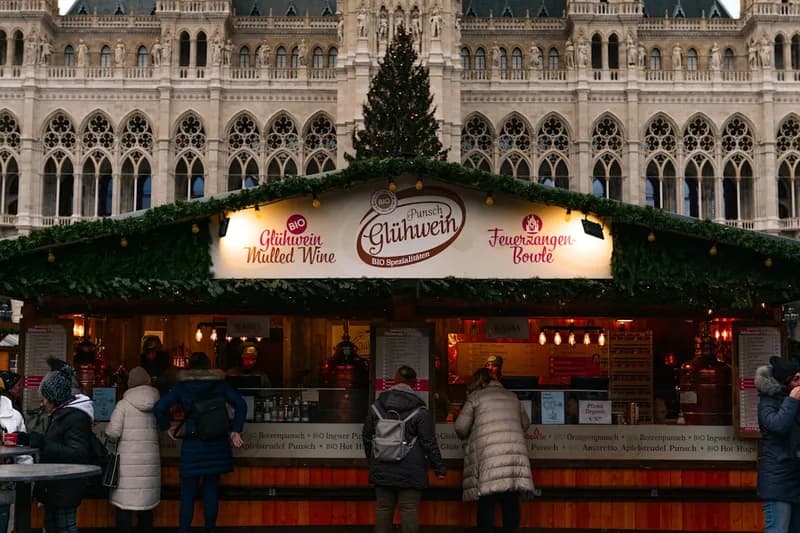
Vienna's Christmas markets are among the most famous and enchanting in the world, and the Advent season transforms the city into a glittering winter wonderland that draws visitors from across the globe. From mid-November until Christmas (some running into early January), dozens of markets — 'Christkindlmärkte' — spring up in squares and courtyards across the city, each with its own character, filling Vienna with twinkling lights, the scent of roasting chestnuts, cinnamon and spiced wine, and a cosy, romantic festive atmosphere. The grandest and most famous is the Christkindlmarkt on Rathausplatz in front of the illuminated neo-Gothic City Hall, an enormous, dazzling affair with hundreds of stalls, a park of light-decorated trees, an ice-skating trail and family attractions — spectacular but very busy. Many locals and connoisseurs prefer the smaller, more atmospheric and characterful markets: the artisan-focused market in the pretty cobbled lanes of Spittelberg, the elegant market on the historic Am Hof square, and the beautiful markets set against the imperial backdrops of Schönbrunn Palace and the Belvedere, along with those at Maria-Theresien-Platz between the great museums, Karlsplatz (with an arty, organic bent) and Stephansplatz. The markets are free to wander and centre on the same beloved rituals: browsing stalls of handcrafted decorations, ceramics, candles, toys and gifts, snacking on seasonal treats like Maroni (roasted chestnuts), Kartoffelpuffer and Christmas biscuits, and above all warming your hands around a mug of Glühwein or hot fruit punch, served in collectible commemorative mugs (you pay a small refundable deposit). The best approach is to go market-hopping over a day or evening, sampling several different markets and mugs of mulled wine as you soak up the magic. Note that this festive popularity makes late November and December a peak, pricey time to visit, so book flights and hotels well ahead — but for sheer Christmas atmosphere, few cities on earth match Vienna.
Hours
Roughly mid-November to 24/26 December (some to early January); daily, afternoons to evening
Price
Free to enter; Glühwein ~€4–5 (plus a refundable mug deposit); crafts and food vary
Getting there
Markets across the city — Rathausplatz, Schönbrunn, Belvedere, Spittelberg, Am Hof, Maria-Theresien-Platz, Karlsplatz
Insider tip: The Rathausplatz market is the biggest and most famous, but Spittelberg, Am Hof, Schönbrunn and Belvedere are more atmospheric — go market-hopping with a mug of Glühwein.
4.Wiener Festwochen
The Wiener Festwochen (Vienna Festival) is the city's flagship festival of the performing arts and one of the most important cultural events in the Viennese calendar, a five-week programme running from around mid-May to mid or late June that fills theatres, concert halls and unconventional venues across the city with ambitious, international and often boundary-pushing work. Founded in 1951, the festival has a strongly contemporary, avant-garde and intellectually adventurous character, distinguishing it from Vienna's more traditional classical offerings: its rich programme spans cutting-edge theatre and directors' work, contemporary and experimental dance, new music and opera, performance art, discussions and projects that frequently engage with pressing social and political themes, drawing leading and emerging artists, companies and directors from Austria and around the world. It gives the late-spring city a vibrant, forward-looking cultural energy and offers visitors a chance to experience Vienna not just as a museum of imperial and classical heritage but as a living, questioning contemporary arts capital. The festival traditionally opens with a large, free public event and concert on Rathausplatz in front of the City Hall, a popular celebration that launches the weeks of programming and is open to all. Individual performances are ticketed, with prices varying widely by event and venue, and the programme, announced in advance, ranges from accessible crowd-pleasers to challenging experimental pieces, so it rewards a look at the schedule to find what appeals. For culturally curious travellers visiting in late spring — itself one of the best times to come for weather and atmosphere — the Wiener Festwochen adds a stimulating extra dimension, and the free opening festivities are a lively, welcoming way to sample the city's contemporary creative scene.
Hours
Roughly mid-May to mid/late June each year
Price
Free opening event; ticketed performances vary widely
Getting there
Performances at venues citywide; the free opening concert is on Rathausplatz
Insider tip: The city's flagship arts festival brings five weeks of avant-garde theatre, music and performance to venues across town — the free opening concert on Rathausplatz kicks it off.
5.Donauinselfest
The Donauinselfest ('Danube Island Festival') is a Viennese summer institution and one of the largest open-air festivals in Europe, a colossal, completely free music and entertainment event that takes over the long Danube Island for one weekend in late June and draws enormous crowds — attendance is counted in the millions across the three days. Spread along the car-free recreation island in the middle of the river, the festival features dozens of stages hosting a vast and eclectic line-up of music across every genre imaginable — Austrian and international pop, rock, hip-hop, dance and electronic, schlager, folk, jazz and more — alongside DJ areas, sports and activity zones, food and drink stands, and a sprawling, high-energy party atmosphere that combines big-name headliners with countless local and emerging acts. Because it is entirely free to attend, with no ticket required, it has an inclusive, democratic, come-one-come-all spirit that makes it hugely popular with locals of all ages and a lively, only-in-summer experience for visitors who happen to be in town. The setting on the Danube Island, with its beaches, bars and open spaces, adds to the relaxed festival vibe, letting people mix music with swimming, sunbathing and picnicking by the water in the warm June weather. The flip side is that it is extremely crowded and busy, so it suits those who enjoy a big, buzzing, festival atmosphere rather than anyone seeking calm, and it can strain transport and the island's facilities at peak times. Easily reached by metro straight onto the island, free, huge and full of music and summer energy, the Donauinselfest is a great bonus for travellers visiting Vienna over its late-June weekend and a vivid glimpse of the city letting its hair down in the sunshine.
Hours
Three days over a weekend in late June
Price
Completely free entry
Getting there
U1 to Donauinsel or U6 to Neue Donau, right onto the festival island
Insider tip: Europe's biggest free open-air music festival takes over the Danube Island for a summer weekend — dozens of stages, huge crowds and no ticket needed.
6.Summer Film Festival on Rathausplatz
The Film Festival on Rathausplatz (often called the Musikfilm Festival) is one of the most beloved features of a Viennese summer, a free open-air cinema and food festival that takes over the grand square in front of the illuminated neo-Gothic City Hall every night throughout July and August, and a wonderful, atmospheric and completely free way to spend a warm summer evening. As dusk falls, a giant screen erected before the floodlit Rathaus shows a nightly programme of music-themed films — recordings of operas, ballets, classical and rock concerts, jazz and music documentaries, showcasing world-class performances from Vienna and around the globe — which visitors watch for free from banks of seating and standing areas on the square, giving a taste of the city's rich musical culture under the stars at no cost. Just as much of a draw as the films is the accompanying culinary village: the square and its surroundings fill with dozens of food and drink stalls offering an international spread of cuisines, from Austrian classics and Asian street food to Mediterranean, Balkan and global specialities, along with bars and refreshments, turning the whole area into a lively, festive gathering place where locals and visitors eat, drink, mingle and soak up the summer-evening atmosphere whether or not they watch the film. The relaxed, sociable, free and central nature of the event — right by the Ring and easily reached by tram or metro — makes it a perfect, low-cost activity for any warm night during a summer visit, and a lovely way to experience Vienna's outdoor culture. Simply turn up in the evening, grab some food from the stalls, find a spot on the square and enjoy world-class music on screen beneath the spires of the City Hall; arrive earlier for the better viewing spots on busy nights.
Hours
Nightly through July and August (screenings from dusk); food stalls from late afternoon
Price
Free to attend; food and drink pay-as-you-go
Getting there
Trams 1, 2, D or U2 to Rathaus/Schottentor; on the square in front of the City Hall
Insider tip: Every summer night the City Hall square becomes a free open-air cinema for opera, concert and music films, ringed by a huge international food village — arrive early for a good spot.