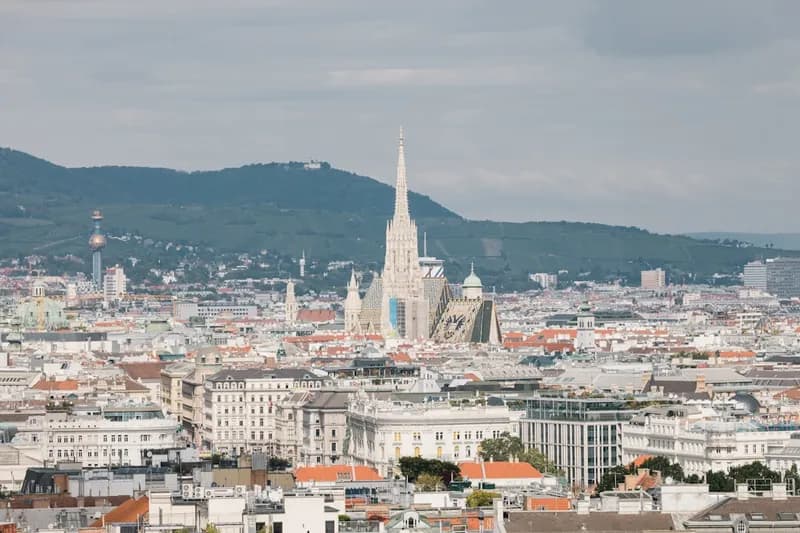
Few cities wear their history as gloriously as Vienna. The Habsburgs' palaces at Schönbrunn and the Hofburg, St Stephen's soaring Gothic cathedral, Klimt's golden 'The Kiss' at the Belvedere, the peerless Kunsthistorisches Museum and the State Opera all sit within a walkable, café-lined centre. Here are the 18 attractions worth building your trip around, with prices, opening hours and tips to skip the queues.
 €27
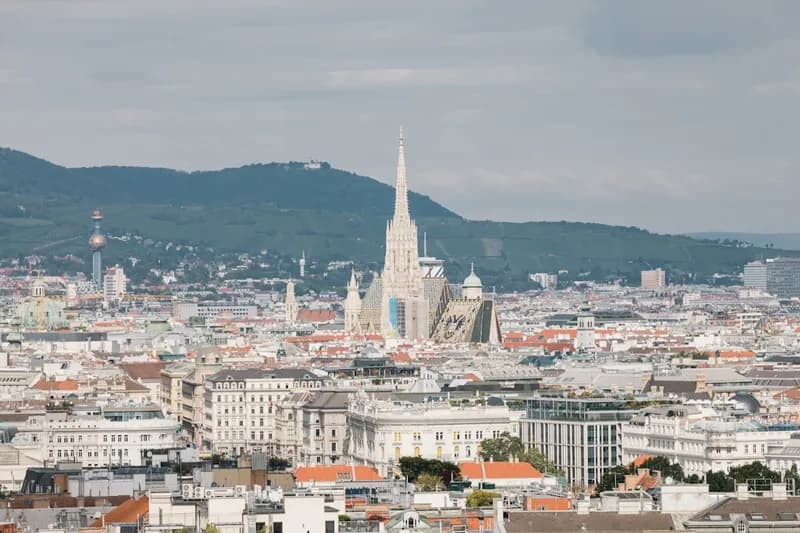
€27Schönbrunn Palace
Area
Hietzing (13th)
Category
Palaces & Imperial
“The Imperial Tour (22 rooms) is enough on a first visit; take U4 to Schönbrunn and book a timed slot online to skip the queue.”
 €19.50
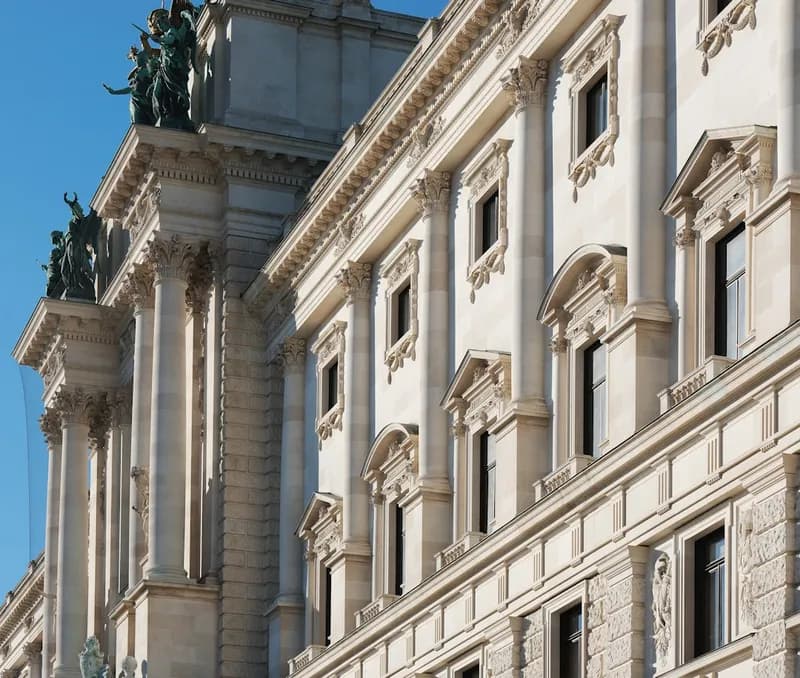
Hofburg Palace & Sisi Museum
Area
Innere Stadt (1st)
Category
Palaces & Imperial
“The Sisi Ticket covers the Imperial Apartments, Sisi Museum and Silver Collection — allow 2.5 hours and go first thing.”
 Free (tower €6)
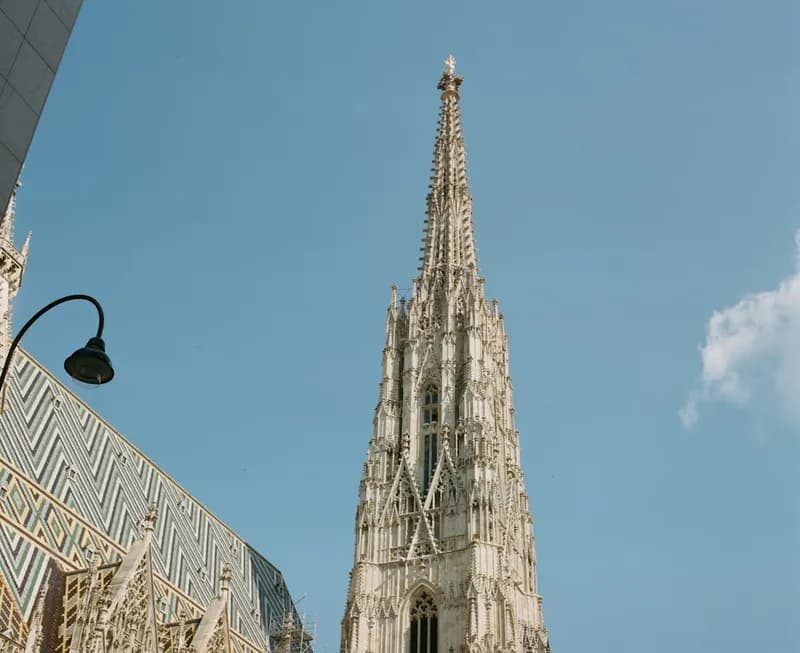
St Stephen's Cathedral (Stephansdom)
Area
Innere Stadt (1st)
Category
Churches
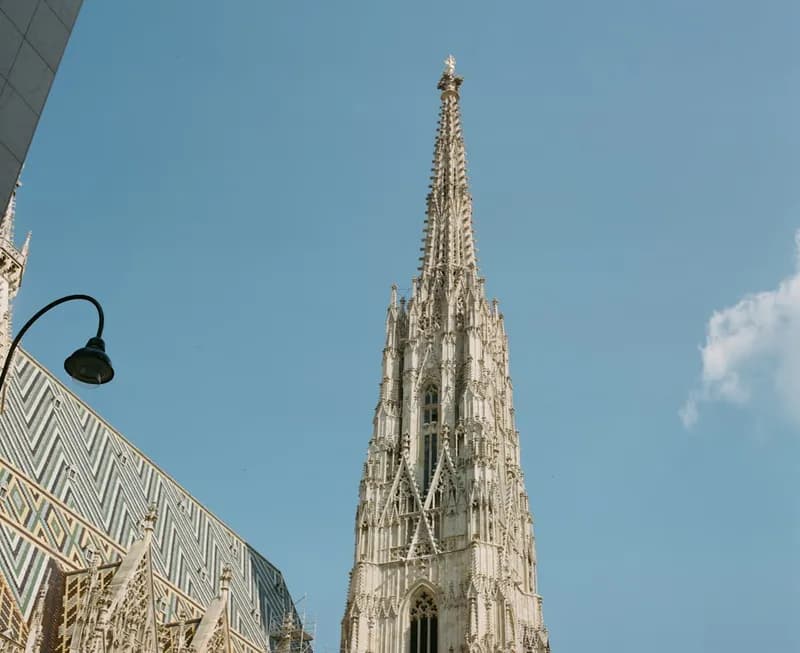
“Climb the 343 steps of the South Tower for the best city view; the North Tower lift (€6) reaches the giant Pummerin bell.”
 €17.50
Belvedere & Klimt's The Kiss
Area
Landstraße (3rd)
Category
Art & Museums
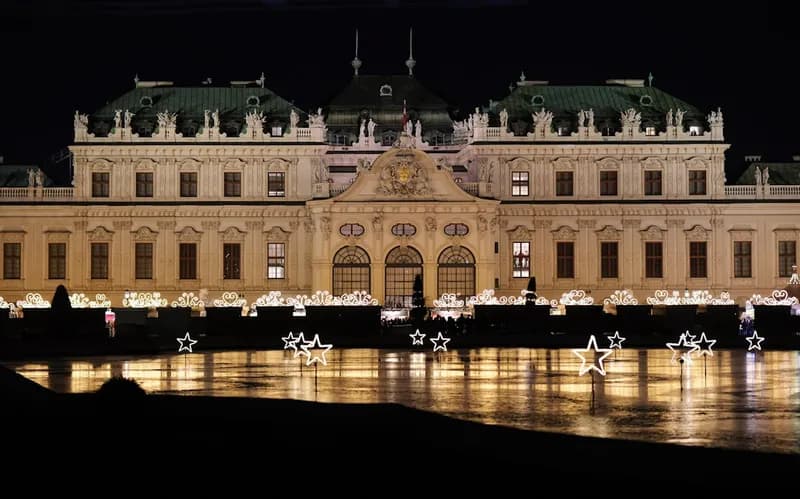
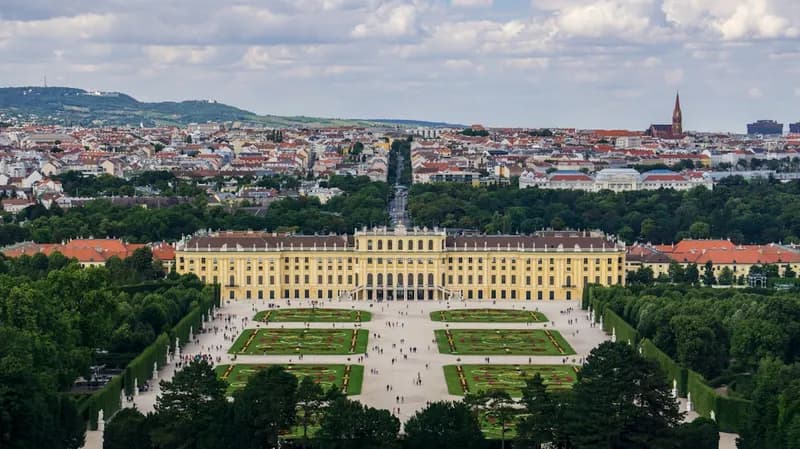
“Klimt's 'The Kiss' and 'Judith' hang in the Upper Belvedere; the garden between the two palaces is free and frames a superb view.”
 €21
€21Kunsthistorisches Museum
Area
Innere Stadt (1st)
Category
Art & Museums
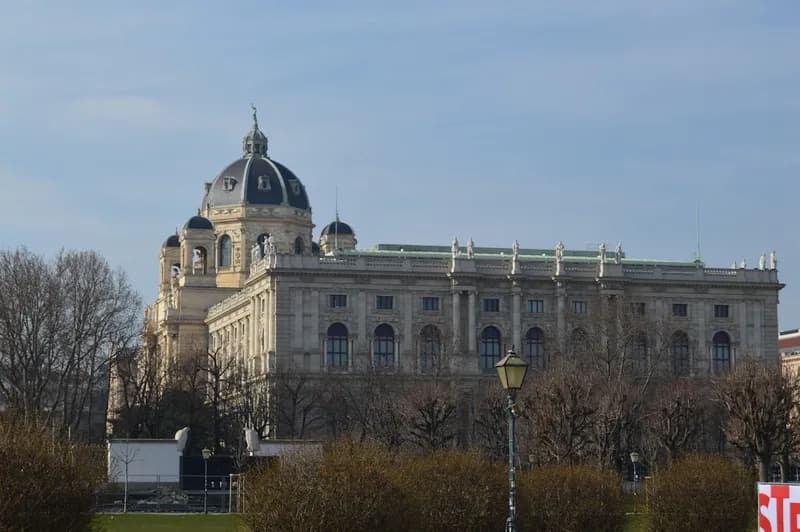
“Home to the world's largest Bruegel collection; the domed café is worth a coffee, and a combined ticket with the Natural History Museum saves €9.”
 €13 standing
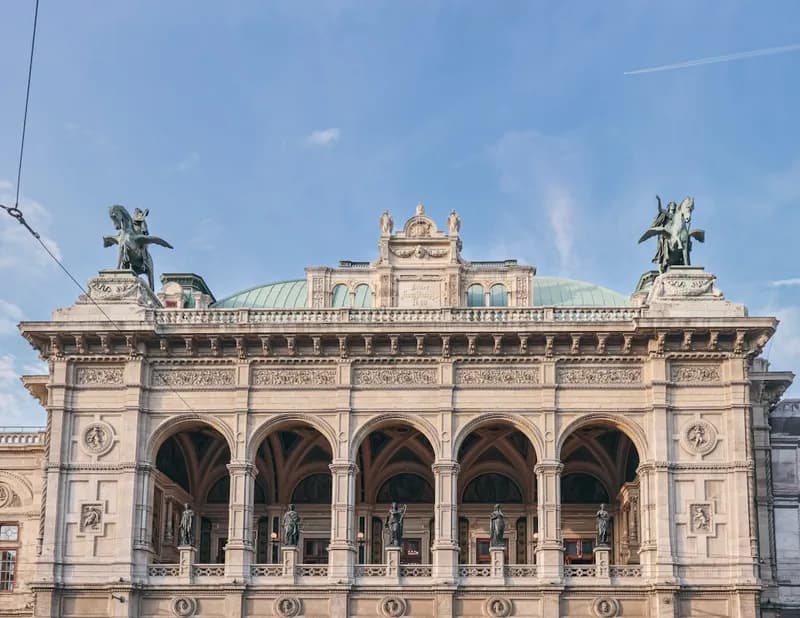
Vienna State Opera (Staatsoper)
Area
Innere Stadt (1st)
Category
Music & Opera
“Standing-room tickets (€13) go on sale 80 minutes before curtain at the Operngasse box office — queue early in peak season for a legendary night out on a budget.”
 €16 morning training
Spanish Riding School
Area
Innere Stadt (1st)
Category
Palaces & Imperial
“The morning exercise sessions (from ~€16) are far cheaper than a gala performance and let you watch the Lipizzaner stallions train under the chandeliers.”
 €16.90
Albertina
Area
Innere Stadt (1st)
Category
Art & Museums
“Dürer's 'Young Hare' is the house icon (shown only periodically); the permanent Monet-to-Picasso collection and the Habsburg state rooms are always on view.”
 Park free (wheel €14)
Prater & the Giant Ferris Wheel
Area
Leopoldstadt (2nd)
Category
Parks & Markets
“The park and its paths are free; a ride on the 1897 Riesenrad (€14) turns in the original carriages made famous by 'The Third Man'.”
 Free (lunch €12–22)
Naschmarkt
Area
Mariahilf (6th)
Category
Parks & Markets
“Come hungry and graze the stalls; the Saturday flea market (from ~06:30) at the far end is the city's best treasure hunt — go early.”
 Courtyard free
MuseumsQuartier
Area
Neubau (7th)
Category
Art & Museums
“The vast courtyard with its coloured 'Enzi' loungers is free and buzzing; the Leopold Museum holds the world's biggest Egon Schiele collection.”
 Free (exterior)
Hundertwasserhaus
Area
Landstraße (3rd)
Category
Architecture
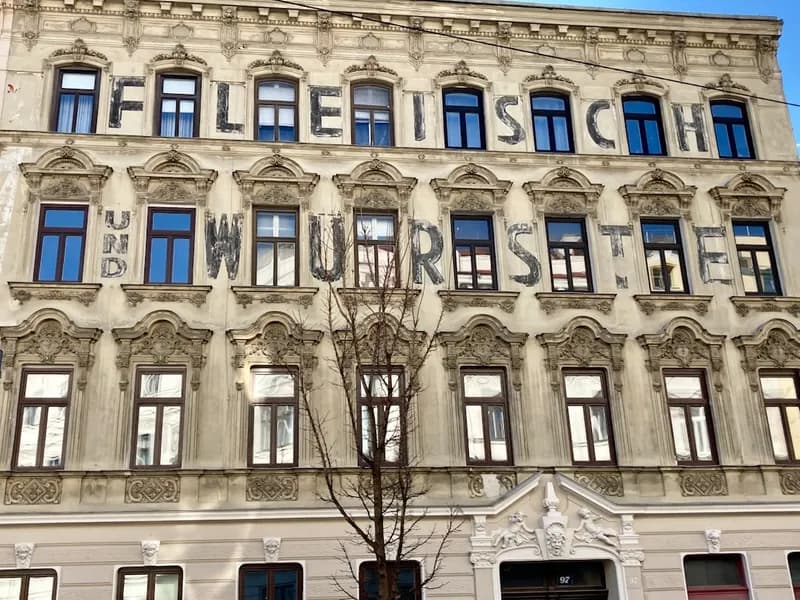
“It's a private residence, so admire the façade from outside; pop into the free Hundertwasser Village opposite and combine with Kunst Haus Wien nearby.”
 €9.50
€9.50Karlskirche
Area
Wieden (4th)
Category
Churches
“The ticket includes a panorama lift up into the dome to see the frescoes at close range — a rare and unforgettable perspective.”
 €14
€14Imperial Treasury (Schatzkammer)
Area
Innere Stadt (1st)
Category
Palaces & Imperial
“Often quiet compared with the rest of the Hofburg — perfect for a rainy hour with the 1,000-year-old crown of the Holy Roman Empire.”
 €16
€16Natural History Museum (NHM)
Area
Innere Stadt (1st)
Category
Art & Museums
“Seek out the 29,500-year-old 'Venus of Willendorf' in Hall 11; the rooftop tour and the digital planetarium are worth adding.”
 Concerts €30–120
Musikverein
Area
Innere Stadt (1st)
Category
Music & Opera
“The Golden Hall is considered the finest-sounding concert hall on earth; the Vienna Philharmonic's New Year's Concert is broadcast from here.”
 Free
FreeCentral Cemetery (Zentralfriedhof)
Area
Simmering (11th)
Category
Parks & Markets
“Head for Group 32A to see the graves of Beethoven, Schubert, Brahms, Strauss and a memorial to Mozart, all clustered together.”
Vienna attractions in detail
1.Schönbrunn Palace
Schönbrunn is Vienna's answer to Versailles and the single sight no first-time visitor should miss — the sprawling 1,441-room summer palace of the Habsburg dynasty, a UNESCO World Heritage Site painted in the distinctive 'Schönbrunn yellow'. Commissioned by Empress Maria Theresa in the eighteenth century, its state rooms drip with gilt, crystal and rococo excess: the Great Gallery where the Congress of Vienna danced, the lacquered Chinese cabinets, the Millions Room and the apartments where a six-year-old Mozart performed for the imperial family. The Imperial Tour covers twenty-two rooms and suits most visitors, while the Grand Tour adds Maria Theresa's private salons. But the palace is only half the experience: the vast formal gardens, free to enter, climb to the colonnaded Gloriette on the hill for a sweeping view back over the city, and hide a hedge maze, the Palm House, and the Tiergarten — the oldest zoo in the world, founded in 1752. Entry is by timed ticket and the palace sells out in peak season, so book online before you go and arrive early. Reach it easily on the U4 metro line. Allow a full half-day, longer if you add the zoo and gardens, and pack comfortable shoes for the grounds.
Hours
Daily 09:00–17:00 (until 18:00 in summer); gardens from 06:30
Price
Imperial Tour €27; Grand Tour €31 (adds Maria Theresa's private rooms); gardens free
Getting there
U4 metro to Schönbrunn (5-minute walk); trams 10 & 60, bus 10A
Insider tip: The Imperial Tour (22 rooms) is enough on a first visit; take U4 to Schönbrunn and book a timed slot online to skip the queue.
2.Hofburg Palace & Sisi Museum
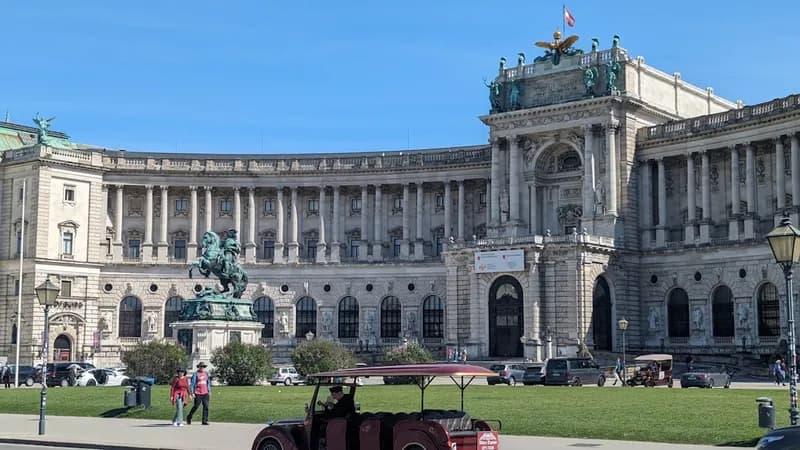
The Hofburg is not a single building but a whole imperial quarter — the winter residence of the Habsburgs and the nerve centre of their empire for more than six hundred years, growing over the centuries into a labyrinth of wings, courtyards, churches and squares that today houses the Austrian president, several museums, a riding school and the national library. The core visit is the Sisi Ticket, which threads through the opulent Imperial Apartments where Emperor Franz Joseph lived and worked, the poignant Sisi Museum devoted to his beautiful, restless and ultimately tragic wife Empress Elisabeth (assassinated in 1898 and reborn as a modern cult figure), and the glittering Silver Collection of the imperial table. Around it cluster the Imperial Treasury with its Holy Roman crown jewels, the Spanish Riding School, the Augustinerkirche where the Habsburgs married, and the grand Michaelerplatz and Heldenplatz squares. It sits at the very heart of the compact Innere Stadt, so it slots into any walking day. Book the Sisi Ticket online to skip the queue, allow at least two and a half hours, and combine it with the neighbouring Kaisergruft (Imperial Crypt) and the great museums on the Ring for a full immersion in Habsburg Vienna.
Hours
Daily 09:00–17:30 (until 18:00 Jul–Aug)
Price
Sisi Ticket €19.50 (Apartments + Sisi Museum + Silver Collection); Imperial Treasury separate €14
Getting there
U3 to Herrengasse or U1/U2/U4 to Karlsplatz/Stephansplatz; trams 1, 2, 71 & D on the Ring
Insider tip: The Sisi Ticket covers the Imperial Apartments, Sisi Museum and Silver Collection — allow 2.5 hours and go first thing.
3.St Stephen's Cathedral (Stephansdom)
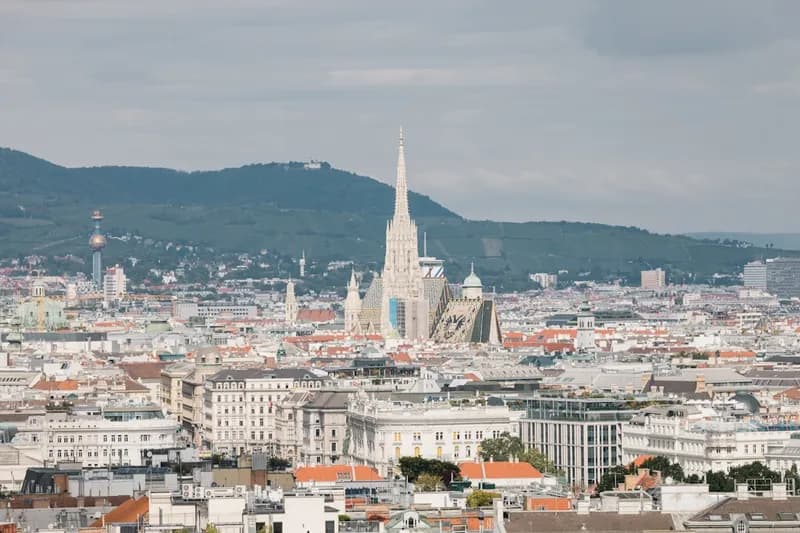
Stephansdom — 'Steffl' to the Viennese — is the soul of the city, a soaring Gothic cathedral that has stood at the exact centre of Vienna for some 800 years and whose 136-metre south spire is visible across the rooftops. Its most photographed feature is the dazzling tiled roof, a diamond-patterned skin of 230,000 glazed tiles laid out to form the double-headed Habsburg eagle and the coats of arms of the city and Austria. Inside, the cavernous nave holds a wealth of treasures: the intricate late-Gothic Pilgram pulpit with its carved self-portrait of the sculptor peering out from a window, the winged Wiener Neustädter altar, and the Renaissance tomb of Emperor Frederick III. Beneath the floor, the catacombs hold the bones of tens of thousands of plague victims and the copper urns containing the entrails of the Habsburgs, whose bodies lie in the Imperial Crypt and whose hearts rest elsewhere. Energetic visitors climb the 343 narrow steps of the South Tower for the finest panorama in the city, while a lift in the North Tower reaches the Pummerin, one of Europe's largest swinging bells, rung to mark the New Year. The nave is free to enter; the towers, catacombs and treasury carry small charges. Come early or late to avoid the crush on Stephansplatz.
Hours
Mon–Sat 09:00–11:30 & 13:00–16:30, Sun 13:00–16:30 (nave); towers daily
Price
Nave free; South Tower climb €6; North Tower lift €6; catacombs tour €7
Getting there
U1/U3 metro directly to Stephansplatz (the cathedral is the exit)
Insider tip: Climb the 343 steps of the South Tower for the best city view; the North Tower lift (€6) reaches the giant Pummerin bell.
4.Belvedere & Klimt's The Kiss
The Belvedere is a magnificent Baroque palace complex built in the early eighteenth century as the summer residence of Prince Eugene of Savoy, the brilliant general who broke the Ottoman siege, and today it is one of the world's great art museums. Two ornate palaces — the Upper and Lower Belvedere — face each other across a formal terraced garden of fountains, sphinxes and clipped hedges that tumbles downhill with a picture-perfect view over the garden to the spire of Stephansdom and the city beyond, and is free to walk. The reason most visitors come is the Upper Belvedere's peerless collection of Gustav Klimt, above all 'The Kiss' (1907–08), the shimmering gold-leaf embrace that is Austria's most beloved painting and a highlight of the Vienna Secession; nearby hang his 'Judith' and works by Schiele, Kokoschka, Monet, van Gogh and the Austrian masters. The Lower Belvedere and Orangery host changing exhibitions, while the palace interiors themselves — the Marble Hall, the Hall of Grotesques — are works of art. Book a timed ticket online, arrive at opening to have 'The Kiss' briefly to yourself, and give the collection two hours before strolling the gardens down to the Lower palace. It is an easy tram ride from the centre.
Hours
Upper Belvedere daily 09:00–18:00; Lower Belvedere 10:00–18:00
Price
Upper Belvedere €17.50; combined Upper + Lower €24; garden free
Getting there
Tram D to Schloss Belvedere or tram 71; U1 to Südtiroler Platz, 8-minute walk
Insider tip: Klimt's 'The Kiss' and 'Judith' hang in the Upper Belvedere; the garden between the two palaces is free and frames a superb view.
5.Kunsthistorisches Museum
The Kunsthistorisches Museum, the imperial Museum of Fine Arts, is one of the finest art galleries on earth — a purpose-built palace of 1891 on the Ring whose grand staircase, marble halls and domed café are almost as breathtaking as the collection they house. Assembled by the Habsburgs over centuries, the picture gallery is a roll-call of Western art: it holds the world's largest collection of Pieter Bruegel the Elder, with the seasonal masterpieces 'Hunters in the Snow' and 'The Tower of Babel' hanging together in a single unforgettable room, alongside Vermeer's 'The Art of Painting', Raphael's 'Madonna of the Meadow', Velázquez portraits of the Spanish infantas, Caravaggio, Titian, Rubens and Rembrandt. Beyond the paintings lie a dazzling Kunstkammer of imperial curiosities — the gold Saliera by Cellini among them — and rich Egyptian, Greek and Roman antiquities. The building faces its identical twin, the Natural History Museum, across the statue-filled Maria-Theresien-Platz, and a combined ticket links the two. Don't rush: a proper visit takes two to three hours, and pausing for coffee and cake beneath the great cupola is part of the experience. Book online, come on a Thursday evening for late opening and thinner crowds, and prioritise the Bruegel room if time is short.
Hours
Tue–Sun 10:00–18:00 (Thu until 21:00); closed Mon (open Mon Jun–Aug)
Price
€21; combined with Natural History Museum €28
Getting there
U2 to Museumsquartier or U3 to Volkstheater; trams 1, 2, 71, D to Burgring
Insider tip: Home to the world's largest Bruegel collection; the domed café is worth a coffee, and a combined ticket with the Natural History Museum saves €9.
6.Vienna State Opera (Staatsoper)
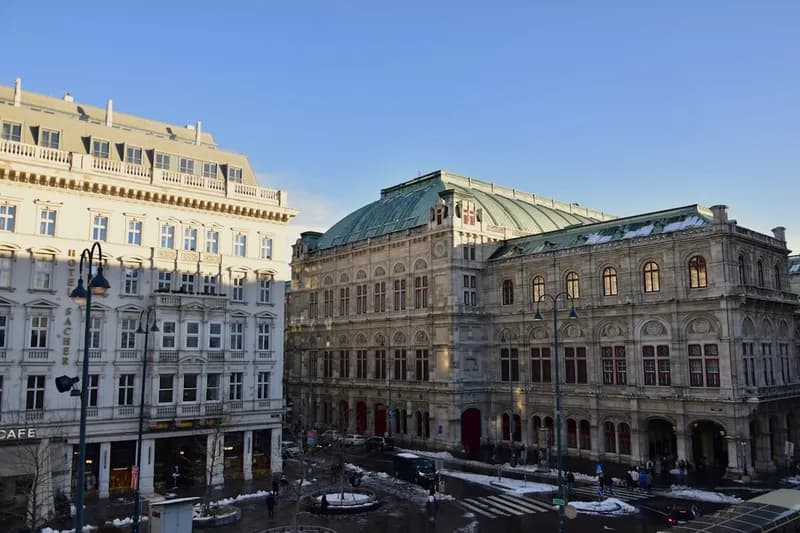
The Wiener Staatsoper is one of the most prestigious opera houses in the world and a fixture of Vienna's identity in the city that gave us Mozart, Beethoven, Schubert, Brahms, Mahler and the Strauss dynasty. Opened in 1869 as the first of the grand buildings on the new Ringstraße, the neo-Renaissance house was gutted by bombing in 1945 and lovingly rebuilt, reopening in 1955 as a symbol of Austria's postwar renewal. Behind its arcaded façade, the gilded auditorium, sweeping staircase and frescoed Schwind Foyer form a suitably lavish setting for a season of some 350 performances of opera and ballet, changing almost nightly, under a roster of the world's great singers and conductors. The most magical way in for travellers on a budget is the standing-room ('Stehplatz') tradition: a few hundred tickets go on sale for as little as €13 just 80 minutes before each performance, so join the queue at the Operngasse entrance well ahead and you can watch a world-class production for the price of a sandwich. Prefer daylight? Guided backstage tours run when no rehearsal is on, and in summer selected performances are streamed live and free onto a giant screen on the square outside. Dress smartly for an evening performance and soak up an authentic slice of musical Vienna.
Hours
Performances most evenings Sep–Jun; guided tours daily when no rehearsal
Price
Standing room from €13; seats €20–250; guided tour €13
Getting there
U1/U2/U4 to Karlsplatz (Opera exit); trams 1, 2, 71, D, 62 to Oper
Insider tip: Standing-room tickets (€13) go on sale 80 minutes before curtain at the Operngasse box office — queue early in peak season for a legendary night out on a budget.
7.Spanish Riding School
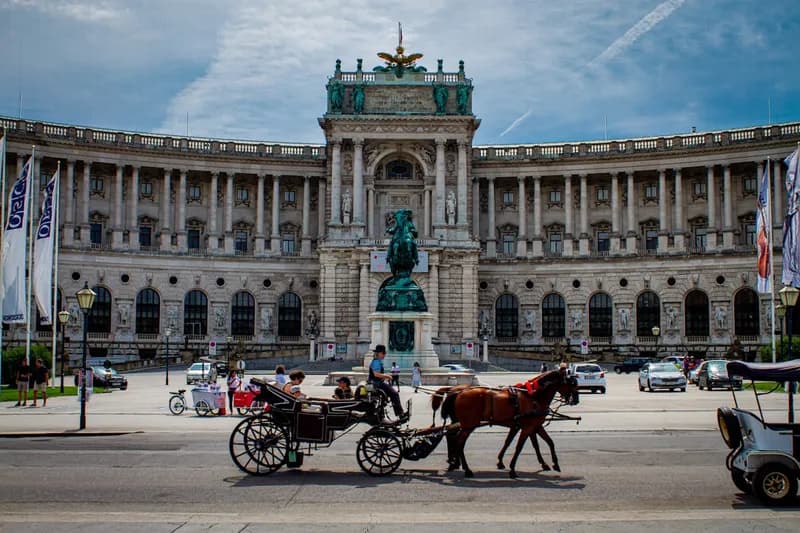
The Spanish Riding School is a living piece of imperial Vienna, the oldest classical equestrian academy in the world, in continuous operation since 1565 and dedicated to preserving the Renaissance art of haute-école dressage. Its stars are the famous Lipizzaner stallions — born dark and greying to a brilliant white with age — bred from a line established by the Habsburgs and trained over years to perform the extraordinary 'airs above the ground', the balletic leaps and controlled movements of classical horsemanship. They perform beneath the crystal chandeliers of the Winter Riding School, a dazzling white Baroque hall built for Emperor Charles VI within the Hofburg, its columned galleries and royal box making it one of the most beautiful arenas anywhere. Full gala performances are a spectacle but pricey and often sold out; the smart and far cheaper option is to attend a Morning Exercise session, when you can watch the horses and riders train to classical music in the same magnificent setting for a fraction of the cost. Guided tours also take you into the stables and tack rooms. Because sessions depend on the horses' schedule and the school's summer breaks, always check the online calendar and book ahead. It is a magical, only-in-Vienna experience, especially for families and horse lovers, right in the heart of the Hofburg.
Hours
Performances & morning training on set days (mostly Tue–Sun); check the calendar
Price
Morning exercise from ~€16; performances €25–170; guided tours ~€19
Getting there
U3 to Herrengasse, 4-minute walk; entrance at Michaelerplatz within the Hofburg
Insider tip: The morning exercise sessions (from ~€16) are far cheaper than a gala performance and let you watch the Lipizzaner stallions train under the chandeliers.
8.Albertina
The Albertina occupies the largest of the Habsburg residential palaces, perched on a bastion above the Opera, and it wears two hats brilliantly. First, it holds one of the most important collections of graphic art in the world — more than a million prints and 65,000 drawings spanning six centuries, from Michelangelo, Leonardo and Rubens to Klimt and Schiele, its emblem being Albrecht Dürer's exquisite watercolour 'Young Hare' of 1502, so fragile that the original is displayed only occasionally. Second, its permanent gallery, 'Monet to Picasso', offers a crisp survey of modern classics — French Impressionism, German Expressionism, Russian avant-garde, Picasso and beyond — that alone justifies a visit. On top of the art, the museum preserves the sumptuous Habsburg State Rooms, twenty-one lavishly restored imperial apartments with parquet floors and gilded stucco, giving a taste of aristocratic palace life. Ambitious changing exhibitions of blockbuster names fill the upper halls. Its sister venue, the Albertina Modern on Karlsplatz, extends the story into contemporary art. Superbly central just steps from the Opera and Hofburg, it is easy to slot into a day, and the terrace over the Ring makes a fine photo stop. Book online, allow a couple of hours, and check which star works are currently on display before you go.
Hours
Daily 10:00–18:00 (Wed & Fri until 21:00)
Price
€16.90; combined with Albertina Modern €24
Getting there
U1/U2/U4 to Karlsplatz (Opera exit), 3-minute walk; trams to Oper
Insider tip: Dürer's 'Young Hare' is the house icon (shown only periodically); the permanent Monet-to-Picasso collection and the Habsburg state rooms are always on view.
9.Prater & the Giant Ferris Wheel
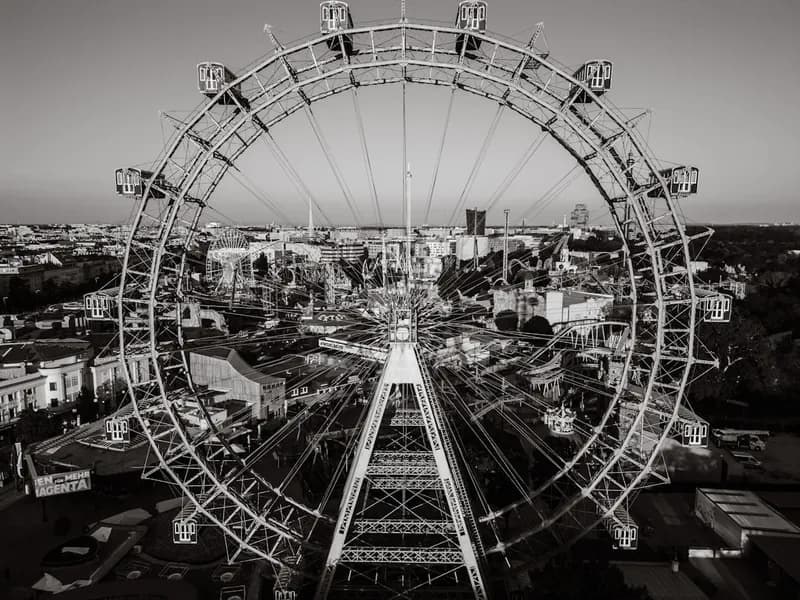
The Prater is Vienna's much-loved green playground, a vast former imperial hunting ground on an island between the Danube and the Danube Canal that Emperor Joseph II opened to the public in 1766, making it one of the world's first public parks. It splits into two moods. The Wurstelprater at the northern end is a lively, free-to-enter funfair of roller coasters, ghost trains, carousels, beer gardens and sausage stands that has entertained the Viennese for generations, presided over by the city's most famous silhouette: the Wiener Riesenrad, a giant Ferris wheel built in 1897, 65 metres high, whose slow revolution in its wood-panelled cabins offers a romantic view over the rooftops and was immortalised in the classic 1949 film 'The Third Man'. Beyond the rides stretches the Grüner Prater, a huge natural park of meadows and woodland threaded by the arrow-straight, chestnut-lined Hauptallee, perfect for jogging, cycling, roller-blading or simply escaping the city, plus a planetarium, a miniature railway and sports grounds. It is free to wander, family-friendly and open around the clock, with the funfair charging only per ride. Easily reached on the U1 or U2 metro to Praterstern, it makes a relaxed half-day, especially good with children or as a green counterpoint to the palaces and museums.
Hours
Park always open; funfair rides ~10:00–24:00 (Mar–Oct); Ferris wheel daily year-round
Price
Park and promenade free; Ferris wheel €14; individual rides €2–10
Getting there
U1/U2 to Praterstern (at the funfair entrance); trams 1 & 5, bus 80A
Insider tip: The park and its paths are free; a ride on the 1897 Riesenrad (€14) turns in the original carriages made famous by 'The Third Man'.
10.Naschmarkt
The Naschmarkt is Vienna's most famous market and one of the great pleasures of the city, a bustling 1.5-kilometre strip of around 120 stalls and stands running along the Wienzeile between Karlsplatz and Kettenbrückengasse, on the covered course of the River Wien. Trading here since the eighteenth century, it began as a farmers' market and has grown into a gloriously cosmopolitan bazaar reflecting modern Vienna: mounds of fruit and vegetables, dripping honey and dried fruit, olives and cheeses, spice pyramids, fresh fish, Austrian delicacies and a strong Middle Eastern and Asian accent thanks to the city's diverse traders. The eastern half nearest the centre is increasingly given over to restaurants, delis and cafés — from the celebrated Naschmarkt Deli to sushi bars and mezze counters — spilling tables onto the aisles, making it a superb spot for a long grazing lunch or an evening drink. Every Saturday the western end hosts a sprawling flea market, one of the best in Central Europe, where early birds hunt through antiques, vinyl, bric-a-brac and genuine bargains from dawn. It is free to wander, endlessly photogenic and buzzing with life. Come with an appetite, arrive early on Saturdays for the flohmarkt, and be aware that the sit-down restaurants can be pricier and pushier than the stalls — check prices before you order.
Hours
Mon–Fri ~06:00–21:00, Sat until ~18:00 (stalls vary); closed Sun
Price
Free to browse; snacks from €4, sit-down lunch €12–22; Saturday flea market
Getting there
U4 to Kettenbrückengasse or U1/U2/U4 to Karlsplatz, along the market
Insider tip: Come hungry and graze the stalls; the Saturday flea market (from ~06:30) at the far end is the city's best treasure hunt — go early.
11.MuseumsQuartier
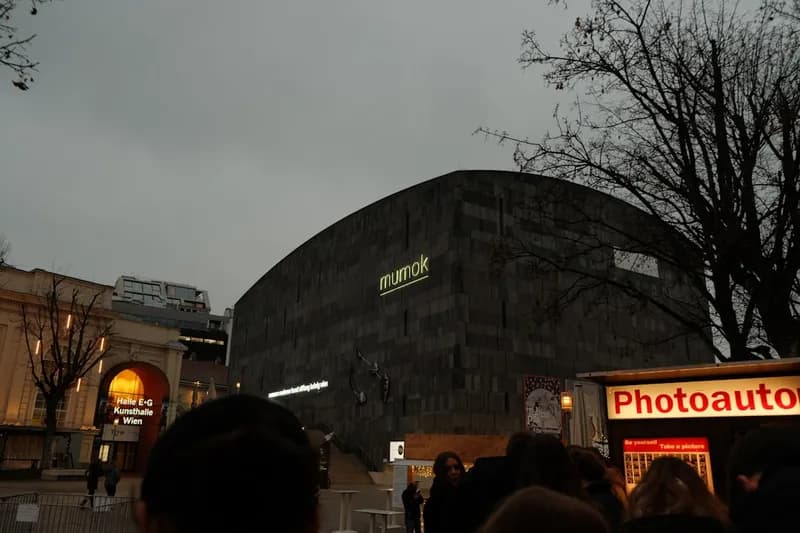
The MuseumsQuartier — the MQ to locals — is one of the largest cultural districts in the world, a sprawling 60,000-square-metre campus created around the elegant Baroque buildings of the former imperial court stables just behind the great Ring museums. It brilliantly juxtaposes historic façades with bold modern architecture, and its great inner courtyard has become one of Vienna's favourite public living rooms: strewn with the distinctive coloured 'Enzi' loungers, it is free to enter and fills day and night with people reading, drinking, meeting friends and enjoying open-air events, cafés and design shops. Around it cluster major museums for every taste. The Leopold Museum is the star, holding the world's largest collection of Egon Schiele alongside superb Klimt, Kokoschka and Viennese Secession and Jugendstil work. The mumok (Museum of Modern Art) fills a dark basalt block with Pop Art, Viennese Actionism and twentieth-century classics; the Kunsthalle stages contemporary exhibitions; and there are venues for dance, theatre, architecture and children (ZOOM Kindermuseum) too. It is the creative, youthful counterpoint to imperial Vienna, and a place you can dip into for a single museum or a whole day. Buy a combined ticket if you plan several, and linger in the courtyard with a drink to feel the city's contemporary pulse.
Hours
Courtyard always open; museums typically 10:00–18:00 (some closed Mon/Tue)
Price
Courtyard free; Leopold Museum €17; mumok €15; Kunsthalle €8; combi tickets available
Getting there
U2 directly to Museumsquartier; U3 to Volkstheater, short walk
Insider tip: The vast courtyard with its coloured 'Enzi' loungers is free and buzzing; the Leopold Museum holds the world's biggest Egon Schiele collection.
12.Hundertwasserhaus
The Hundertwasserhaus is Vienna's most joyfully eccentric building, a municipal apartment block designed by the visionary artist and ecologist Friedensreich Hundertwasser and completed in 1985 as a deliberate rebellion against the 'tyranny of the straight line'. Every conventional rule of architecture is playfully broken: the façade is a patchwork of clashing colours and irregular hand-painted tiles, no two windows are alike, the floors inside undulate ('an uneven floor is a melody to the feet', he said), golden onion domes sprout from the roofline, and more than 250 trees and shrubs grow from terraces and windows, so that greenery cascades down the walls. Hundertwasser refused any fee, wanting only that something ugly not be built on the site, and the result is a beloved, still-inhabited council house of some fifty flats. Because it is a private residence, you cannot go inside, but the exterior is free to admire and endlessly photogenic (do respect the residents and stay on the pavement). Directly opposite, the small Hundertwasser Village, a former tyre workshop reimagined in his style, houses quirky shops and a café, while a few minutes' walk away the Kunst Haus Wien, also his design, is a full museum of his art and hosts photography exhibitions. Together they make an easy, offbeat half-hour or half-day away from the imperial centre, reached by a short tram ride.
Hours
Exterior viewable any time; Hundertwasser Village shops daily; Kunst Haus Wien 10:00–18:00
Price
Free to view from the street; Kunst Haus Wien museum ~€12
Getting there
Tram 1 to Hetzgasse; U1/U4 to Schwedenplatz, then tram 1; bus 4A
Insider tip: It's a private residence, so admire the façade from outside; pop into the free Hundertwasser Village opposite and combine with Kunst Haus Wien nearby.
13.Karlskirche
The Karlskirche (St Charles's Church) is the greatest Baroque building in Vienna and one of the finest north of the Alps, commissioned by Emperor Charles VI in 1713 in thanks for the city's deliverance from a plague epidemic and completed in 1737 by the architect Johann Bernhard Fischer von Erlach and his son. Its façade is a bold and unusual fusion of styles: a classical Greek temple portico, a vast green-copper dome, and — most strikingly — two enormous free-standing columns modelled on Trajan's Column in Rome, spiralling with reliefs that depict the life of the church's patron saint and echo the minarets of the recently defeated Ottomans. Inside, the light-filled elliptical nave rises to a spectacular dome fresco by Johann Michael Rottmayr depicting the Apotheosis of St Charles Borromeo. The great treat, and what makes a visit worthwhile, is the panorama lift installed beneath the dome, which carries you up scaffolding-style platforms to within arm's reach of the frescoes and out onto a viewing deck — an extraordinary close-up of Baroque painting and a fine view over the city. The church sits behind a reflecting pool on the leafy Karlsplatz, where its mirrored image is a classic photo, and it is an easy walk from the Naschmarkt, the Secession and the Musikverein. Allow 45 minutes, and check for the evening classical concerts often held under the dome.
Hours
Mon–Sat 09:00–18:00, Sun 12:00–19:00 (last lift ~30 min before close)
Price
€9.50 (includes dome lift and museum); free for the reflecting-pool view outside
Getting there
U1/U2/U4 to Karlsplatz, 3-minute walk across the square
Insider tip: The ticket includes a panorama lift up into the dome to see the frescoes at close range — a rare and unforgettable perspective.
14.Imperial Treasury (Schatzkammer)
Tucked into the Schweizerhof, the oldest medieval core of the Hofburg, the Imperial Treasury holds the most important collection of royal regalia and treasures in the world, a glittering thousand-year record of Habsburg and Holy Roman power. Its supreme object is the Imperial Crown of the Holy Roman Empire, an octagonal masterpiece of gold, pearls and enormous uncut gems made around AD 960 that crowned emperors for eight centuries and is one of the oldest and most significant crown jewels in existence. Around it are gathered the coronation robes and swords, the orb and sceptre, the Austrian imperial crown of Rudolf II, and objects of near-mythical status: the 'Holy Lance' said to have pierced the side of Christ, a huge unpolished emerald carved into a vessel, a giant narwhal tusk once believed to be a unicorn's horn, and the elaborate treasures of the Order of the Golden Fleece. A second suite of rooms holds the ecclesiastical treasury of reliquaries and vestments. It is a comparatively compact and often uncrowded museum — a real advantage over the busier Hofburg apartments — making it ideal for a focused hour or a rainy afternoon. The lighting and hushed rooms lend real drama to the jewels. It sits at the heart of the palace complex, easily combined with the Sisi Museum, the Spanish Riding School and the National Library's magnificent State Hall next door.
Hours
Wed–Mon 09:00–17:30; closed Tue
Price
€14 (separate from the Sisi Ticket); combined KHM options available
Getting there
U3 to Herrengasse; entrance via the Schweizerhof, the oldest part of the Hofburg
Insider tip: Often quiet compared with the rest of the Hofburg — perfect for a rainy hour with the 1,000-year-old crown of the Holy Roman Empire.
15.Natural History Museum (NHM)
The Naturhistorisches Museum is the twin of the Kunsthistorisches Museum, facing it across the grand Maria-Theresien-Platz in an identical palatial building of 1889, and it is one of the most important natural history collections in the world — a place that delights adults and children in equal measure. Its treasures span the story of life and the planet: the 29,500-year-old 'Venus of Willendorf', a tiny limestone fertility figure that is among the most famous prehistoric artworks ever found, holds pride of place; a huge and beautifully displayed mineral and gemstone hall glitters with meteorites and a bouquet of jewelled flowers made for Maria Theresa; and popular dinosaur galleries with animatronic models, fossils and a full-scale skeleton thrill younger visitors. There are anthropology, zoology and taxidermy halls of Victorian splendour, a digital planetarium and, in good weather, guided tours out onto the roof for a view over the Ring and the museum quarter. The building itself — frescoed ceilings, a soaring central dome, sweeping marble stairs and an elegant cupola café — is a nineteenth-century monument in its own right. It is superbly central on the Ring, a short walk from the Hofburg and MuseumsQuartier, and a combined ticket pairs it neatly with its art-museum twin. Allow two hours or more, especially with kids, and check the schedule for the planetarium shows.
Hours
Thu–Mon 09:00–18:00, Wed until 20:00; closed Tue
Price
€16; combined with the Kunsthistorisches Museum €28
Getting there
U2 to Museumsquartier or U3 to Volkstheater; trams 1, 2, 71, D to Burgring
Insider tip: Seek out the 29,500-year-old 'Venus of Willendorf' in Hall 11; the rooftop tour and the digital planetarium are worth adding.
16.Musikverein
The Musikverein is the temple of classical music in the city that music built, opened in 1870 and home to the Vienna Philharmonic Orchestra. Its principal auditorium, the Großer Saal or 'Golden Hall', is famous the world over: a rectangular, richly gilded room lined with statues of caryatids and topped by a coffered ceiling of muses, whose 'shoebox' proportions and materials give it an acoustic that musicians and audiences consistently rank among the very finest on the planet. This is the hall from which the Vienna Philharmonic's New Year's Concert is broadcast every 1 January to an audience of tens of millions across the globe — tickets for that event are famously allocated by a years-long lottery — but throughout the season the hall and the smaller Brahms-Saal host a near-nightly programme of orchestral concerts, chamber music, recitals and popular Mozart-and-Strauss evenings aimed at visitors. Hearing a concert here, surrounded by so much gold and history, is one of Vienna's essential experiences, and prices span from affordable upper-gallery and (for some concerts) standing places to premium stalls. When no rehearsal is under way, guided tours reveal the halls, the archives and the building's history. It sits moments from Karlsplatz, the Opera and the Karlskirche. Book concert tickets well ahead for big-name performances, dress smartly, and if the schedule allows, choose the Golden Hall itself for the full acoustic magic.
Hours
Concerts most evenings; guided tours on selected days (check schedule)
Price
Concert tickets €30–120+; guided tour ~€10; standing-room options for some concerts
Getting there
U1/U2/U4 to Karlsplatz, 3-minute walk; trams 1, 2, D, 71 to Kärntner Ring/Oper
Insider tip: The Golden Hall is considered the finest-sounding concert hall on earth; the Vienna Philharmonic's New Year's Concert is broadcast from here.
17.Central Cemetery (Zentralfriedhof)
The Zentralfriedhof is one of the largest cemeteries in Europe and, improbably, one of Vienna's most rewarding and atmospheric sights — a vast, tranquil parkland of some 2.5 square kilometres holding around three million graves, more than the living population of the city. Opened in 1874, it was laid out grandly with tree-lined avenues, a monumental Art Nouveau church (the Karl-Borromäus-Kirche, designed by Max Hegele) at its heart, and dedicated sections for every faith and community, including old Jewish, Protestant, Orthodox and Islamic grounds. For most visitors the pilgrimage point is Group 32A, the 'Ehrengräber' or graves of honour, where the city gathered its greatest composers: Ludwig van Beethoven, Franz Schubert, Johannes Brahms, Johann Strauss father and son, and Antonio Salieri lie within a few steps of one another, around a central monument to Mozart (who is actually buried in an unmarked grave elsewhere). The scale, the greenery, the roaming deer and red squirrels, the crumbling and the grand tombs, and the sheer melancholy grandeur make it a uniquely Viennese place — the city has a famously intimate relationship with death and 'a beautiful corpse'. A small Funeral Museum explores this culture. It is free, reached in about half an hour on tram 71 from the Ring, and best given a relaxed couple of hours. Bring a map or download one, as the site is enormous.
Hours
Daily ~08:00–18:00 (until 20:00 in summer, shorter in winter)
Price
Free entry; Funeral Museum ~€6
Getting there
Tram 71 from the Ring to the main gate 'Tor 2' (a 30-minute ride, hence the Viennese joke about being 'as dead as the 71')
Insider tip: Head for Group 32A to see the graves of Beethoven, Schubert, Brahms, Strauss and a memorial to Mozart, all clustered together.