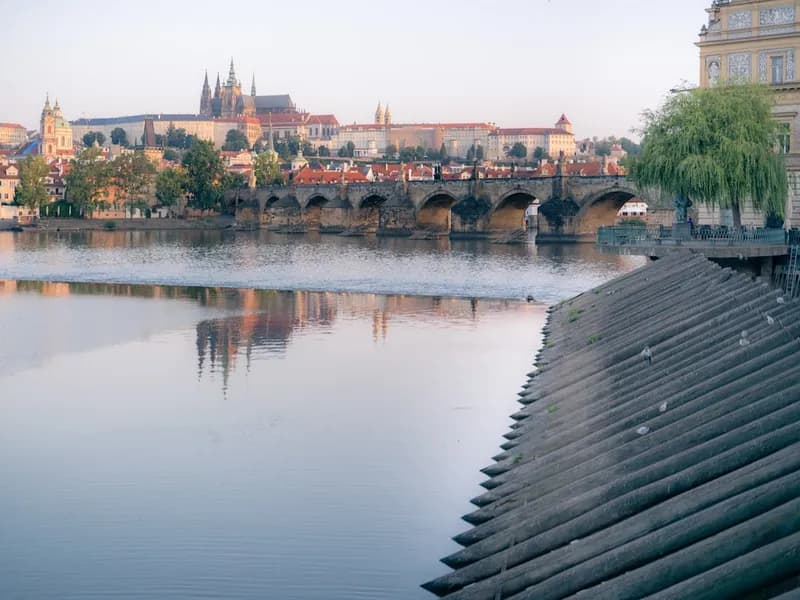
Few cities pack as much beauty into as small a space as Prague. From the Gothic sweep of Charles Bridge and the vast hilltop castle to the medieval theatre of the Astronomical Clock, the haunting Jewish Quarter and the green heights of Petřín and Vyšehrad, almost everything worth seeing is walkable and much of it is free. Here are the 18 attractions worth building your trip around, each with prices, opening hours and tips to dodge the crowds.
 Free
FreeCharles Bridge
Area
Old Town / Malá Strana
Category
Landmark
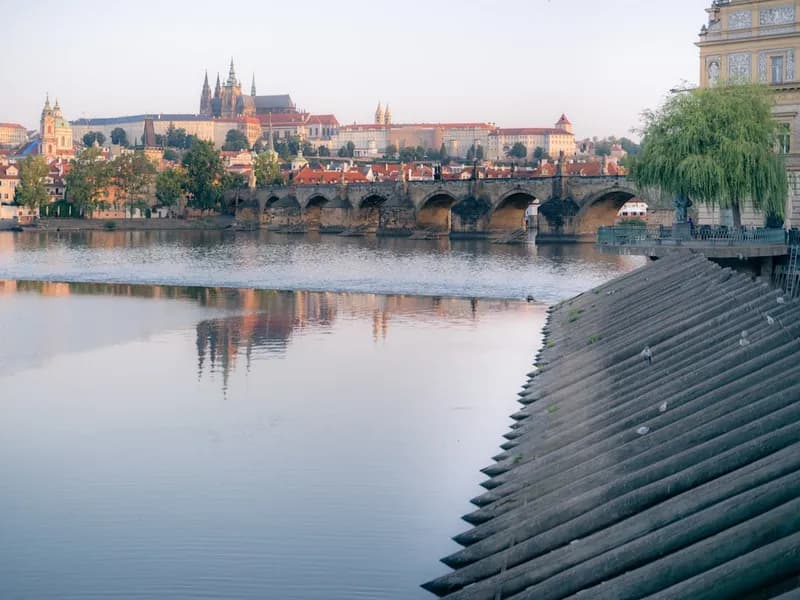
“Cross at 06:00 for a near-empty bridge and mist rising off the Vltava — the photo everyone wants.”
 450 Kč
Prague Castle
Area
Hradčany
Category
Castle Complex
“Buy the Circuit B ticket (cathedral, Old Royal Palace, St George's, Golden Lane) and skip the pricier full pass.”
 In castle ticket
St Vitus Cathedral
Area
Prague Castle
Category
Cathedral
“Find the Mucha stained-glass window in the north nave — its jewel-like colours are the interior highlight.”
 Free
FreeOld Town Square
Area
Old Town
Category
Square
“Climb the Old Town Hall tower for the best top-down view of the square and the twin Týn spires.”
 Free
FreeAstronomical Clock
Area
Old Town
Category
Landmark
“The hourly show is brief — stand back and watch the whole tower, then queue for the tower lift instead.”
 600 Kč
Jewish Quarter (Josefov)
Area
Josefov
Category
Historic District
“One combined ticket covers all six sites — start early at the Old-New Synagogue before groups arrive.”
 Free
FreeWenceslas Square
Area
New Town
Category
Square
“It's a boulevard, not a square — walk its length to the National Museum, then look back for the view.”
 Funicular 60 Kč
Petřín Hill & Tower
Area
Malá Strana
Category
Hill / Views
“Ride the funicular up and walk down through the orchards — magical when the cherry trees blossom in April.”
 150 Kč
Strahov Monastery
Area
Hradčany
Category
Monastery / Library
“The Theological and Philosophical Halls are viewed from the doorway — come off-peak to actually see in.”
 Free
FreeVyšehrad
Area
Vyšehrad
Category
Fortress / Park
“Go at sunset — the ramparts over the Vltava are the local's antidote to the Old Town crush.”
 Free (rooftop 200 Kč)
Dancing House
Area
New Town
Category
Architecture
“Skip the pricey restaurant — pay a small fee for the rooftop bar terrace for the same view and a good beer.”
 300 Kč
Klementinum
Area
Old Town
Category
Library / Tower
“Tours are timed and cap numbers — book the earliest slot online to guarantee the Baroque Library.”
 Free
FreeKampa Island
Area
Malá Strana
Category
Island / Park
“Find the crawling bronze babies by David Černý and the Lennon Wall a two-minute walk away.”
 290 Kč
National Museum
Area
New Town
Category
Museum
“Even if you skip the exhibits, step inside for the glorious marble Pantheon staircase and dome.”
 Show tickets vary
National Theatre
Area
New Town
Category
Theatre / Opera
“Cheap standing or upper-balcony seats to an opera or ballet cost less than a museum ticket — book ahead.”
 290 Kč
Mucha Museum
Area
New Town
Category
Art Museum
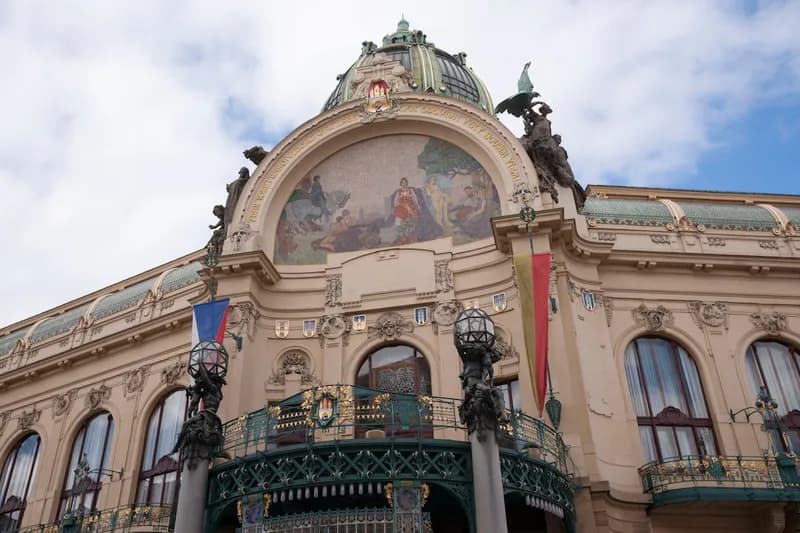
“Small but perfectly formed — 45 minutes is plenty; pair it with the Municipal House nearby.”
 330 Kč
Lobkowicz Palace
Area
Prague Castle
Category
Palace / Museum
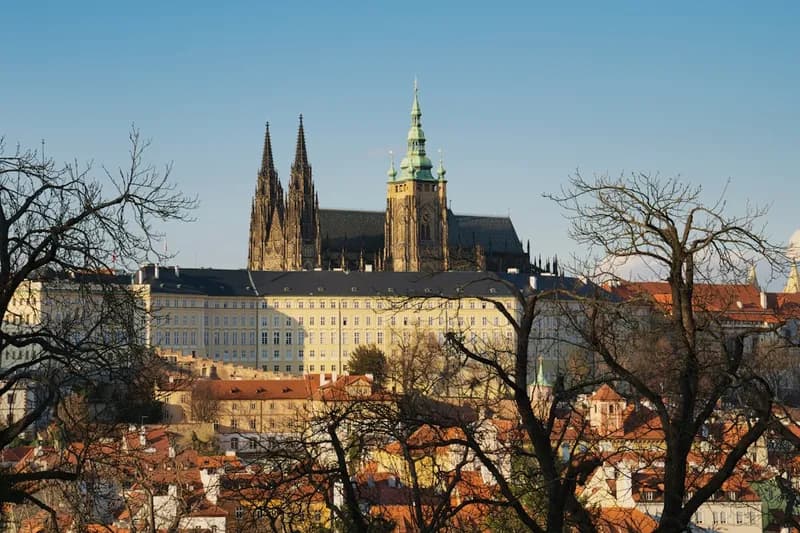
“The included audio guide, narrated by the family, is one of the best in Europe — don't rush it.”
Prague attractions in detail
1.Charles Bridge
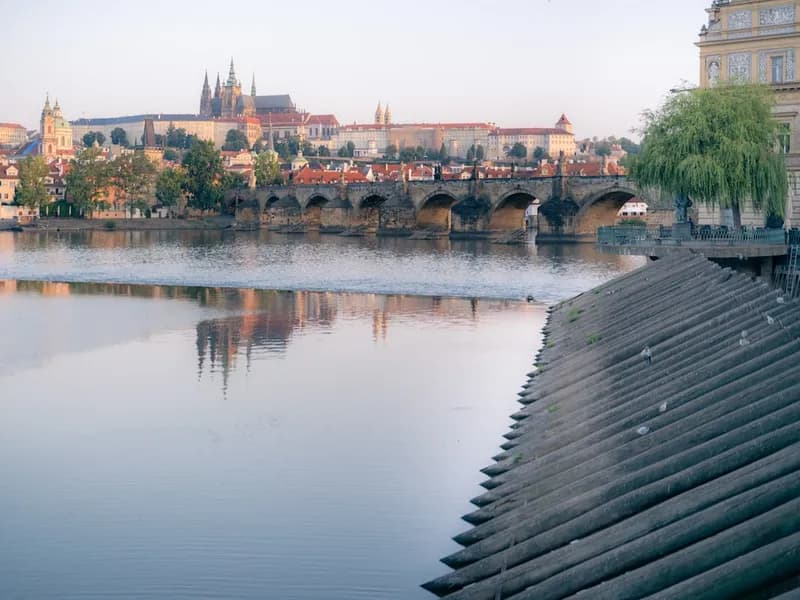
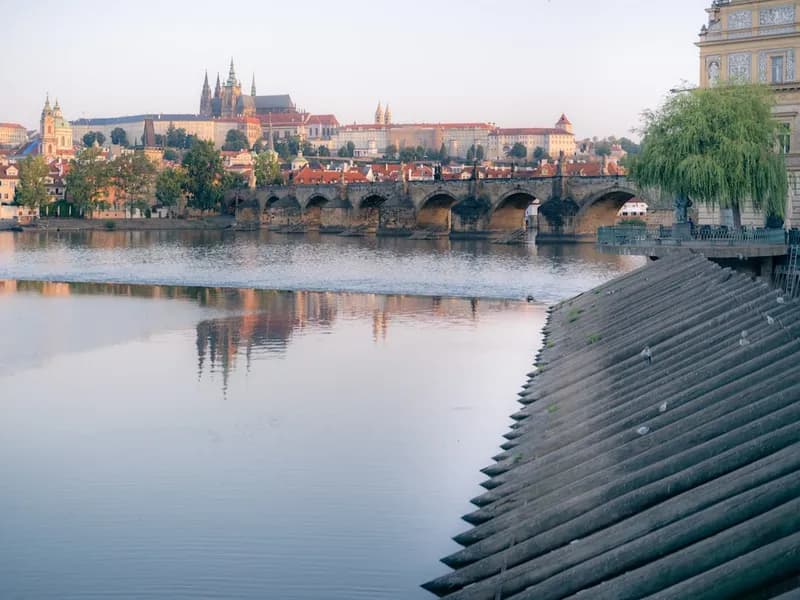
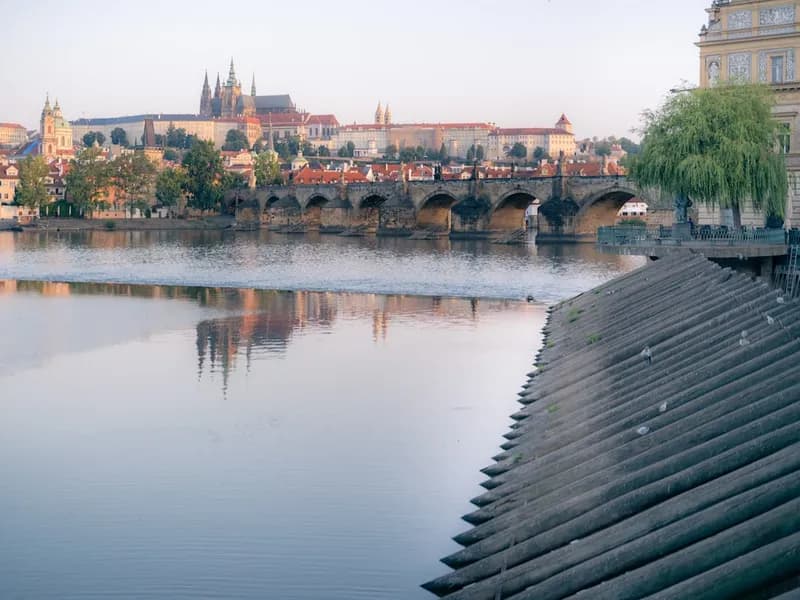
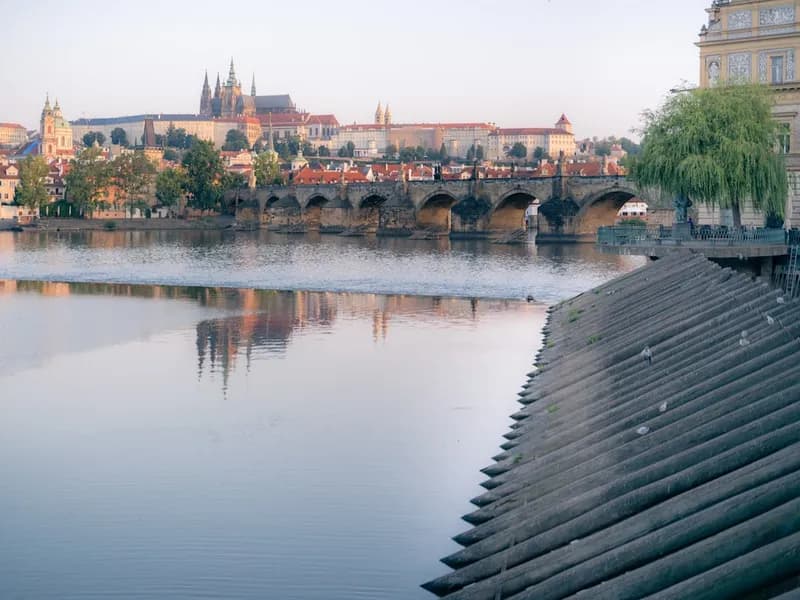
Charles Bridge (Karlův most) is the beating heart of Prague — a 516-metre Gothic bridge begun in 1357 under Emperor Charles IV, whose foundation stone was famously laid at 5:31am on the ninth of July to align an auspicious palindrome of odd numbers. Thirty baroque statues line the balustrades, the most touched being St John of Nepomuk, whose plaque is polished gold by superstitious visitors rubbing it for luck. By day the bridge is a riot of buskers, caricaturists and portrait painters; by dawn it belongs to photographers who come for the mist, the empty cobbles and the fairytale silhouette of Prague Castle rising beyond the Malá Strana bridge tower. Climb either of the two towers for a soaring view down the length of the span and across the red rooftops. Free to cross and open around the clock, it is the single walk that connects Old Town to the Castle district and defines the city's skyline in a hundred postcards.
Hours
Open 24/7; bridge towers ~10:00–18:00 (seasonal)
Price
Free to cross; each tower ~150 Kč
Getting there
Metro A to Staroměstská or Malostranská, then a 5-min walk; trams 2, 17, 18
Insider tip: Cross at 06:00 for a near-empty bridge and mist rising off the Vltava — the photo everyone wants.
2.Prague Castle
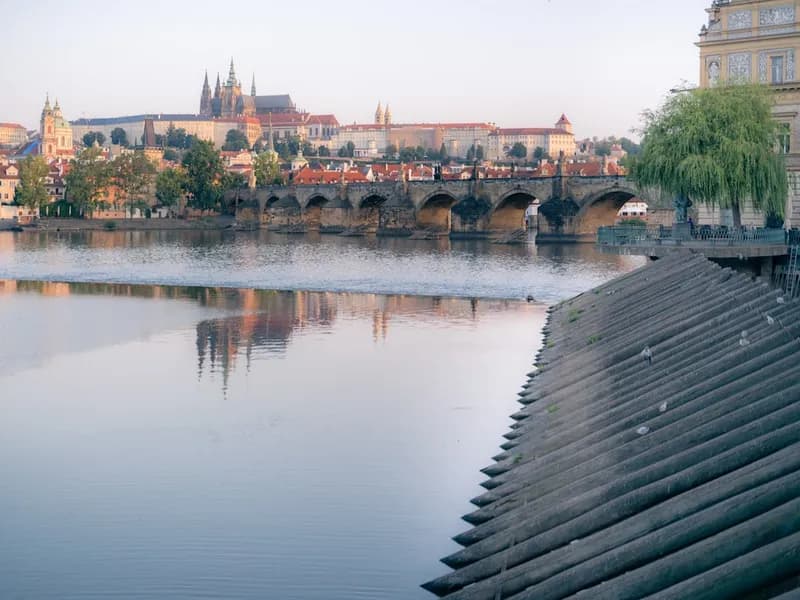
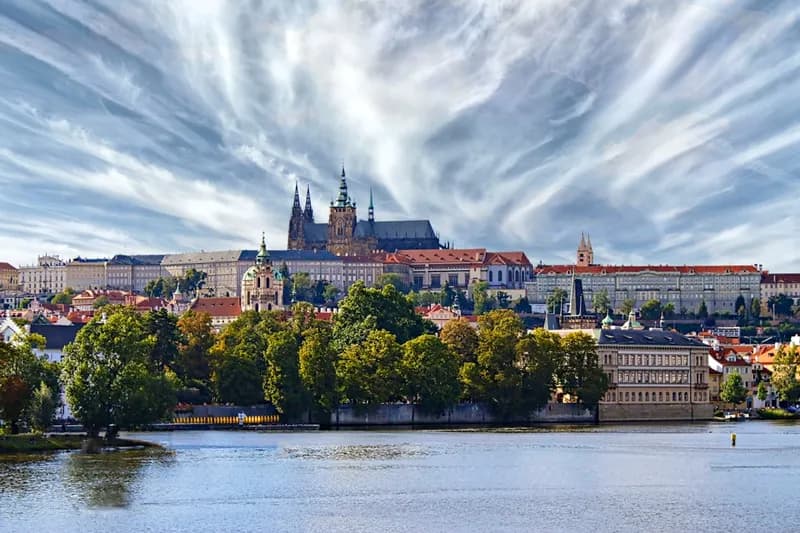
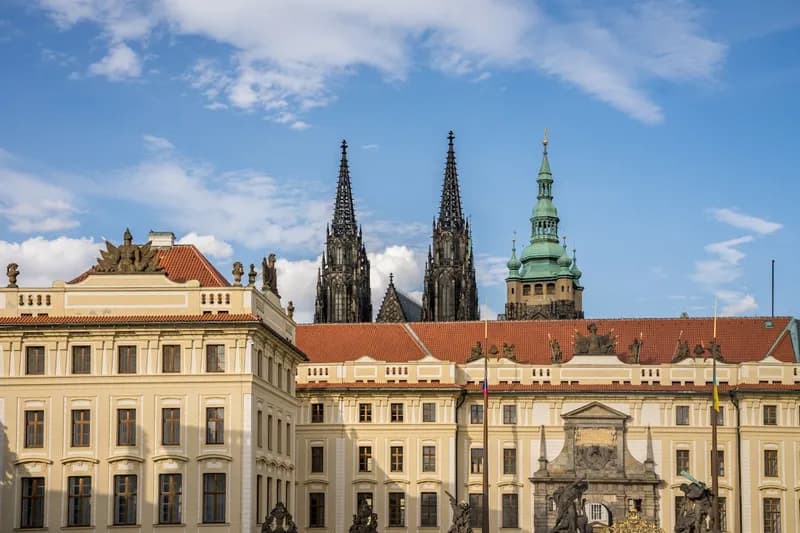
Sprawling across the Hradčany ridge, Prague Castle (Pražský hrad) is recognised by Guinness as the largest coherent castle complex on earth — nine hectares of courtyards, cathedrals, palaces and gardens that have been the seat of Bohemian kings, Holy Roman emperors and today's Czech president for over a thousand years. The dominant landmark is St Vitus Cathedral, but the paid circuit also takes in the Old Royal Palace with its cavernous Vladislav Hall, the Romanesque St George's Basilica, and Golden Lane, a row of tiny coloured cottages where Franz Kafka once wrote. Wander the grounds free of charge to catch the changing of the guard on the hour, or the grand ceremony with fanfare at noon. Allow at least half a day, arrive early to beat the tour groups pouring off the Charles Bridge, and pause at the southern gardens and terraces for one of the finest panoramas over the spires and river below. It is Prague's essential sight.
Hours
Grounds 06:00–22:00; buildings 09:00–17:00 (to 16:00 winter)
Price
Circuit ticket ~450 Kč; grounds free
Getting there
Metro A to Malostranská then tram 22 to Pražský hrad; or walk up from Charles Bridge
Insider tip: Buy the Circuit B ticket (cathedral, Old Royal Palace, St George's, Golden Lane) and skip the pricier full pass.
3.St Vitus Cathedral
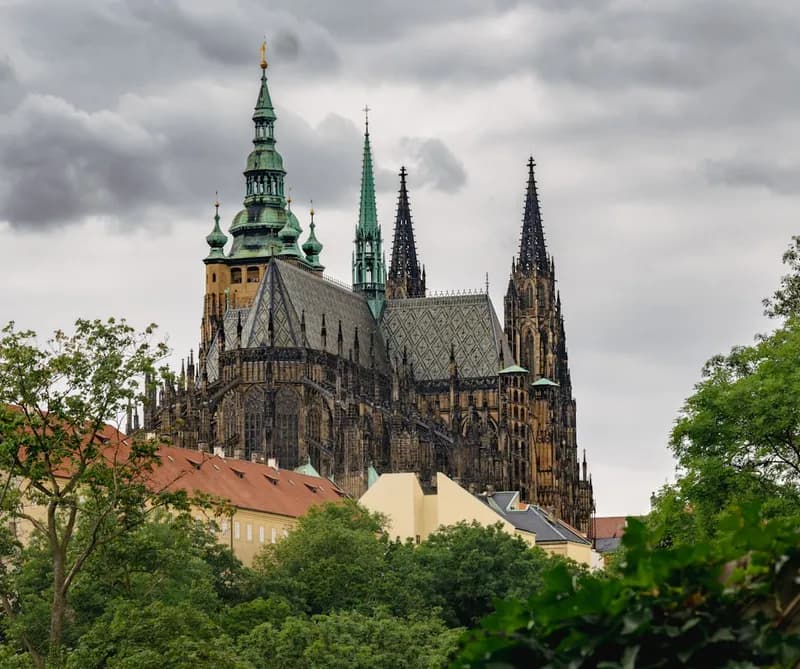
St Vitus Cathedral (Katedrála svatého Víta) is the spiritual and architectural summit of Prague Castle, a Gothic giant whose twin spires and great rose window dominate the skyline from across the city. Though founded in 1344, it was only completed in 1929, blending centuries of styles under one soaring nave. Inside, the light show belongs to the stained glass — above all the luminous Art Nouveau window by Alphonse Mucha, glowing in the third chapel of the north aisle. The cathedral guards the tomb of St Wenceslas in his own gem-encrusted chapel, the ornate silver monument to St John of Nepomuk, the royal crypt where Charles IV lies, and the chamber that holds the Bohemian crown jewels behind a door with seven locks. Climb the 287 steps of the Great South Tower for a heart-stopping panorama over the rooftops. Entry to the front section is free; the full interior comes with any castle circuit ticket, and it richly rewards the queue.
Hours
Mon–Sat 09:00–17:00, Sun 12:00–17:00 (to 16:00 winter)
Price
Included in Prague Castle circuit ~450 Kč; front section free
Getting there
Inside Prague Castle — tram 22 to Pražský hrad
Insider tip: Find the Mucha stained-glass window in the north nave — its jewel-like colours are the interior highlight.
4.Old Town Square
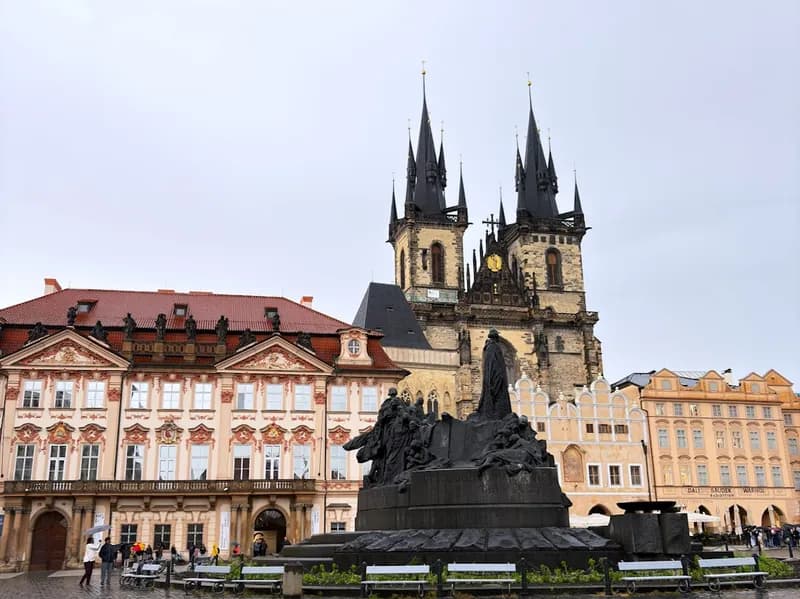
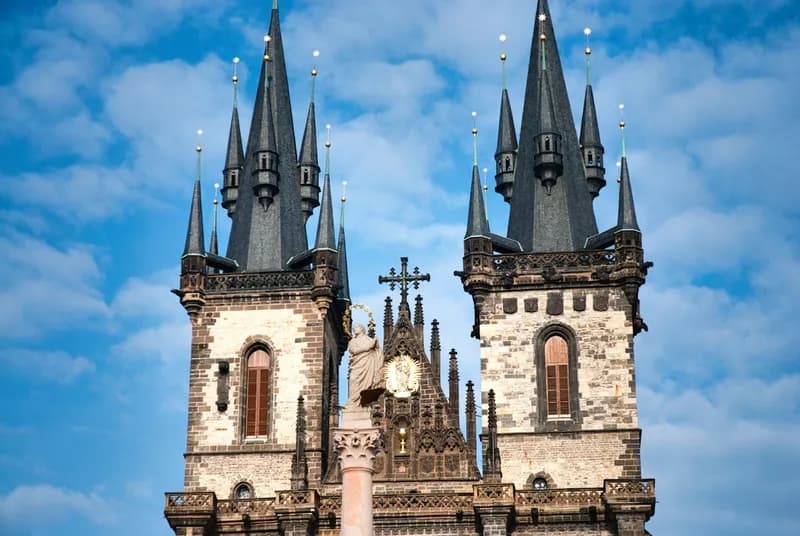
Staroměstské náměstí, the Old Town Square, has been the stage for Prague's history since the 12th century — a market place, a place of coronations and, in 1621, the execution of 27 Protestant nobles, marked by white crosses in the cobbles today. It is a glorious open-air museum ringed by pastel baroque and Gothic townhouses, the twin black spires of the Church of Our Lady before Týn spiking the skyline, the baroque St Nicholas Church, and the brooding Art Nouveau monument to religious reformer Jan Hus at its centre. Café terraces, horse-drawn carriages and, in winter, one of Europe's prettiest Christmas markets fill the space. The star turn is the medieval Astronomical Clock on the Old Town Hall, drawing crowds every hour. For the definitive view, ride the lift up the Old Town Hall tower and look down on the whole ensemble, the Týn towers close enough to touch. Free, central and endlessly photogenic, it is where almost every Prague visit begins.
Hours
Always open; tower ~09:00–21:00
Price
Free; Old Town Hall tower ~300 Kč
Getting there
Metro A to Staroměstská, 3-min walk; trams to Staroměstská
Insider tip: Climb the Old Town Hall tower for the best top-down view of the square and the twin Týn spires.
5.Astronomical Clock
The Prague Astronomical Clock (Pražský orloj), mounted on the south wall of the Old Town Hall, is the oldest astronomical clock still in operation, first installed in 1410. It is a marvel of medieval engineering and symbolism: the astronomical dial tracks the sun, moon and zodiac against a stylised earth, while the calendar dial below carries Josef Mánes' painted roundels of the months. On every hour, a small crowd gathers to watch the 'Walk of the Apostles', when two windows open and the twelve apostles parade past as a skeleton figure of Death tolls a bell and turns his hourglass, joined by allegorical figures of Vanity, Greed and the Turk. Legend holds that clockmaker Hanuš was blinded so he could never recreate it elsewhere. The spectacle itself lasts under a minute and can feel underwhelming, so the real reward is climbing the adjoining tower for sweeping views, or joining the guided tour into the clock's inner workings. Free to watch and pure medieval theatre, it remains one of Prague's unmissable set-pieces.
Hours
Hourly show 09:00–23:00; tower ~09:00–21:00
Price
Free to watch; tower + clock tour ~300 Kč
Getting there
On the Old Town Hall, Old Town Square — Metro A Staroměstská
Insider tip: The hourly show is brief — stand back and watch the whole tower, then queue for the tower lift instead.
6.Jewish Quarter (Josefov)
Josefov, the old Jewish quarter wedged between the Old Town Square and the river, tells one of the most moving stories in Prague. A Jewish community lived here for a thousand years, walled into a ghetto until the 19th century, and though the slums were cleared and rebuilt in grand Art Nouveau style around 1900, its historic synagogues survived — reputedly because the Nazis intended a 'museum of an extinct race'. The Jewish Museum's combined ticket unlocks six sites: the Gothic Old-New Synagogue of 1270, the oldest active synagogue in Europe and home to the golem legend; the Pinkas Synagogue, its walls inscribed with the names of nearly 78,000 Czech and Moravian Holocaust victims; the Spanish Synagogue's dazzling Moorish interior; and above all the Old Jewish Cemetery, where some 12,000 tumbled, moss-dark headstones stand crowded over as many as twelve layers of burials. Solemn, beautiful and essential, Josefov rewards a slow, respectful half-day and one of the city's most affecting museum tickets.
Hours
Sun–Fri 09:00–18:00 (to 16:30 winter); closed Sat & Jewish holidays
Price
Combined ticket ~600 Kč (500 Kč without Old-New Synagogue)
Getting there
Metro A to Staroměstská, 2-min walk north of Old Town Square
Insider tip: One combined ticket covers all six sites — start early at the Old-New Synagogue before groups arrive.
7.Wenceslas Square
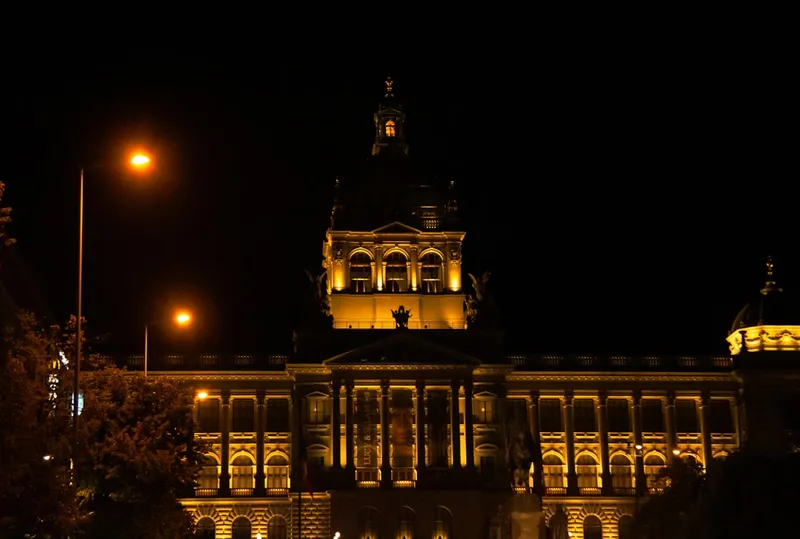
Wenceslas Square (Václavské náměstí) is less a square than a broad, 750-metre boulevard sloping up through the New Town, and it has been the stage on which modern Czech history has played out. Here crowds gathered to found Czechoslovakia in 1918, tanks rolled in during the 1968 Prague Spring, student Jan Palach set himself alight in protest in 1969, and hundreds of thousands jangled keys during the 1989 Velvet Revolution that ended communism. Today it is the city's commercial artery, lined with department stores, hotels, sausage stands, exchange booths and neon, buzzing day and night. At the top stands the imposing neo-Renaissance National Museum, and before it the mounted statue of St Wenceslas, the patron saint and the traditional meeting point ('under the horse'). It is livelier and grittier than the fairytale Old Town, and worth walking end to end for its Art Nouveau and functionalist façades, its history and its people-watching. Keep an eye on your belongings after dark, when the nightlife crowd takes over.
Hours
Always open
Price
Free
Getting there
Metro A/B Můstek at the bottom, Metro A/C Muzeum at the top
Insider tip: It's a boulevard, not a square — walk its length to the National Museum, then look back for the view.
8.Petřín Hill & Tower
Rising 130 metres above Malá Strana, Petřín is Prague's leafy escape — a hill of orchards, rose gardens and winding paths that locals climb for fresh air and city views. Its landmark is the Petřín Lookout Tower, a 63-metre steel spire built for the 1891 Jubilee Exhibition as a cheeky one-fifth-scale nod to the Eiffel Tower; its viewing gallery, reached by 299 steps or a lift, sits at roughly the same altitude as the top of the Paris original thanks to the hill beneath. Around it cluster the Mirror Maze in a mock-Gothic castle, the baroque St Lawrence Church, a rose garden and the Štefánik Observatory. The easy way up is the historic funicular from Újezd, covered by a standard city transport ticket; the reward at the top is a panorama sweeping over the whole red-roofed city, the castle and the river. In spring the blossoming cherry and apple trees make it Prague's most romantic spot. Come for sunset, then stroll back down through the gardens as the lights come on.
Hours
Park always open; tower 10:00–22:00 (seasonal)
Price
Funicular ~60 Kč (Lítačka ticket valid); tower ~220 Kč
Getting there
Tram 12, 15, 20, 22 to Újezd, then the Petřín funicular to the top
Insider tip: Ride the funicular up and walk down through the orchards — magical when the cherry trees blossom in April.
9.Strahov Monastery
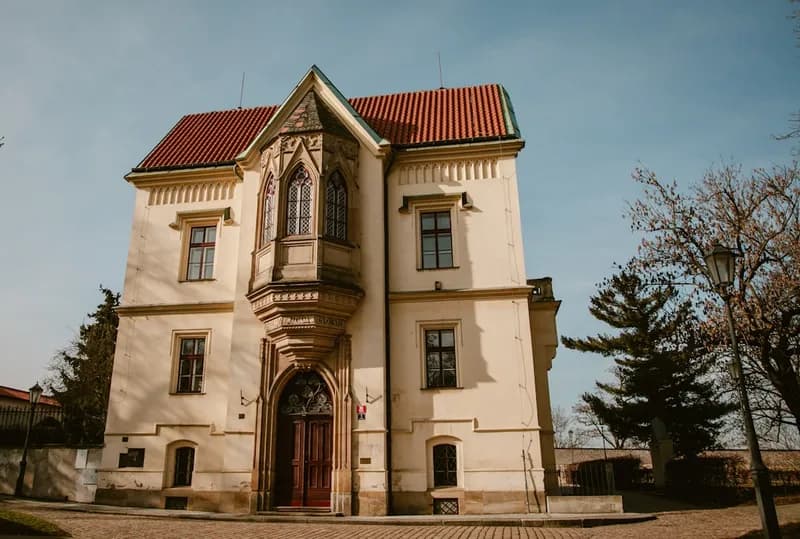
Perched on the hill above Prague Castle, Strahov Monastery (Strahovský klášter) has been home to the Premonstratensian order since 1143, and its glory is one of the most beautiful monastic libraries in the world. Two ornate baroque halls hold some 200,000 volumes: the Theological Hall of 1679, with its stuccoed vaulted ceiling and antique globes, and the taller Philosophical Hall of the 1790s, whose sweeping walnut shelving rises two storeys beneath a vast fresco of the intellectual progress of mankind. To protect the interiors, visitors view both from the doorways, so arrive off-peak to linger. The complex also includes a cabinet of curiosities, the Strahov Picture Gallery and the Basilica of the Assumption, where Mozart is said to have played the organ. Just outside, the monastery's own brewery pours excellent dark lager on a terrace with a sweeping view over the city. Combine it with neighbouring Loreta and the castle for a rewarding high-Hradčany morning away from the densest crowds below.
Hours
Library 09:00–17:00 (closed 12:00–13:00)
Price
Library ~150 Kč; photo permit ~50 Kč
Getting there
Tram 22 to Pohořelec, then a short walk above Prague Castle
Insider tip: The Theological and Philosophical Halls are viewed from the doorway — come off-peak to actually see in.
10.Vyšehrad
Vyšehrad is where Prague began — or so legend says, for this rocky hilltop fort above the Vltava is the mythic seat of Princess Libuše, who is said to have prophesied the city's glory. Today it is a tranquil, largely free park that locals treasure precisely because the tour buses miss it. Within the star-shaped baroque ramparts stand the twin-spired neo-Gothic Basilica of St Peter and St Paul, the small Romanesque Rotunda of St Martin (one of Prague's oldest buildings), and the atmospheric Vyšehrad Cemetery, where the nation buries its greats — composers Dvořák and Smetana, artist Alfons Mucha and writer Karel Čapek all lie here beneath the Slavín monument. The real draw, though, is the walk along the fortifications, with wide-open views over the river bend, the distant castle and the red rooftops, best of all at golden hour with a beer from the park kiosk. Peaceful, historic and refreshingly uncrowded, Vyšehrad is the perfect half-day counterpoint to central Prague's bustle.
Hours
Grounds always open; casemates & sights ~09:30–18:00
Price
Grounds free; basilica & casemates ~90 Kč each
Getting there
Metro C to Vyšehrad, then a 10-min walk; or tram 3, 7, 17 to Výtoň and climb up
Insider tip: Go at sunset — the ramparts over the Vltava are the local's antidote to the Old Town crush.
11.Dancing House
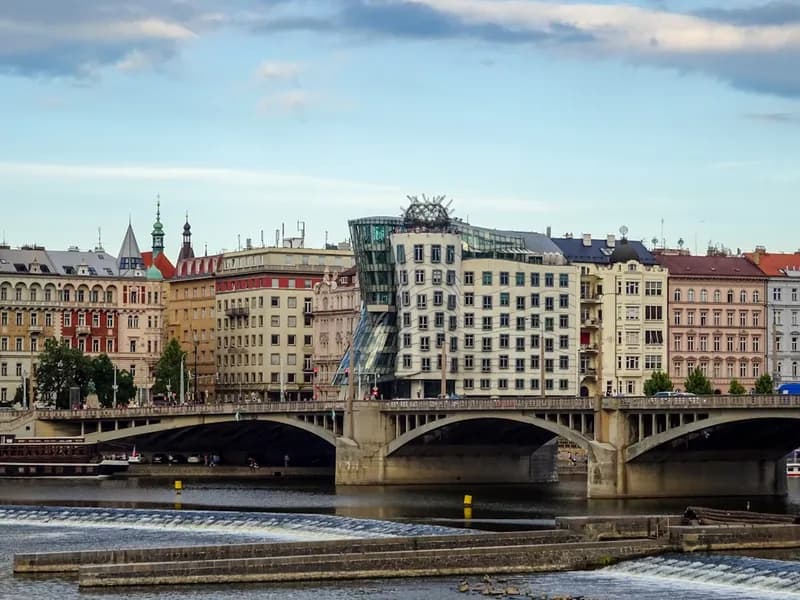
The Dancing House (Tančící dům) is Prague's most famous piece of modern architecture, a deconstructivist landmark completed in 1996 on a riverfront plot left empty since American bombs fell in 1945. Designed by Croatian-Czech architect Vlado Milunić with Canadian starchitect Frank Gehry, its two towers — one a rigid stone cylinder, the other a flared glass form that seems to sway and lean into its partner — earned the nickname 'Fred and Ginger' after the dancing duo Astaire and Rogers. Its curving, twisting silhouette caused fierce controversy among traditionalists when it went up amid the baroque and Art Nouveau facades, but it has since become a beloved symbol of post-communist optimism. The interior houses offices and a hotel, but visitors can ride to the Glass Bar rooftop terrace for a sweeping view over the Vltava to the castle, ideally with a cocktail at sunset. It sits a pleasant 15-minute riverside walk south of the National Theatre and pairs naturally with a stroll along the embankment. A quick but rewarding stop for design fans.
Hours
Exterior always visible; rooftop bar ~10:00–22:00
Price
Free to view; rooftop terrace ~200 Kč (often redeemable)
Getting there
Tram 17 to Jiráskovo náměstí; Metro B to Karlovo náměstí, 5-min walk
Insider tip: Skip the pricey restaurant — pay a small fee for the rooftop bar terrace for the same view and a good beer.
12.Klementinum
Hidden behind unassuming walls between the Old Town Square and Charles Bridge, the Klementinum is one of the largest historic building complexes in Europe — a former Jesuit college founded in 1556 that grew into a city within the city. Its showpiece, seen only on a timed guided tour, is the Baroque Library Hall of 1722, a breathtaking gilded chamber lined with ancient globes and crowned by a ceiling fresco celebrating knowledge and the pursuit of wisdom; it is regularly named among the most beautiful libraries in the world. The same tour climbs the 68-metre Astronomical Tower, once a working observatory where the accurate 'Prague time' was signalled to the city, for a superb 360-degree panorama over the Old Town rooftops and river. You also glimpse the Baroque Mozart Hall, where the composer performed. Because numbers are strictly limited and the library so sought-after, tickets sell out, so book the first tour of the day online. Compact yet astonishing, the Klementinum is Prague's best-kept grand secret.
Hours
Guided tours daily ~10:00–17:30 (seasonal)
Price
Guided tour ~300 Kč (library, tower, chapel)
Getting there
Metro A to Staroměstská; entrance beside the Charles Bridge approach
Insider tip: Tours are timed and cap numbers — book the earliest slot online to guarantee the Baroque Library.
13.Kampa Island
Kampa is a serene islet on the Malá Strana bank of the Vltava, separated from the mainland by the narrow Čertovka canal — a picturesque channel once lined with working watermills that has earned the corner the nickname 'Prague's Venice'. Reached by a set of stairs directly from Charles Bridge, it feels a world away from the crowds just metres above. Its grassy riverside park is a favourite local spot for a picnic with an uninterrupted view across the water to the Old Town spires. The handsome Sova's Mills building houses the Kampa Museum of modern Central European art, outside which sculptor David Černý's faceless bronze babies famously crawl across the lawn. Cobbled Kampa Square, with its old townhouses and cafés, is one of the prettiest in the city, and the artist John Lennon Wall — a riot of ever-changing peace-and-love graffiti — sits just around the corner. Free, leafy and low-key, Kampa is the perfect place to slow down between the bridge and the castle, ideally at dusk.
Hours
Park always open; Kampa Museum 10:00–18:00
Price
Park free; Kampa Museum ~350 Kč
Getting there
Steps down from Charles Bridge, or tram 12, 15, 20, 22 to Malostranské náměstí
Insider tip: Find the crawling bronze babies by David Černý and the Lennon Wall a two-minute walk away.
14.National Museum
Presiding over the top of Wenceslas Square, the National Museum (Národní muzeum) is the grandest cultural institution in the country, its monumental neo-Renaissance façade of 1891 a landmark in its own right. A seven-year, painstaking renovation, completed in 2018, restored its soaring interiors to full splendour, and for many visitors the building outshines the collections: the ceremonial marble staircase, the domed Pantheon lined with statues and busts of Czech national heroes, and the glass-ceilinged halls are simply magnificent. The exhibits range across natural history — a much-loved hall of skeletons, minerals and taxidermy — and Czech history, archaeology and culture, with a newly built underground passage connecting to the modern New Building next door. Look closely at the sandstone façade and you can still spot repaired scars from Warsaw Pact bullets fired in the 1968 invasion, when soldiers mistook the museum for the radio building. Good for a rainy afternoon and a must for architecture lovers, it is worth the entry for the interiors alone, and children enjoy the natural-history halls.
Hours
Daily 10:00–18:00
Price
Main building ~290 Kč; combined tickets available
Getting there
Metro A/C to Muzeum, at the top of Wenceslas Square
Insider tip: Even if you skip the exhibits, step inside for the glorious marble Pantheon staircase and dome.
15.National Theatre
The National Theatre (Národní divadlo) is a symbol of Czech identity, funded entirely by public donation in the 19th century as a proud statement that a small nation could sustain its own high culture. Its gilded roof, riverside dome and richly decorated neo-Renaissance interior make it one of Prague's most beautiful buildings, and there is a stirring backstory: when the newly opened theatre burned down in 1881, Czechs raised the money to rebuild it within two years. Inside, the auditorium is a jewel-box of frescoes, sculpture and a famous painted curtain by Vojtěch Hynais, all created by a generation of artists known as the 'National Theatre generation'. It remains a working stage for opera, ballet and drama, and attending a performance is one of the most atmospheric — and surprisingly affordable — things to do in the city, with upper-tier and standing tickets often costing less than a casual dinner. Even without a show, the exterior and its riverside setting near the Legion Bridge are well worth the walk, especially when floodlit after dark.
Hours
Box office daily; performances most evenings
Price
Tickets from ~200 Kč (upper tiers) to 1,000+ Kč
Getting there
Tram 2, 17, 18 to Národní divadlo; Metro B to Národní třída
Insider tip: Cheap standing or upper-balcony seats to an opera or ballet cost less than a museum ticket — book ahead.
16.Mucha Museum
The Mucha Museum is a small, elegant tribute to Alphonse Mucha (1860–1939), the Moravian-born artist who became the defining figure of the Art Nouveau movement in belle-époque Paris. His instantly recognisable style — willowy women wreathed in flowers, flowing hair and jewel-toned pastel palettes — first exploded into fame with his theatre posters for the actress Sarah Bernhardt, several of which star here alongside decorative panels, sketches, personal photographs and mementoes. The collection also nods to his patriotic later life and the monumental Slav Epic, the vast cycle of national-history canvases that was his masterwork. Occupying a Baroque palace just off Wenceslas Square, the museum is compact enough to enjoy in under an hour, making it an easy, rewarding stop for anyone drawn to the graphic art that colours so much of Prague's Art Nouveau architecture. The gift shop is one of the city's best for tasteful prints and souvenirs. Combine it with the Municipal House, whose interiors Mucha helped decorate, for a full Art Nouveau afternoon.
Hours
Daily 10:00–18:00
Price
~290 Kč
Getting there
Metro A/B to Můstek, 5-min walk; near Wenceslas Square
Insider tip: Small but perfectly formed — 45 minutes is plenty; pair it with the Municipal House nearby.
17.Lobkowicz Palace
Tucked into the eastern end of Prague Castle, Lobkowicz Palace is the only privately owned building in the complex, restored and opened by the aristocratic Lobkowicz family after their property was seized twice in the 20th century — first by the Nazis, then by the communists — and returned only after 1989. The result is a wonderfully personal museum: a 700-year-old family's collection of paintings by Canaletto, Bruegel the Elder and Velázquez, priceless musical manuscripts annotated by Beethoven and Mozart (the family were great patrons), decorative arts, arms and armour, and portraits that tell the story of Central European history through one dynasty. The superb audio guide, narrated by family members themselves, brings it all warmly to life. The Baroque concert hall hosts a daily lunchtime classical recital, and the café terrace offers one of the finest views in the city, straight out over the red rooftops and river below. Quieter and more intimate than the castle's blockbuster sights, it is a rewarding stop that many visitors miss.
Hours
Daily 10:00–18:00
Price
~330 Kč (includes audio guide)
Getting there
Inside Prague Castle's eastern end — tram 22 to Pražský hrad
Insider tip: The included audio guide, narrated by the family, is one of the best in Europe — don't rush it.