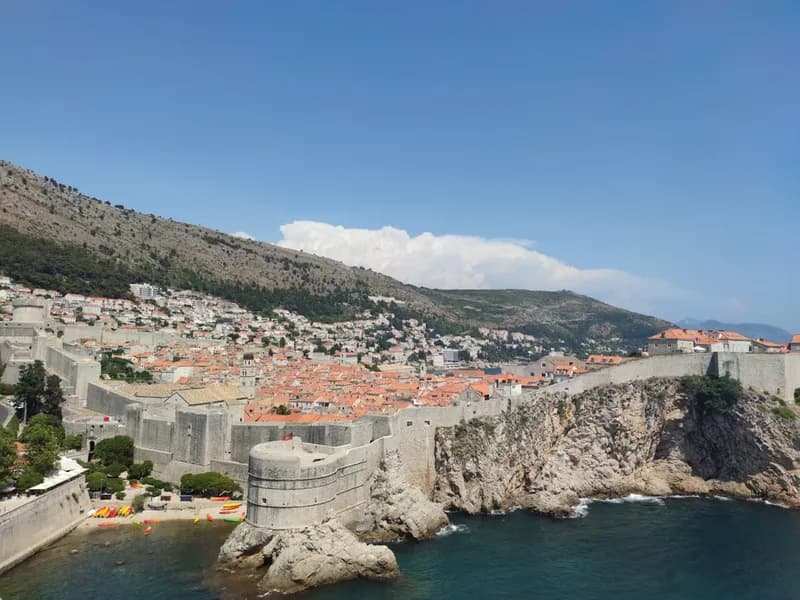
Few cities pack so much into so small a space. Dubrovnik's entire Old Town is a car-free UNESCO masterpiece ringed by the most complete medieval walls in Europe, with red-roofed palaces, Baroque churches and cliff-top forts inside, a cable car and a green island just beyond, and Game of Thrones scenes around every corner. Here are the 20 attractions worth building your trip around, with prices, opening hours and tips to dodge the cruise-ship crowds.
 €35
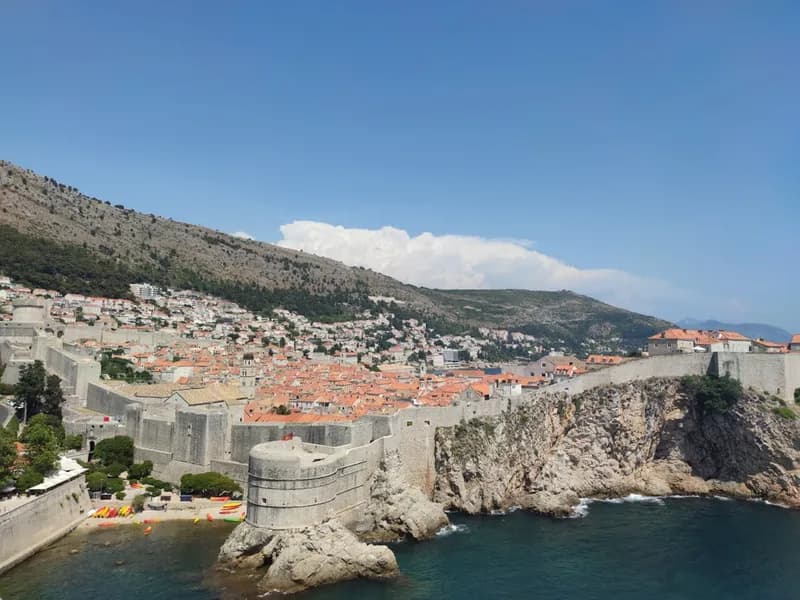
€35Old Town Walls (Zidine)
Area
Old Town
Category
City Walls
“1,940 m around the city, 25 m high — allow 1.5 hours anticlockwise. Walk at 09:00 opening or after 16:00 to dodge the 11:00–15:00 cruise-ship rush.”
 Free
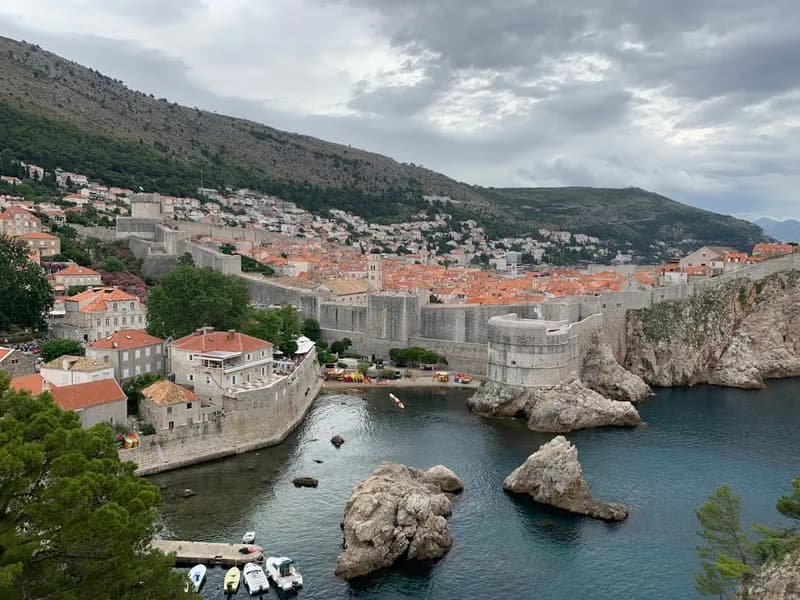
FreeStradun (Placa)
Area
Old Town
Category
Historic Street
“300 m of limestone, completely car-free and polished mirror-smooth by millions of feet. Walk the full length at sunset when the stone turns gold; the evening 'korzo' stroll (19:00–21:00) is a local tradition.”
 €35
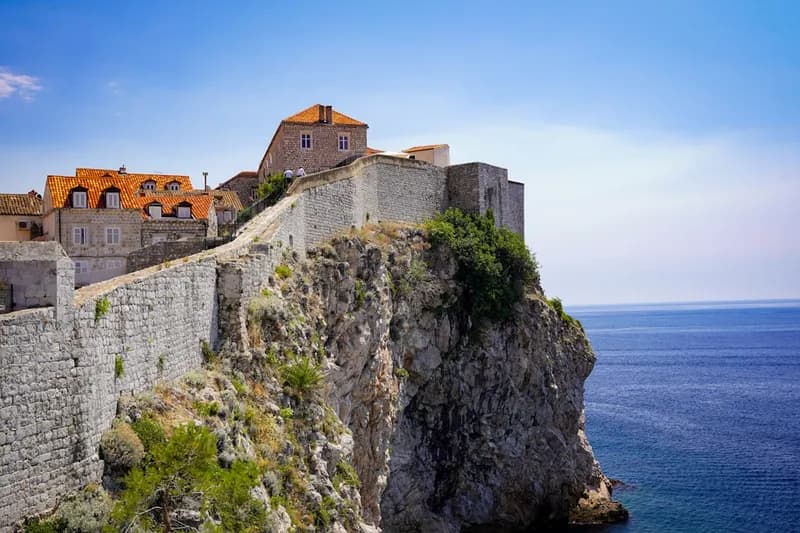
€35Fort Lovrijenac
Area
Pile Gate
Category
Fortress
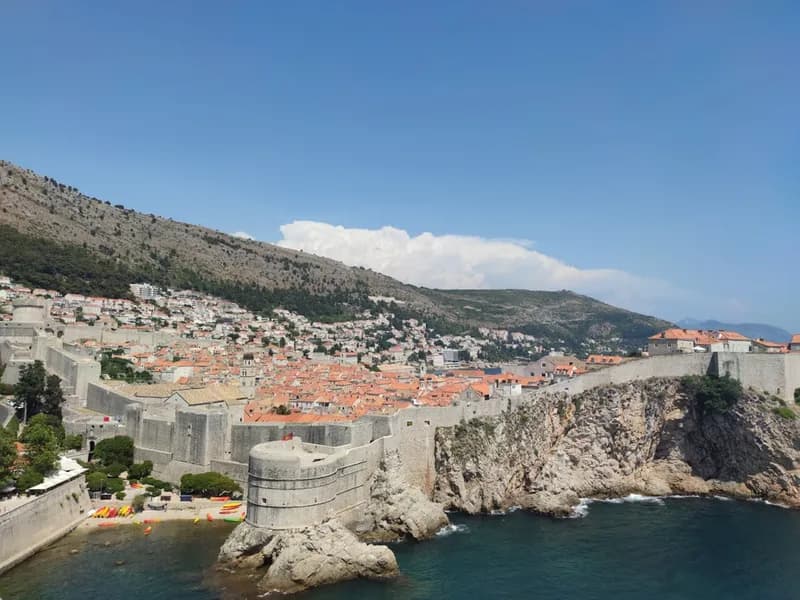
“Called 'Dubrovnik's Gibraltar' — a 37 m cliff straight over the sea. Entry is free if you already hold the €35 city-walls ticket. The inscription above the gate: 'Non bene pro toto libertas venditur auro'.”
 €35
€35Minčeta Tower
Area
Old Town
Category
City Walls
“The highest point of the whole wall ring — perfect for the panoramic shot. Game of Thrones fans will recognise it as the House of the Undying in Qarth (season 2).”
 €27
€27Srđ Cable Car
Area
Srđ
Category
Cable Car
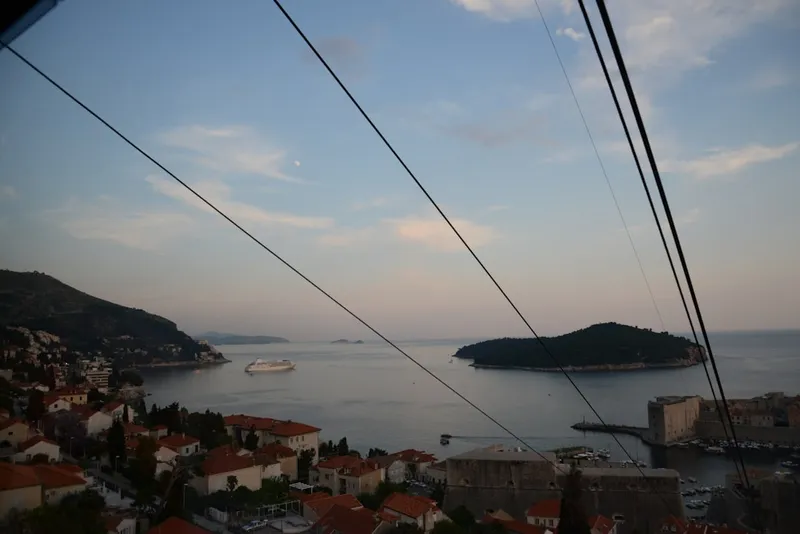
“It lifts you 778 m in 4 minutes. Last car down is around 19:00 in summer — buy a return, go up 30 minutes before sunset and stay for the golden light over the Old Town.”
 €15
€15Rector's Palace (Knežev dvor)
Area
Old Town
Category
Palace / Museum
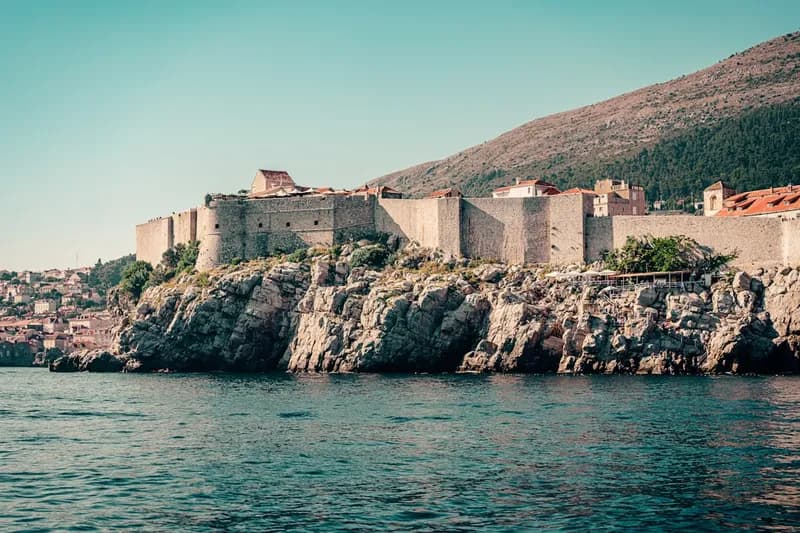
“The rector's term lasted just one month to prevent corruption — and during it he literally could not leave the palace. Today it's the Cultural-History Museum, with atrium concerts during the summer festival.”
 €6
€6Franciscan Monastery (Mala Braća)
Area
Pile Gate
Category
Monastery
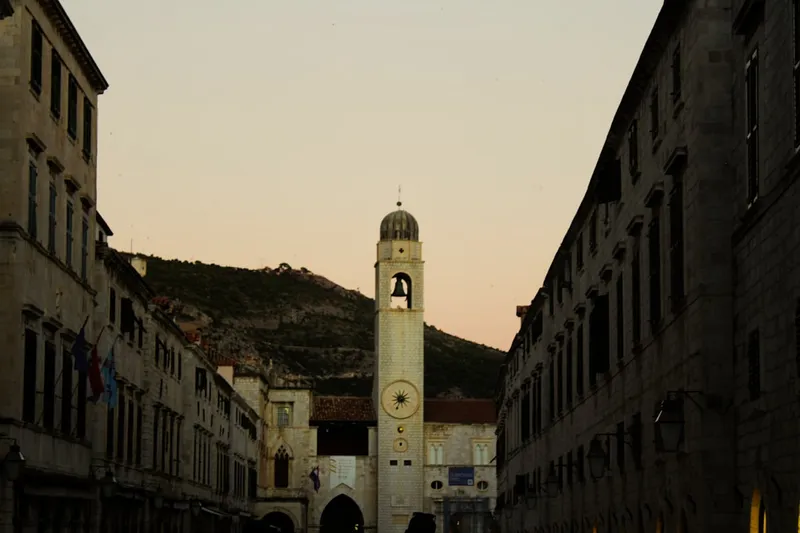
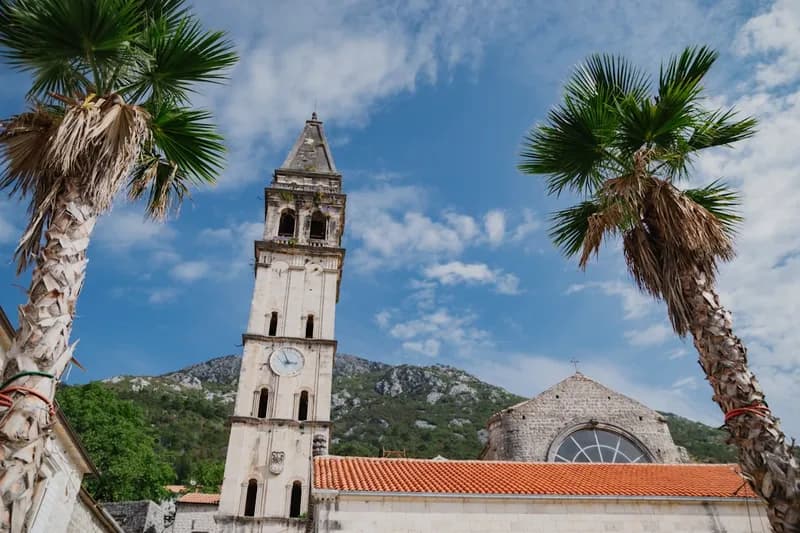
“Mala Braća — Europe's third-oldest pharmacy (after Estepa in Spain and Tallinn in Estonia), continuously operating since 1317. The cloister garden with its double-columned arcade is a calm oasis; enter from Stradun just inside Pile Gate.”
 €5
€5Dominican Monastery
Area
Ploče Gate
Category
Monastery
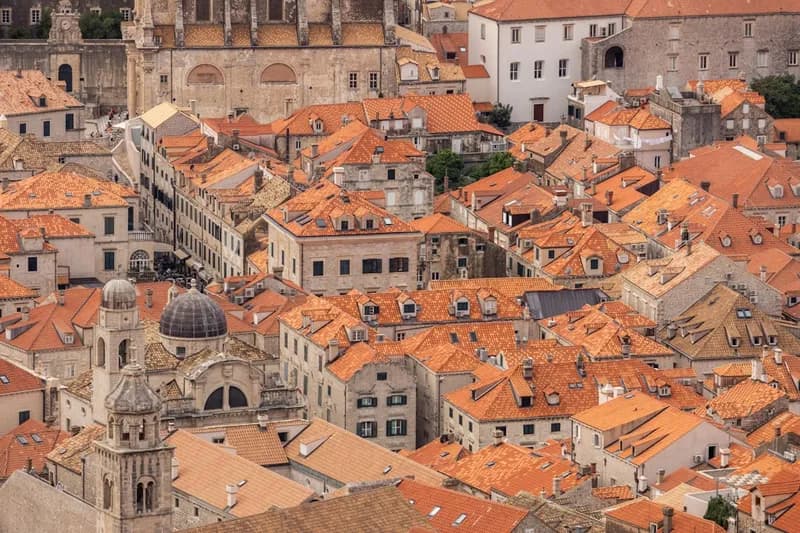
“A 14th-century monastery at the Ploče end of Stradun. The art collection holds a Titian, a Nikola Božidarević triptych and one of Croatia's most important collections of 15th- and 16th-century altarpieces.”
 Free
FreeDubrovnik Cathedral
Area
Old Town
Category
Cathedral
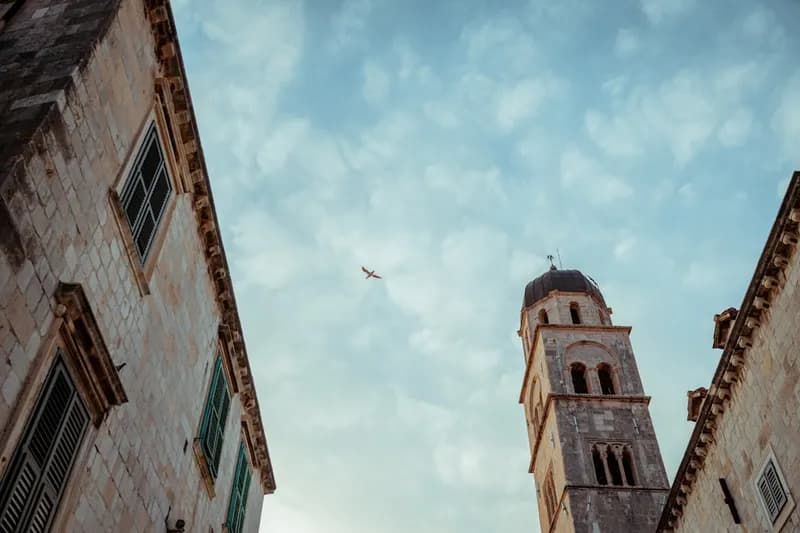
“The original church was funded in 1192 by Richard the Lionheart after he survived a shipwreck on Lokrum, sailing home from the Third Crusade. The current Baroque building dates from 1672; the treasury holds one of Europe's most important relic collections.”
 €12
€12War Photo Limited
Area
Old Town
Category
Museum
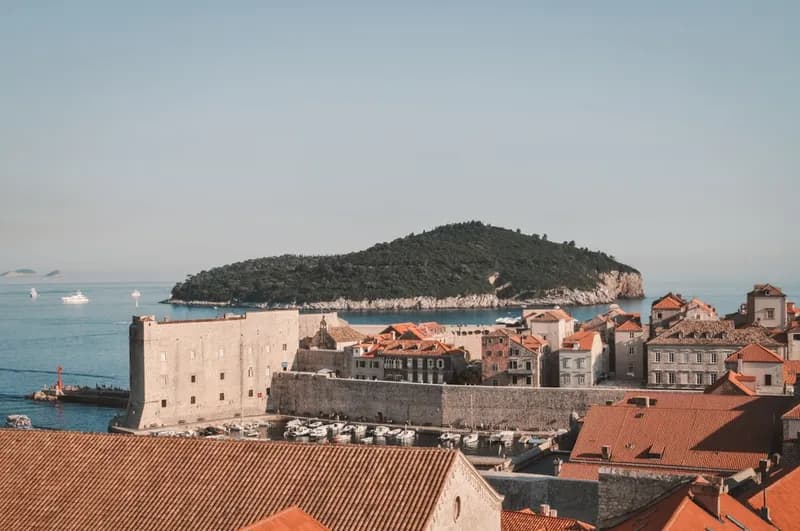
“An internationally respected photojournalism museum — a permanent exhibition on the Yugoslav Wars 1991–95 (including the siege of Dubrovnik) plus rotating shows from Syria, Ukraine and other conflicts. Not for sensitive eyes, but one of the Old Town's most important museums.”
 €8
€8Ethnographic Museum (Rupe)
Area
Old Town
Category
Museum
“Housed in the 16th-century Rupe grain silos — 15 underground limestone chambers where the Republic stored emergency supplies for a 15-month siege. Folk costumes from Konavle and Pelješac, plus an architecturally fascinating building.”
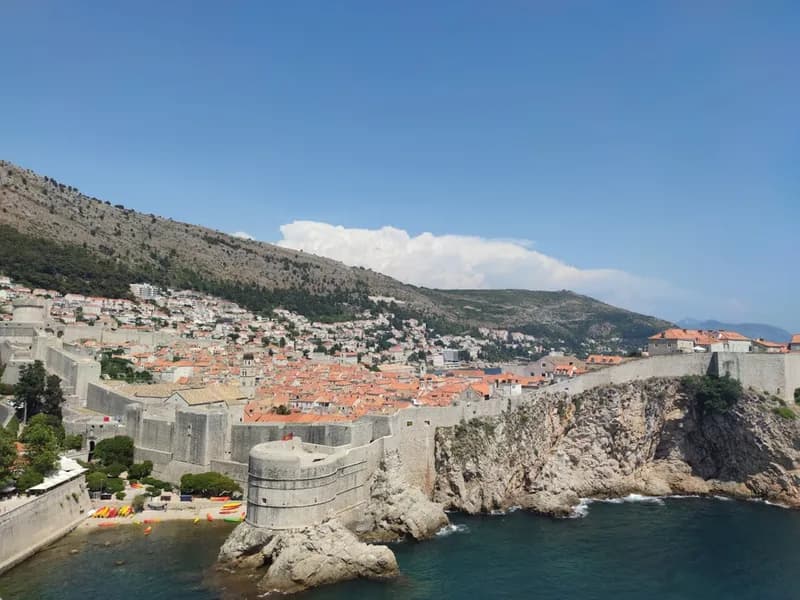 €8
€8Homeland War Bunker (Ploče)
Area
Old Town
Category
Museum
“An authentic shelter from the Yugoslav army's 1991–92 siege — sound recordings of the shelling, photos of the 56% of Old Town roofs that were smashed, and documentation of the rebuilding.”
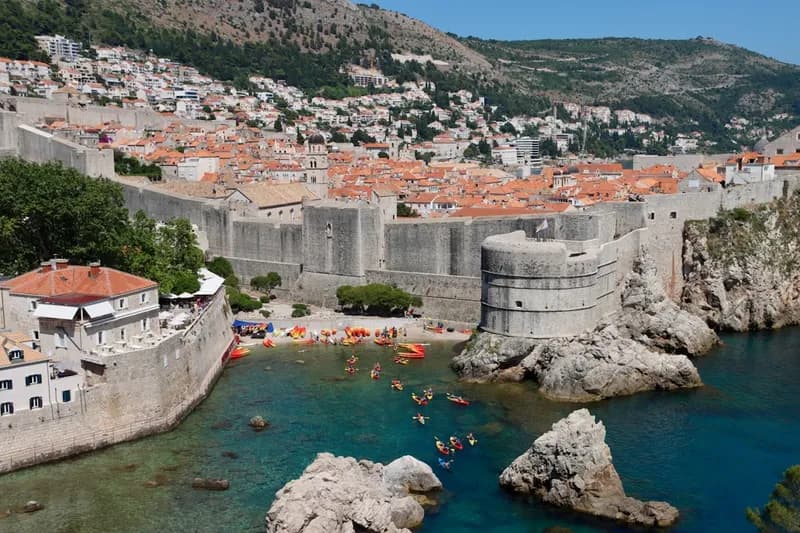 Free
FreeBanje Beach
Area
Ploče Gate
Category
Beach
“The city's closest beach, just 3 minutes from Ploče Gate. A free public zone runs along the eastern end — the East West Beach Club charges €25 for a lounger and parasol but adds towels, a restaurant and clean toilets. The view is straight at the Old Town walls.”
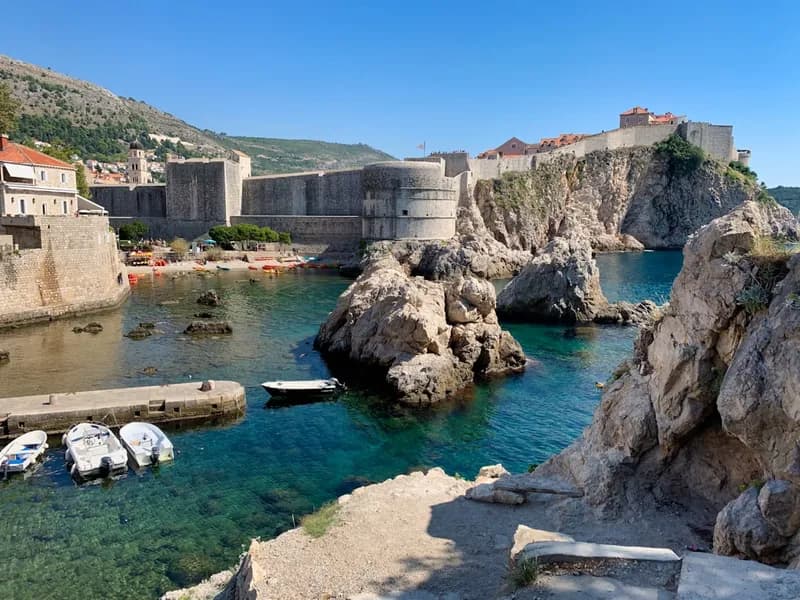 Free
FreeOld Town Harbour
Area
Old Town
Category
Harbour
“A maritime harbour with fishing boats, kayak hire (€25/3h), sunset cruises (€25 pp incl. a drink) and the Lokrum ferry. The Ploče Gate entrance is beautiful — walk around St John Fortress to the pier.”
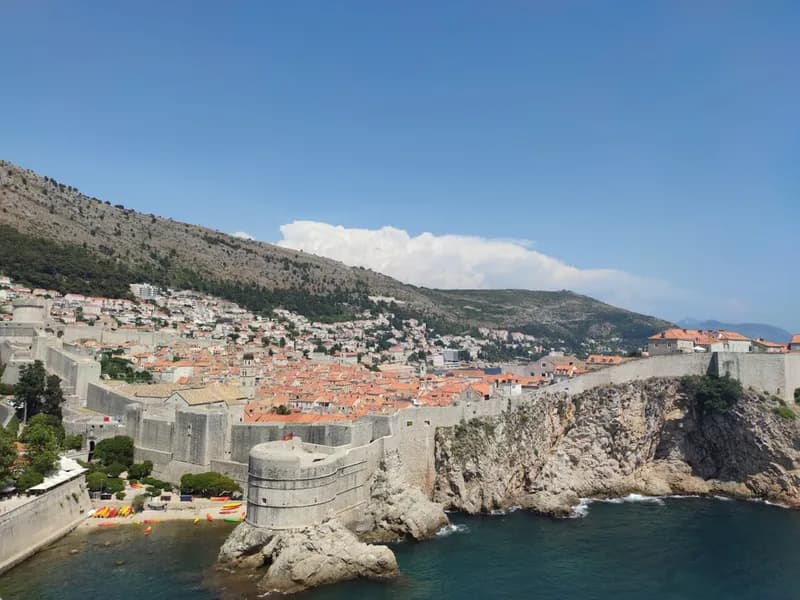 €6–8
€6–8Buža Bar
Area
Old Town
Category
Cliff Bar
“A hole-in-the-wall bar — literally: you walk through a hole in the city wall out to cliff terraces above the sea. 'Buža' means hole in Croatian. There are two, Buža I (more rustic) and Buža II (larger). A sunset drink here is compulsory.”
 €30–50
Game of Thrones Locations
Area
Old Town
Category
Tour
“Dubrovnik was King's Landing for the whole series. The Iron Throne prop is in Lovrijenac, Cersei's walk of shame was filmed on the Jesuit Steps, and a guided 2-hour tour (€30–50 pp) links all the main spots.”
 €27
€27Lokrum Island
Area
Lokrum (10 min by boat)
Category
Island
“Just 600 m from the Old Town Harbour; the boat takes 10 minutes and runs every 30 minutes. Highlights: the 1023 Benedictine monastery, the GoT garden with a sittable Iron Throne replica, the salt lake for swimming, and wild peacocks everywhere.”
 €60
€60Elafiti Islands
Area
Elafiti (1h by boat)
Category
Island Day Trip
“Three islands — Koločep, Lopud and Šipan — all car-free. Full-day tours leave Gruž harbour at 09:00, cost €60 pp with lunch aboard, and stop to swim at all three. Or take the scheduled Jadrolinija ferry if you want to overnight on Lopud.”
 €6
€6Cavtat
Area
Cavtat (15 km S)
Category
Coastal Town
“A calm coastal town 15 km south, 30 minutes on bus 10 from Pile Gate. The Vlaho Bukovac art museum (€5), a walk around the peninsula, swimming coves and taverns at half the Old Town's prices.”
 €50–100
Kotor (Montenegro)
Area
Kotor, Montenegro (2.5h)
Category
Day Trip
“90 km south across the border into Montenegro — the UNESCO-listed Bay of Kotor and its medieval town. Bring your passport (even EU citizens must show ID). A full-day tour is €50–100 pp; leave early (07:00–08:00) as border queues can be 1–2 hours in high season.”
Dubrovnik attractions in detail
1.Old Town Walls (Zidine)
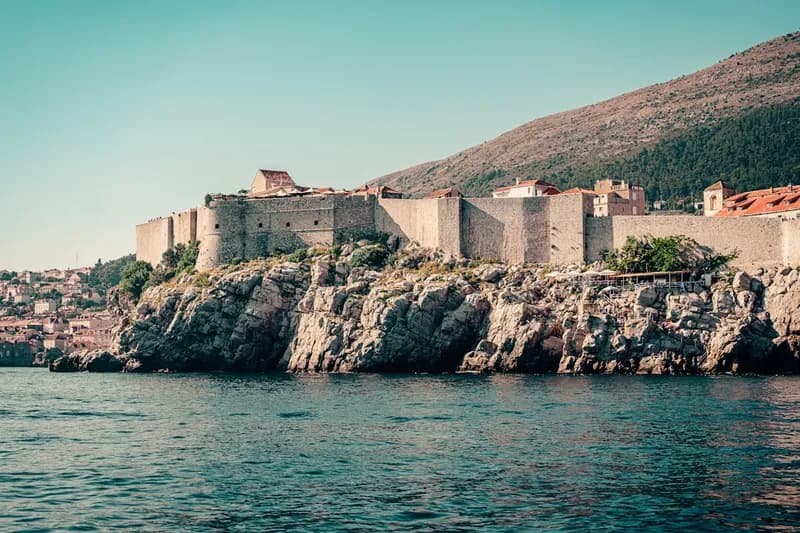
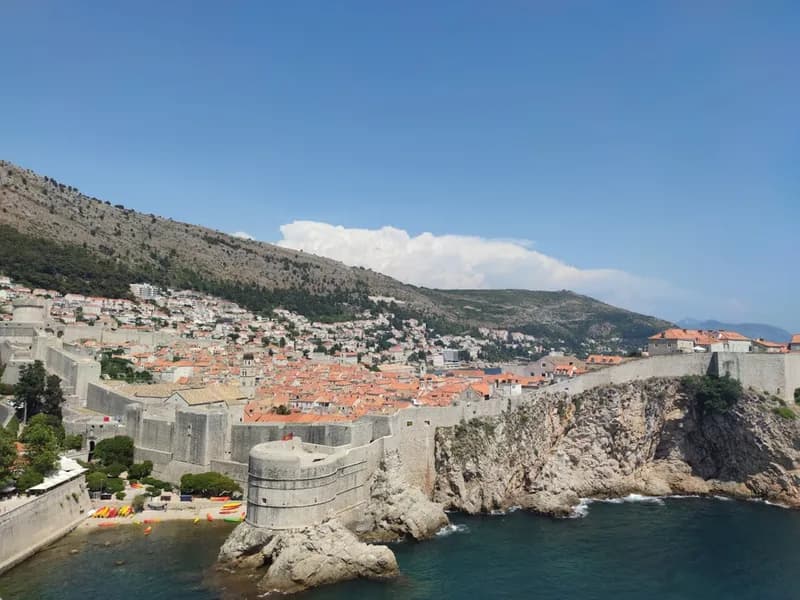
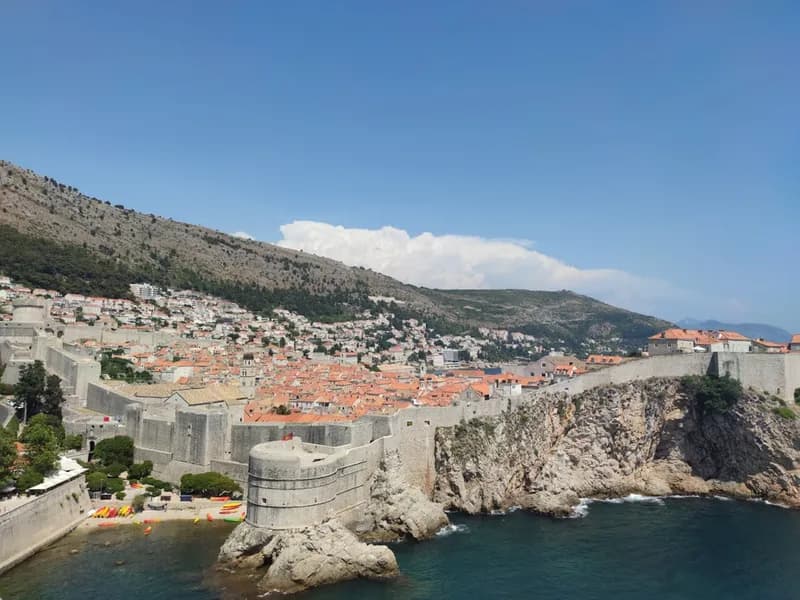
Dubrovnik's city wall is the most complete fortification in Europe — an unbroken ring of white limestone that encircles the whole Old Town, built up gradually between the 14th and 16th centuries and standing much as it did when the Republic of Ragusa rivalled Venice as an Adriatic trading power. UNESCO listed both the walls and the city in 1979, and it was this structure that survived the 1991–92 siege despite more than 2,000 shells (56% of the Old Town's roofs were smashed, but the walls held). The walk along the top is one of Europe's most dramatic experiences: you pass between battlements and arrow-slits with red-tiled roofs on one side and the cobalt Adriatic on the other, taking in four great fortresses — Minčeta, Bokar, St John and Revelin. Allow 1.5 hours anticlockwise from Pile Gate, and bring water, as there is no shade. It's the single most essential thing to do in Dubrovnik.
Hours
Summer 08:00–19:30; spring/autumn 09:00–17:00; winter 09:00–15:00
Price
€35 adult (Jul–Aug), €25 low season; included in the Dubrovnik Pass
Getting there
Main entrance beside Pile Gate; a 5-minute walk from the Pile bus stops
Insider tip: 1,940 m around the city, 25 m high — allow 1.5 hours anticlockwise. Walk at 09:00 opening or after 16:00 to dodge the 11:00–15:00 cruise-ship rush.
2.Stradun (Placa)
Stradun (officially Placa) is the Old Town's backbone — a 300 m long, 13 m wide limestone street that runs dead straight through the centre from Pile Gate in the west to Ploče Gate in the east. The current street was rebuilt after the catastrophic earthquake of 1667 that destroyed much of Dubrovnik and killed around 5,000 people; the reconstruction used a restrained Baroque style with uniform three-storey houses whose ground floors have curved 'na koljeno' doorways that combined an entrance and a shop counter. Two historic fountains mark the ends: the large Onofrio Fountain at Pile (1438) and the small Onofrio at Ploče. Stradun is the heart of the city's evening ritual — after sunset locals and visitors fill the street in a 'korzo' promenade, and during the summer Dubrovnik Summer Festival the whole street becomes an open-air stage for opera, ballet and theatre. Walk it slowly at golden hour when the polished stone glows.
Hours
Always open
Price
Free
Getting there
Runs the length of the Old Town from Pile Gate to Ploče Gate; fully pedestrian
Insider tip: 300 m of limestone, completely car-free and polished mirror-smooth by millions of feet. Walk the full length at sunset when the stone turns gold; the evening 'korzo' stroll (19:00–21:00) is a local tradition.
3.Fort Lovrijenac
Fort Lovrijenac (St Lawrence Fortress) rises dramatically on a 37 m cliff just outside the western city wall — a free-standing bastion that the city's fathers had built in 1018 when they learned the Venetians were planning exactly the same thing from the same spot. The Ragusans worked around the clock for three months to get there first. The result is an irregular triangular fortress with three-metre-thick walls facing the sea but only 60 cm facing the city — so that if it were ever taken by an enemy, Dubrovnik itself could raze it. The inscription above the gate — Non bene pro toto libertas venditur auro (Freedom is not sold for all the gold in the world) — sums up the Republic of Ragusa's political identity. Today Lovrijenac stages Hamlet during the Dubrovnik Summer Festival, served as the Red Keep in Game of Thrones, and is one of the city's very best photo spots, especially at sunset when it catches the Old Town and its walls in golden light from the side.
Hours
Daily ~08:00–19:00 (seasonal)
Price
Included in the €35 city-walls ticket; €12 separately
Getting there
A short walk outside Pile Gate along the western shore
Insider tip: Called 'Dubrovnik's Gibraltar' — a 37 m cliff straight over the sea. Entry is free if you already hold the €35 city-walls ticket. The inscription above the gate: 'Non bene pro toto libertas venditur auro'.
4.Minčeta Tower
Minčeta is the north-west corner and highest point of the wall ring — a massive circular tower designed in 1455 by the Florentine architect Michelozzo Michelozzi (the same man who designed the Palazzo Medici in Florence) after his square predecessor proved vulnerable to the new gunpowder cannon. Michelozzi gave the tower rounded walls so cannonballs would ricochet rather than penetrate, and 6 m thick masonry that withstood almost anything. The tower's name comes from the Menčetić family who originally owned the plot. From the top you see the entire Old Town in a single sweep: the red rooftops, Stradun cutting a diagonal, the cloistered monastery gardens, and the Adriatic wrapping around in a near-270° arc. Game of Thrones used Minčeta's exterior as the House of the Undying — the mysterious tower Daenerys seeks out in Qarth (season 2). On the wall walk it's naturally your high point; most people pause here for ten minutes to take in the view and the photographs.
Hours
Same as the city walls (summer 08:00–19:30)
Price
Included in the €35 city-walls ticket
Getting there
On the north-west corner of the wall walk; reached along the ramparts
Insider tip: The highest point of the whole wall ring — perfect for the panoramic shot. Game of Thrones fans will recognise it as the House of the Undying in Qarth (season 2).
5.Srđ Cable Car
Srđ is the mountain that dominates Dubrovnik's skyline — 778 m above the sea and just 1 km behind the Old Town as the crow flies. The cable car up was originally built in 1969 but destroyed in the Yugoslav army's artillery attack of 1991 (Srđ was Dubrovnik's most important defensive position during the siege) and lay in ruins for nearly 20 years before reopening in 2010. The ride up takes a little over four minutes and suddenly you stand above the whole historic city: the Old Town like a miniature of tiled roofs and walls, Lokrum island in the foreground, the Elafiti islands in the distance, and on a clear day you can see all the way to Italy. At the top are the Imperial Fort (a Napoleonic bastion of 1810 that now houses a small Homeland War museum, €8), the Panorama restaurant with the city's priciest but most view-rich lunch, and a huge white cross raised to mark the war's end. Sunset from here is one of the Adriatic coast's finest experiences.
Hours
Daily from ~09:00; last ascent ~19:00 in summer (seasonal)
Price
€27 return adult; €15 one-way
Getting there
Lower station a short walk uphill from the Old Town's Buža Gate / Ploče
Insider tip: It lifts you 778 m in 4 minutes. Last car down is around 19:00 in summer — buy a return, go up 30 minutes before sunset and stay for the golden light over the Old Town.
6.Rector's Palace (Knežev dvor)
Rector's Palace (Knežev dvor) was the political centre of the Republic of Ragusa from the 14th century until 1808 — home to the rector (knez), the highest elected official who governed the city-state. The fascinating thing about the Ragusan system was that the rector's term was limited to just one month at a time to prevent corruption and the concentration of power; during his term he literally could not leave the palace except for official ceremonies, and he received no salary. The inscription above the gate reads Obliti privatorum publica curate (Forget private affairs, attend to public ones). The current Gothic-Renaissance building dates from 1435 after a gunpowder explosion destroyed the original, then was partly rebuilt after a further explosion in 1463 and finally the 1667 earthquake. The atrium is an architectural gem, with columns designed by Onofrio della Cava and Salvi di Michele. Today the palace houses the Cultural-History Museum with original furniture, portraits and the Republic's regalia — and during the Dubrovnik Summer Festival, classical concerts are held in the atrium.
Hours
Daily ~09:00–18:00 (seasonal; check ahead)
Price
€15 adult; included in the Dubrovnik Pass
Getting there
In the Old Town near the cathedral, just off Stradun
Insider tip: The rector's term lasted just one month to prevent corruption — and during it he literally could not leave the palace. Today it's the Cultural-History Museum, with atrium concerts during the summer festival.
7.Franciscan Monastery (Mala Braća)
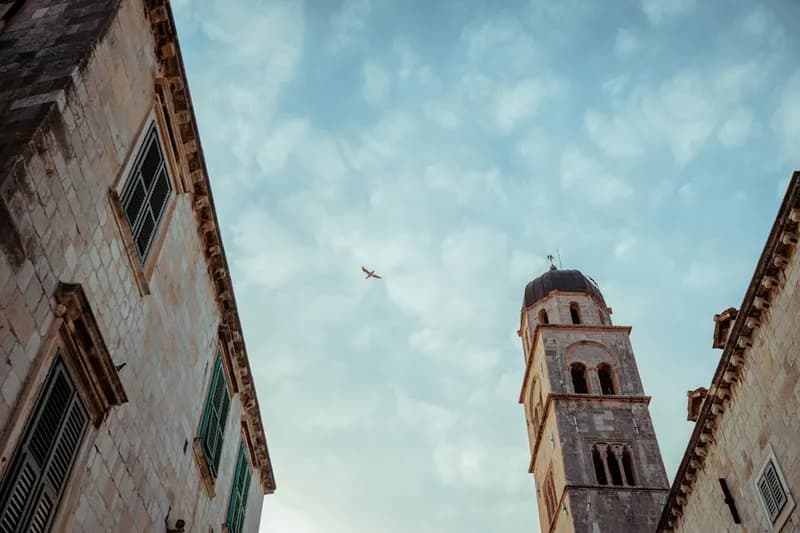
The Franciscan Monastery at Pile Gate is not only religious architecture but home to one of Europe's oldest working pharmacies — Mala Braća (the Little Brothers' pharmacy) has dispensed medicine without interruption since 1317, making it the third oldest in Europe after counterparts in Estepa (Spain) and Tallinn. The monks still sell their own herbal balms, creams and natural remedies based on recipes from the monastery archive. The monastery's greatest architectural treasure, though, is the cloister garden of 1360, designed by the master builder Mihoje Brajkov from Bar in present-day Montenegro: a square courtyard ringed by an arcade of 60 double columns with sculpted capitals, each pair unique — human heads, animals, flowers, mythical creatures. It is one of the few structures from before the 1667 earthquake to survive in its original state. Allow 30–45 minutes, plus time to browse the pharmacy. Tucked just inside the busy Pile Gate, the cloister is a quiet green pause in the middle of the tourist rush.
Hours
Daily ~09:00–18:00 (seasonal)
Price
€6 adult
Getting there
On Stradun, just inside Pile Gate at the western end of the Old Town
Insider tip: Mala Braća — Europe's third-oldest pharmacy (after Estepa in Spain and Tallinn in Estonia), continuously operating since 1317. The cloister garden with its double-columned arcade is a calm oasis; enter from Stradun just inside Pile Gate.
8.Dominican Monastery
The Dominican Monastery sits at the eastern end of Stradun just before Ploče Gate and is a calmer, less-visited counterpoint to the Franciscan Monastery at the other end. The complex was begun in 1315 by the Dominican order and consists of the church of St Dominic, a later bell tower (1424) and, above all, the cloister garden with its late-Gothic-Renaissance columns designed by Maso di Bartolomeo (the Florentine sculptor who worked in Donatello's workshop). The real treasure is the monastery museum, holding one of Croatia's most important collections of medieval and early-Renaissance painting — Nikola Božidarević's triptych of 1500 (a milestone in Croatian art), works by Lovro Dobričević and Mihajlo Hamzić, a small but authentic Titian, plus liturgical objects, manuscripts and a Madonna by Vlaho Bukovac (the 19th-century master from nearby Cavtat). The monastery survived both the 1667 earthquake and the 1991–92 bombardment without major damage. Allow around 45 minutes, and enjoy the stillness of the cloister just metres from the bustle of Stradun.
Hours
Daily ~09:00–17:00 (seasonal)
Price
€5 adult
Getting there
At the Ploče Gate end of Stradun, opposite the Franciscan Monastery
Insider tip: A 14th-century monastery at the Ploče end of Stradun. The art collection holds a Titian, a Nikola Božidarević triptych and one of Croatia's most important collections of 15th- and 16th-century altarpieces.
9.Dubrovnik Cathedral
Dubrovnik's cathedral has one of the more dramatic origin stories of the Middle Ages: in 1192 the English king Richard the Lionheart was shipwrecked in the Adriatic on his way home from the Third Crusade and managed to reach land on Lokrum. In thanks he vowed to build a church — and the money went towards a Romanesque cathedral in the centre of Dubrovnik, probably the Adriatic coast's first Gothic building. That cathedral was destroyed entirely in the 1667 earthquake, and today's Baroque building dates from 1672–1713, designed by the Italian architects Andrea Buffalini and Paolo Andreotti. The highlight inside is the treasury (Riznica) with over 200 relics, including the skull, hands and right leg of St Blaise (the city's patron saint) in gold-worked reliquaries from the 12th and 14th centuries. Above the altar hangs a large Assumption of the Virgin altarpiece from Titian's workshop — one of the few church paintings in Dubrovnik to survive both the earthquake and the 1991 shelling intact. Entry to the church is free; the treasury costs a few euros.
Hours
Daily ~08:00–17:00 (services permitting)
Price
Free; treasury €3
Getting there
In the Old Town beside Rector's Palace, just off Stradun
Insider tip: The original church was funded in 1192 by Richard the Lionheart after he survived a shipwreck on Lokrum, sailing home from the Third Crusade. The current Baroque building dates from 1672; the treasury holds one of Europe's most important relic collections.
10.War Photo Limited
War Photo Limited is one of Europe's most respected photojournalism museums, founded in 2003 by New Zealander Wade Goddard, who himself worked as a war photographer during the Yugoslav Wars. The gallery occupies two floors of a restored palace just north of Stradun, in the heart of the Old Town. The permanent exhibition on the upper floor deals with the Yugoslav Wars of 1991–95 — including a powerful section on the siege of Dubrovnik itself, where 90% of the Old Town's buildings suffered some form of shell damage and the population lived in cellars for six months. The ground floor shows rotating exhibitions from current conflict zones — Syria, Ukraine, Yemen, Afghanistan, Sudan — always with original images from photographers who were there. This is not easy viewing between a gelato and dinner on Stradun, but it may be the single most important sight in Dubrovnik if you want to understand what the city has lived through and why the walls mean something beyond tourism. Allow around an hour.
Hours
Daily ~10:00–20:00 in season (closed in winter)
Price
€12 adult
Getting there
On Antuninska, a small street just north of Stradun in the Old Town
Insider tip: An internationally respected photojournalism museum — a permanent exhibition on the Yugoslav Wars 1991–95 (including the siege of Dubrovnik) plus rotating shows from Syria, Ukraine and other conflicts. Not for sensitive eyes, but one of the Old Town's most important museums.
11.Ethnographic Museum (Rupe)
The Ethnographic Museum, locally known as Rupe (The Holes), is one of Dubrovnik's oddest and most wonderful museums — not primarily for its exhibition but for the building itself. When the Republic of Ragusa built its war reserves in the 16th century, it had 15 enormous underground silos carved directly into the limestone bedrock beneath the Old Town, with a total capacity of around 1,200 tonnes of grain — enough to feed the city's population through a 15-month siege. The silos are still there, perfectly preserved, and are shown today through glass panels in the floor of the museum above. The exhibition itself displays folk costumes from Konavle (the region south of Dubrovnik), traditional tools, weaving, jewellery-making and objects from rural life on the Pelješac peninsula and the Elafiti islands. Allow around 45 minutes — short but memorable, above all for the astonishing engineering of the building. It's also a cool, quiet refuge from the summer heat and the crowds down on Stradun.
Hours
Daily ~09:00–16:00 (closed some days; check ahead)
Price
€8 adult; included in the Dubrovnik Pass
Getting there
In the upper Old Town, a short climb from Stradun toward the southern walls
Insider tip: Housed in the 16th-century Rupe grain silos — 15 underground limestone chambers where the Republic stored emergency supplies for a 15-month siege. Folk costumes from Konavle and Pelješac, plus an architecturally fascinating building.
12.Homeland War Bunker (Ploče)
This bunker is one of Dubrovnik's newest and most affecting sights — an authentic shelter from the siege of 1991–92, turned into a small museum by a local foundation. For seven months the Yugoslav People's Army (JNA) bombarded Dubrovnik from the Srđ heights and from ships off the coast, while the population sheltered in bunkers and cellars. The museum displays authentic gas masks, radio equipment, journalists' gear from the BBC and CNN crews who made it into the besieged city, and sound recordings of shells falling that you can hear in the dark. Above ground, a photographic record shows the roof damage — of the Old Town's 824 buildings, 563 (68%) took some kind of direct hit, and 56% of the roof surfaces had to be replaced after the war. The uniform red-tile colour that dominates Dubrovnik's skyline today is largely from the 1990s reconstruction. Allow around an hour; it is a powerful counterpoint to the tourist romance of the wall walk, and essential context for understanding the city.
Hours
Daily ~09:00–17:00 (seasonal)
Price
€8 adult
Getting there
Slightly outside the Old Town; ~10 minutes by local bus or taxi
Insider tip: An authentic shelter from the Yugoslav army's 1991–92 siege — sound recordings of the shelling, photos of the 56% of Old Town roofs that were smashed, and documentation of the rebuilding.
13.Banje Beach
Banje Beach is Dubrovnik's iconic city beach — a roughly 200 m pebble strand just east of Ploče Gate with a clear view across the water to the Old Town walls and Lokrum island. The beach splits into two zones: the western part (closest to town) is run by the East West Beach Club, where you pay around €25 per person for a lounger and parasol but get towels, a restaurant, bar and clean toilets; the eastern part is a completely free public zone where you lay out your own towel but must do without service. The water is clear turquoise and drops to around 5 m about 10 m from the shoreline — good for snorkelling. Banje is also the launch point for several watersports: jet-ski, parasailing and stand-up paddleboard hire. In the evening the East West Beach Club turns into a nightclub with DJ sets until late. Allow at least half a day; note that the lunch spots nearby are expensive, with mains typically €22–32.
Hours
Always open
Price
Free public zone; beach-club lounger + parasol ~€25
Getting there
A 3-minute walk from Ploče Gate, on the eastern edge of the Old Town
Insider tip: The city's closest beach, just 3 minutes from Ploče Gate. A free public zone runs along the eastern end — the East West Beach Club charges €25 for a lounger and parasol but adds towels, a restaurant and clean toilets. The view is straight at the Old Town walls.
14.Old Town Harbour
Old Town Harbour (Stara luka) is the historic harbour of the Republic of Ragusa — the small sheltered inlet in the north-east corner of the Old Town that for centuries received the merchant fleet's ships from the Levant, Italy and Spain. Today the harbour is too small for big vessels (cruise ships dock further out, in Gruž) but it serves as the start and end point for several of Dubrovnik's best water activities. Kayaking is one of the city's most popular outings — around €25 per person for a 3-hour guided tour that takes you around Lokrum, into the Buža cave and a swim stop on a hidden beach. Sunset cruises (about €25 per person including a drink) leave between 17:30 and 19:00 depending on the season and run 1.5 hours along the walls with the photo spots in golden light. And the harbour is the departure point for the Lokrum ferry (10 minutes, €27 return), which runs every 30 minutes in summer. In the evening the harbour promenade is one of the city's more romantic corners, with open-air restaurants where you eat fresh fish as the boats bob gently at the quay.
Hours
Always open; activities daytime and early evening
Price
Free to wander; sunset cruise ~€25 pp; kayak ~€25/3h
Getting there
In the north-east corner of the Old Town, through Ploče Gate past St John Fortress
Insider tip: A maritime harbour with fishing boats, kayak hire (€25/3h), sunset cruises (€25 pp incl. a drink) and the Lokrum ferry. The Ploče Gate entrance is beautiful — walk around St John Fortress to the pier.
15.Buža Bar
Buža (Croatian for 'hole') is not so much a bar as an experience — an unexpected opening cut literally through the city wall on the southern side of the Old Town, leading out to a series of cliff terraces above the Adriatic. Two separate bars share the name: Buža I (the smaller, higher up the cliff, more rustic) and Buža II (a little lower and larger, with more seating). Both offer the same basic experience: a plastic chair, a table on white limestone, drinks for €6–8 (beer, wine, lemonade, mojito) and the very best sunset view in Dubrovnik. You can also swim straight off the rocks below the bars, where several local diving spots have crystal-clear water 4–6 m deep. No bookings are taken, no food is served, and there's no music beyond the sea; in high season the wait for a spot can be 30 minutes, so head there around 17:00 if you want to be sure of the sunset. It's one of very few places in the Old Town that still feels more local than tourist.
Hours
Daily, roughly 09:00 until late (weather dependent)
Price
Drinks €6–8; cash recommended
Getting there
Through a marked opening in the southern city wall of the Old Town
Insider tip: A hole-in-the-wall bar — literally: you walk through a hole in the city wall out to cliff terraces above the sea. 'Buža' means hole in Croatian. There are two, Buža I (more rustic) and Buža II (larger). A sunset drink here is compulsory.
16.Game of Thrones Locations
Dubrovnik served as the filming location for King's Landing from season 2 of Game of Thrones (2012) and remained the show's primary location right through to the finale in 2019 — which doubled the city's visitor numbers and turned certain spots into genuine pilgrimage sites. The highlights: Fort Lovrijenac stood in as the Red Keep with scenes of Cersei, Joffrey and the Iron Throne; the 99-step Jesuit Staircase beside St Ignatius's Baroque church was where Cersei Lannister's infamous 'walk of shame' was filmed (season 5); the northern stretch of the walls with Minčeta Tower became the House of the Undying in Qarth (season 2); and almost every street, alley and square appeared in the background of one King's Landing scene or another. Local operators offer 2-hour guided GoT walks for €30–50 per person that take you to all the main spots with a tablet showing series stills beside the real location. Even if you've never seen the show, the tour is a good, efficient way to see the Old Town in half a day.
Hours
Tours run daily, various start times
Price
Guided 2-hour tour €30–50 per person
Getting there
Tours typically start near Pile Gate or the main Stradun entrance
Insider tip: Dubrovnik was King's Landing for the whole series. The Iron Throne prop is in Lovrijenac, Cersei's walk of shame was filmed on the Jesuit Steps, and a guided 2-hour tour (€30–50 pp) links all the main spots.
17.Lokrum Island
Lokrum lies barely 600 m off Dubrovnik's Old Town Harbour and is one of the coast's most varied day trips — on just 0.72 km² you'll find a 1,000-year-old Benedictine monastery, a salt lake for swimming, wild peacocks (imported in the 1800s by Archduke Maximilian, who later became Emperor of Mexico), a Game of Thrones exhibition with a sittable Iron Throne replica, rocky beaches, a botanical garden and hiking trails through Mediterranean forest. The monastery of 1023 was abandoned after Napoleon closed all the monasteries in Dalmatia in 1808 — legend says the departing monks left a curse behind them, and every subsequent owner of the island died suddenly or lost their fortune (Maximilian was shot in Mexico, Rudolf of Habsburg died at Mayerling). Mrtvo More (the Dead Sea) is a salt lake in the island's interior with the same high salinity as the Adriatic — perfect for swimming because you float naturally. The last boat back to Dubrovnik leaves at 19:00 in summer, so bring a picnic or eat at the island's one restaurant. Allow half a day.
Hours
Boats every 30 min in season; last boat back ~19:00
Price
€27 return boat (includes island entry)
Getting there
Ferry from the Old Town Harbour, a 10-minute crossing
Insider tip: Just 600 m from the Old Town Harbour; the boat takes 10 minutes and runs every 30 minutes. Highlights: the 1023 Benedictine monastery, the GoT garden with a sittable Iron Throne replica, the salt lake for swimming, and wild peacocks everywhere.
18.Elafiti Islands
The Elafiti are an archipelago of three inhabited islands — Koločep, Lopud and Šipan — just 30–60 minutes by boat from Dubrovnik's Gruž harbour, and perfect if you want to combine Dalmatian atmosphere with swimming and a break from the Old Town's crowds. Koločep is the smallest (1.2 km², around 150 residents) with a perfect little village and rocky beaches. Lopud is the most popular, thanks to Šunj — one of the Adriatic coast's rare natural sandy beaches, surrounded by cypress and pine woods. Šipan is the largest (16 km²) with two villages (Suđurađ and Šipanska Luka) and one of Croatia's highest concentrations of summer villas from the Republic of Ragusa era. The standard option is a full-day tour from Dubrovnik (€60 per person) leaving Gruž at 09:00 and stopping 1.5–2 hours on each island, with lunch aboard (usually fish, salad and wine) and swim stops in natural harbours. For something more independent, take the scheduled Jadrolinija ferry (€6–10 one-way) and spend a night on Lopud. All three islands are entirely car-free — just feet, bikes and electric buggies.
Hours
Full-day tours depart Gruž ~09:00 in season
Price
Full-day tour €60 pp incl. lunch; scheduled ferry €6–10 one-way
Getting there
Tour boats and Jadrolinija ferries leave from Gruž harbour
Insider tip: Three islands — Koločep, Lopud and Šipan — all car-free. Full-day tours leave Gruž harbour at 09:00, cost €60 pp with lunch aboard, and stop to swim at all three. Or take the scheduled Jadrolinija ferry if you want to overnight on Lopud.
19.Cavtat
Cavtat is Dubrovnik's calm little brother — a coastal town of 2,000 people 15 km south of the Old Town, set on a perfectly sheltered bay with a pine-clad peninsula jutting into the Adriatic. The town was founded as the Greek Epidauros in the 6th century BC, making it older than Dubrovnik itself (Dubrovnik's original settlement of Ragusa was in fact founded by refugees from Epidauros when the Visigoths burned the town in the 7th century AD). Today Cavtat is a charming mix of Mediterranean port and low-key resort: a palm-lined seafront promenade (the Riva), two churches with fine paintings by Vlaho Bukovac (Cavtat's most famous son and Croatia's most important 19th-century artist), and the Galerija Vlaho Bukovac in his childhood home (€5 entry), showing 200+ paintings and his preserved studio. The walk around the peninsula (Rat) takes 45 minutes and passes the Račić Mausoleum by Ivan Meštrović (Croatia's answer to Rodin). Restaurants are 30–40% cheaper than in the Old Town. Bus 10 from Pile Gate runs every 30 minutes, costs €6 one-way and takes 30 minutes.
Hours
Always open; museum ~09:00–17:00
Price
Bus 10 from Pile ~€6 one-way; Bukovac museum €5
Getting there
Bus 10 from Pile Gate every 30 min (~30 min); summer boat shuttle ~€12
Insider tip: A calm coastal town 15 km south, 30 minutes on bus 10 from Pile Gate. The Vlaho Bukovac art museum (€5), a walk around the peninsula, swimming coves and taverns at half the Old Town's prices.
20.Kotor (Montenegro)
Kotor in Montenegro is one of the Adriatic coast's most dramatic medieval towns — UNESCO-listed since 1979 (the same year as Dubrovnik) but less visited and with a completely different character. The town sits deep inside the Bay of Kotor, a fjord-like inlet where 1,700 m mountains plunge straight into the Adriatic — geologically a flooded canyon rather than a true fjord, but visually impossible to tell apart from one. Kotor itself is an intact medieval town ringed by 4.5 km of walls that zigzag up the mountainside to St John's Fortress at 280 m (a tough climb of 1,200 steps, but the view is magical). Inside you'll find the cathedral of St Tryphon from 1166, five monasteries, alleys as narrow as Dubrovnik's, and prices about 30% lower. The journey from Dubrovnik takes 2–2.5 hours each way depending on the queue at the Debeli Brijeg border — in high season (July–August) that queue can be 1–2 hours, so full-day tours leave at 07:00. Bring your passport; Montenegro is not in the EU. Allow a full day, home by 19:00–20:00.
Hours
Full-day tours depart ~07:00–08:00
Price
Full-day tour €50–100 pp incl. border crossing; car ~€60 total
Getting there
~2–2.5 hours by road via the Debeli Brijeg border crossing
Insider tip: 90 km south across the border into Montenegro — the UNESCO-listed Bay of Kotor and its medieval town. Bring your passport (even EU citizens must show ID). A full-day tour is €50–100 pp; leave early (07:00–08:00) as border queues can be 1–2 hours in high season.