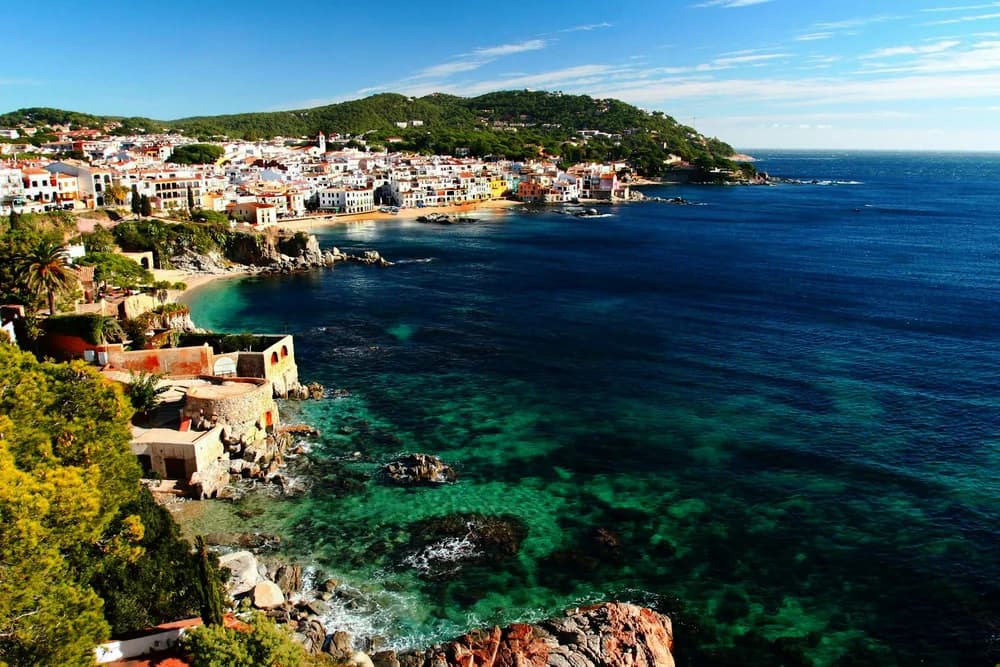
Some of the finest experiences on a Lisbon trip lie just outside the city. The fairytale palaces of Sintra and the genteel coast of Cascais are barely 40 minutes away by train, while a little further afield wait the medieval walls of Óbidos, the turquoise coves of the Arrábida park, the UNESCO-listed Alentejo city of Évora and the great pilgrimage sanctuary of Fátima. Here are the best day trips from Lisbon, with distances, how to get there and how to plan each.
 Train €5
Sintra
Area
Sintra
Distance
40 min west
“Take the 08:00 train, book Pena Palace online for the first slot, and do the quieter Quinta da Regaleira after.”
 Train €5
Cascais & Estoril
Area
Cascais
Distance
40 min west
“The train hugs the coast the whole way — sit on the left, and walk the promenade between Estoril and Cascais.”
 Bus €8
Óbidos
Area
Óbidos
Distance
1h north
“Walk the full castle walls (no railings — mind the drop), and try a ginjinha cherry liqueur in a chocolate cup.”
 Train €5
Setúbal & Arrábida
Area
Setúbal
Distance
1h south
“Combine fresh grilled cuttlefish (choco frito) in Setúbal with the turquoise coves of the Arrábida natural park.”
 Train €12
Évora
Area
Évora
Distance
1.5h east
“See the eerie Chapel of Bones and the Roman Temple, then lunch on Alentejo pork and a glass of local red.”
 Bus €13
Fátima
Area
Fátima
Distance
1.5h north
“Visit the vast sanctuary and the humble shepherds' village of Aljustrel; pair it with medieval Tomar if driving.”
Day trips from Lisbon in detail
1.Sintra
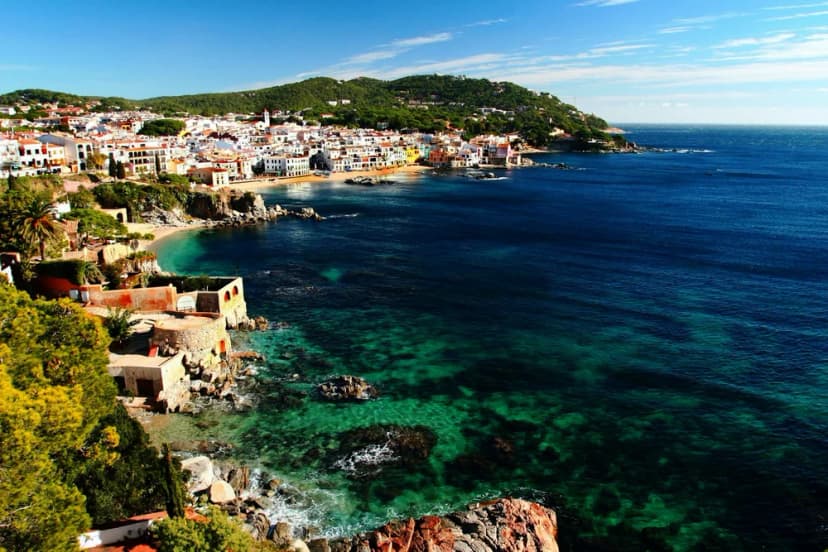
Sintra is the day trip no first-time visitor to Lisbon should miss — a lush, hilly wonderland of romantic palaces, Moorish ruins and enchanted gardens wrapped in cool forest and frequent mist, a UNESCO World Heritage cultural landscape just 40 minutes away by train. Its icon is the Palácio da Pena, a wildly colourful 19th-century Romanticist fantasy of red-and-yellow towers and turrets crowning a peak, but Sintra rewards a full day: the ruined hilltop Castelo dos Mouros with its ramparts and views, the elegant Palácio Nacional with its conical chimneys in the town centre, and the mysterious Quinta da Regaleira with its symbolist gardens and the spiral 'Initiation Well'. The catch is its popularity — it gets extremely busy, and the hilltop sights are spread out and steep — so strategy matters: take an early train from Rossio station, buy timed palace tickets online, and use the 434/435 tourist buses, tuk-tuks or a taxi to link the hilltop sites rather than walking up. Give it a full day, wear layers for the microclimate, and combine it with Cascais on the loop back if energy allows.
Hours
Palaces ~09:30–18:30 (seasonal)
Price
CP train ~€2.40 each way; Pena Palace ~€20; Regaleira ~€15
Getting there
CP train from Rossio station to Sintra (~40 min), then buses 434/435 or tuk-tuks up the hills
Insider tip: Take the 08:00 train, book Pena Palace online for the first slot, and do the quieter Quinta da Regaleira after.
2.Cascais & Estoril
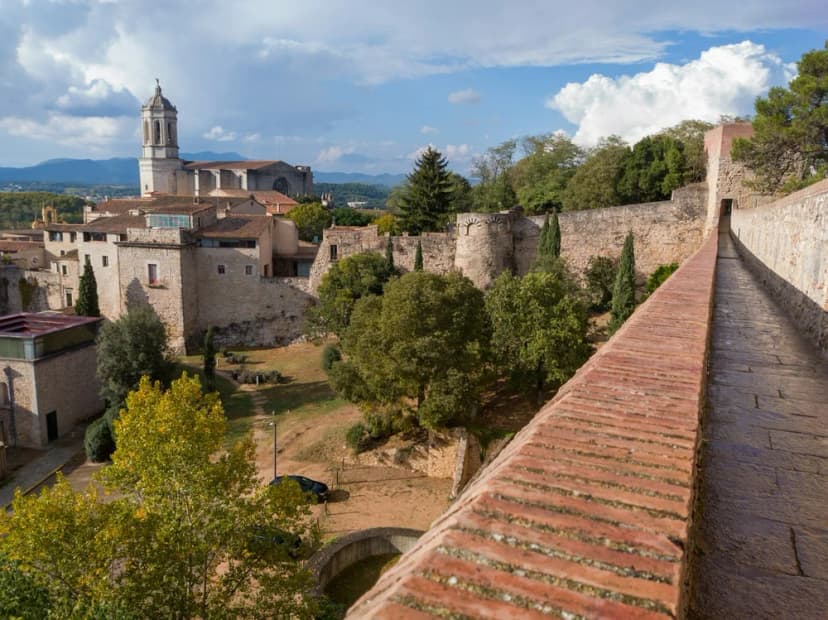
Cascais is the easiest and most relaxing escape from Lisbon — a stylish former fishing village turned upmarket seaside town, reached by a lovely 40-minute train ride from Cais do Sodré that hugs the Atlantic coast the entire way. Once the summer retreat of the Portuguese royal family, it retains a genteel charm: a pretty marina, cobbled pedestrian streets full of restaurants and shops, sandy town beaches, elegant villas, the Paula Rego museum (Casa das Histórias) and the dramatic Boca do Inferno sea cliff a short walk away. Its neighbour Estoril, one stop before, adds a grand belle-époque promenade, a famous casino (said to have inspired Ian Fleming's first Bond novel) and a long beachfront you can stroll between the two towns. Together they make a flexible half- or full-day trip: swim, lunch on grilled fish by the marina, browse the boutiques, or rent a bike for the scenic coastal path out toward the wild Guincho beach and Cabo da Roca, mainland Europe's westernmost point. It's calmer and less demanding than Sintra, and the two can be combined into a single loop on the well-connected regional buses.
Hours
Always open; museums ~10:00–18:00
Price
CP Cascais line ~€2.40 each way from Cais do Sodré
Getting there
CP train from Cais do Sodré along the coast to Cascais (~40 min), stopping at Estoril
Insider tip: The train hugs the coast the whole way — sit on the left, and walk the promenade between Estoril and Cascais.
3.Óbidos
Óbidos is a storybook medieval village about an hour north of Lisbon, and one of the prettiest small towns in Portugal — a compact cluster of whitewashed, bougainvillea-draped houses trimmed in blue and yellow, threaded by narrow cobbled lanes and encircled entirely by imposing 14th-century castle walls you can walk right around. Once given by Portuguese kings to their queens as a wedding gift, it now charms visitors with its flower-filled streets, artisan shops, tiny churches, a hilltop castle (part of which is a pousada hotel) and the local speciality of ginjinha, a sweet cherry liqueur traditionally served in an edible chocolate cup. Walking the unguarded ramparts for views over the terracotta rooftops and surrounding countryside is the highlight, though the lack of railings means care is needed. It's small enough to see in a few hours, so it makes a relaxed half-day, though it also hosts atmospheric festivals — a medieval market in summer, a chocolate festival in spring and a magical Christmas village in winter — worth timing a visit around. Reached easily by direct bus from Lisbon, it's a gentle, photogenic contrast to the bigger city sights.
Hours
Village always open; walls dawn–dusk
Price
Free to enter; Rodoviária bus from Lisbon ~€8 each way
Getting there
Green Rodoviária do Oeste bus from Campo Grande (~1h); driving is also easy
Insider tip: Walk the full castle walls (no railings — mind the drop), and try a ginjinha cherry liqueur in a chocolate cup.
4.Setúbal & Arrábida
South of the Tagus, the Setúbal Peninsula offers one of Lisbon's most rewarding and less-touristed day trips, combining great seafood with genuinely spectacular coastline. Setúbal itself is a lively working port at the mouth of the Sado estuary, celebrated for its fresh fish and above all choco frito — crisp fried cuttlefish — best eaten at a bustling local restaurant, and its market is one of the country's finest. The real showstopper, though, is the adjacent Parque Natural da Arrábida, a range of limestone hills cloaked in Mediterranean scrub that plunge to a string of astonishingly beautiful beaches — Praia dos Galápinhos, Praia do Portinho da Arrábida and others — where turquoise water laps white sand beneath green cliffs, some of the prettiest beaches in Portugal. From the Sado estuary you may also spot resident bottlenose dolphins on a boat trip, and the wine village of Azeitão nearby produces excellent Moscatel and cheeses. Because the park's coves are hard to reach by public transport, this trip is best with a car or an organised tour; allow a full day to pair Arrábida's beaches, a seafood lunch and perhaps a dolphin-watching outing or wine tasting.
Hours
Always open; park beaches best May–Sep
Price
Fertagus train + bus ~€5–8 each way; car easiest for the park
Getting there
Fertagus train from Lisbon to Setúbal (~1h), or drive over the 25 de Abril bridge; a car helps for Arrábida
Insider tip: Combine fresh grilled cuttlefish (choco frito) in Setúbal with the turquoise coves of the Arrábida natural park.
5.Évora
Évora, the historic capital of the sun-baked Alentejo plains about 90 minutes east of Lisbon, is a beautifully preserved walled city and a UNESCO World Heritage Site that rewards a full day's exploring. Its compact old town is a maze of whitewashed lanes and grand monuments layering two thousand years of history: the striking Roman Temple (often called the Temple of Diana) with its Corinthian columns, the Gothic cathedral, and the macabre yet mesmerising Capela dos Ossos — the Chapel of Bones, its walls and pillars lined with the bones and skulls of thousands, above the chilling inscription 'we bones, lying here, await yours'. Beyond the sights, Évora is a wonderful place to eat and drink: the Alentejo is one of Portugal's great gastronomic and wine regions, so lunch on hearty pork-and-clam or black-pork dishes, sheep's cheese and a glass of robust local red is a highlight in itself. The surrounding countryside holds prehistoric megaliths and cork oak plantations for those with a car. Reachable by direct train or bus, Évora offers a deeper, slower, more Portuguese experience than the coastal trips — history, atmosphere and exceptional food in equal measure.
Hours
Sights ~09:00–18:00
Price
CP train from Lisbon ~€12–14 each way (~1.5h)
Getting there
CP train or bus from Lisbon to Évora (~1.5h); driving takes similar time
Insider tip: See the eerie Chapel of Bones and the Roman Temple, then lunch on Alentejo pork and a glass of local red.
6.Fátima
Fátima, about 90 minutes north of Lisbon, is one of the most significant Catholic pilgrimage destinations in the world, drawing millions each year to the site where three shepherd children reported apparitions of the Virgin Mary in 1917. The enormous Sanctuary of Fátima centres on a vast open esplanade — larger than St Peter's Square — flanked by two great basilicas: the older neoclassical Basílica de Nossa Senhora do Rosário, where the visionary children are entombed, and the huge modern Basílica da Santíssima Trindade. The small Capelinha das Aparições marks the exact spot of the apparitions, and pilgrims are often seen approaching it on their knees in acts of devotion. Even for the non-religious, the scale, atmosphere and quiet intensity of the place are striking, particularly around the major pilgrimage dates of the 13th of each month from May to October. Nearby, the humble village of Aljustrel preserves the shepherd children's homes. It makes a moving half-day for the faithful; those with a car can combine it with the spectacular Knights Templar convent at Tomar or the great monastery at Batalha, both close by, for a rich day of Portuguese heritage.
Hours
Sanctuary always open; basilicas ~07:30–19:30
Price
Free; bus from Lisbon ~€13 each way (~1.5h)
Getting there
Rede Expressos bus from Sete Rios to Fátima (~1.5h); driving is straightforward
Insider tip: Visit the vast sanctuary and the humble shepherds' village of Aljustrel; pair it with medieval Tomar if driving.