Planning
Best Time to Visit Barcelona — Month by Month Guide
When is the perfect time to visit Barcelona? We break down weather, crowds, prices and events month by month so you can plan the ideal trip.
Barcelona is a genuine year-round destination — one of the few major European cities where you can sightsee in shorts in October and still find sunshine in January. But the best time to visit Barcelona depends entirely on what you want from your trip: beach days and warm sea, or empty museums and cheap flights. This month-by-month guide covers the weather, crowds, prices and events so you can pick the perfect window.
Spring (March–May) — The Sweet Spot
Spring is arguably the best time to visit Barcelona. Temperatures climb from a mild 17°C in March to a lovely 22°C by May, the city bursts into bloom, and the crushing summer crowds haven't yet arrived. Days are long and sunny, café terraces fill up, and you can comfortably walk the Gothic Quarter, queue for the Sagrada Família and hike up to Park Güell without wilting in the heat.
April and May are ideal for combining culture with the first proper beach afternoons — the sand is quiet and the light is beautiful, even if the sea is still a touch cool for a long swim. Hotel prices sit in a comfortable middle band, well below the July–August peak, and flight fares are reasonable if you book six to eight weeks ahead. Watch out for Easter (Setmana Santa), when prices and crowds spike for a week. Don't miss Sant Jordi on 23 April, when the whole city fills with books and roses — one of the most charming days in the Barcelona calendar.
Summer (June–August) — Peak Season
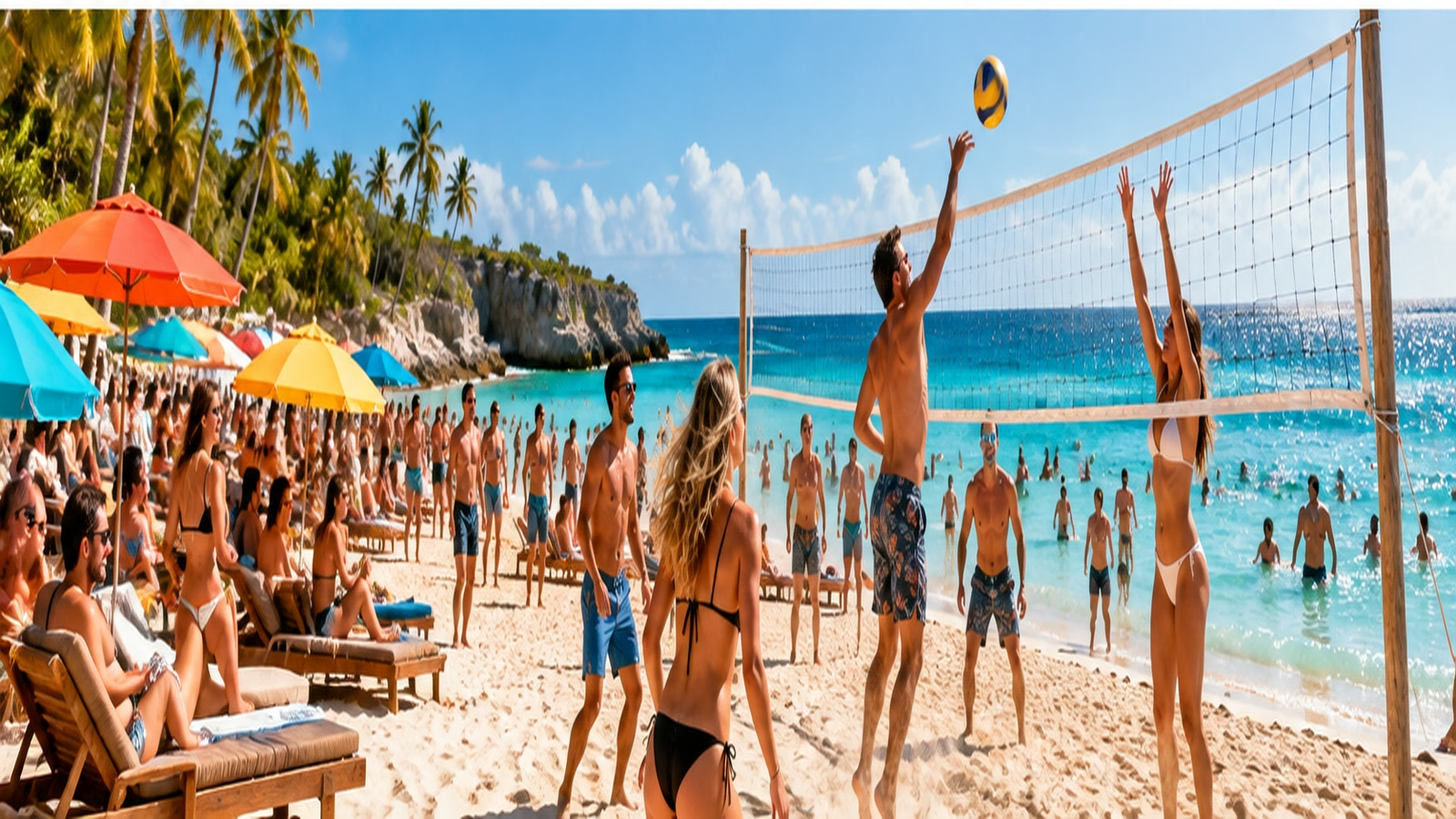
Summer is Barcelona at full volume. Temperatures hit 29°C and beyond in July and August, the Mediterranean warms to a swimmable 25°C, and the beachfront comes alive with chiringuitos, festivals and nightlife that runs until sunrise. If your priority is sun, sea and a buzzing party atmosphere, this is your season.
The trade-offs are real, though. This is peak tourist season: the Sagrada Família, Park Güell and Las Ramblas are packed, restaurant queues are long, and hotel prices are at their highest — a mid-range double that costs €120 in spring can top €200 in August. The city can feel sticky and humid, and locals famously flee in August, so some small family-run restaurants close for holidays. Book everything — flights, hotels, big attractions — well in advance, and start your sightseeing early to beat both the heat and the crowds. June is the pick of the three, with slightly lower prices and thinner crowds than the July–August crush.
Autumn (September–November) — Golden Season
Autumn is a hidden gem. September in particular is many travellers' favourite month: the summer heat softens to a perfect 26°C, the sea is still warm enough to swim, and once the first week passes the crowds thin dramatically as families head home for school. You get near-summer conditions with far more breathing room, and prices begin to fall.
September also brings La Mercè, Barcelona's biggest street festival, around the 24th — a spectacular free week of concerts, fireworks, human towers (castellers) and fire-running correfocs. October stays pleasant at 22°C but is the city's wettest month, so pack a light rain jacket. By November temperatures cool to the mid-teens and the beach season is over, but the city is at its calmest and cheapest for museums, food and long lunches. For the best balance of good weather, manageable crowds and value, mid-September to mid-October is hard to beat.
Winter (December–February) — Budget Season
Barcelona's winter is mild by northern-European standards — daytime highs of 14–15°C, plenty of blue-sky days and 2,500+ hours of annual sunshine mean it rarely feels bleak. This is the budget traveller's season: hotel rates drop to their lowest (outside Christmas and New Year), flights are cheap, and the big sights are blissfully quiet. February is statistically the cheapest month to fly, with average round-trip fares around $128.
You won't be swimming, but winter is perfect for the indoor city — the Picasso Museum, MACBA, the Palau de la Música, long tapas lunches and Christmas markets. December sparkles with festive lights and the Fira de Santa Llúcia market outside the cathedral, while January's sales are a shopper's dream. Pack layers and a warm jacket for cool evenings, and you'll have one of Europe's great cities largely to yourself.
Month by Month at a Glance
- January: 14°C, cheapest flights, quiet, festive-sale bargains.
- February: 15°C, lowest average fares (~$128), few crowds.
- March: 17°C, spring begins, great value.
- April: 19°C, blooming and lively — mind Easter prices.
- May: 22°C, warm, sunny, ideal all-rounder.
- June: 26°C, beach season opens, pick of the summer.
- July: 29°C, hot and busy, priciest hotels.
- August: 29°C, peak crowds, some closures.
- September: 26°C, warm sea, La Mercè, superb value once schools return.
- October: 22°C, pleasant but the wettest month.
- November: 17°C, calm and cheap, beach season over.
- December: 15°C, mild, festive lights and markets.
Flight Tips
Whenever you go, the biggest saving comes from timing your flight. February is the cheapest month to fly to Barcelona, followed by the shoulder months of March, November and January. July and August are the most expensive by far. Aim to book roughly six to eight weeks before departure for the best fares, and be flexible with your dates — midweek departures (Tuesday and Wednesday) are typically cheaper than weekends. Pairing a shoulder-season trip in May or September with a fare booked in advance is the single best way to enjoy Barcelona at its finest without paying peak prices.
Planning a trip to Barcelona?
Compare fares and find the cheapest dates to fly.