Barcelona packs more must-see sights into a walkable city than almost anywhere in Europe — from Gaudí's fantastical architecture and world-class museums to Mediterranean beaches and buzzing food markets. Here are the 20 attractions worth building your trip around, with prices, opening hours and tips to skip the queues.
 €26
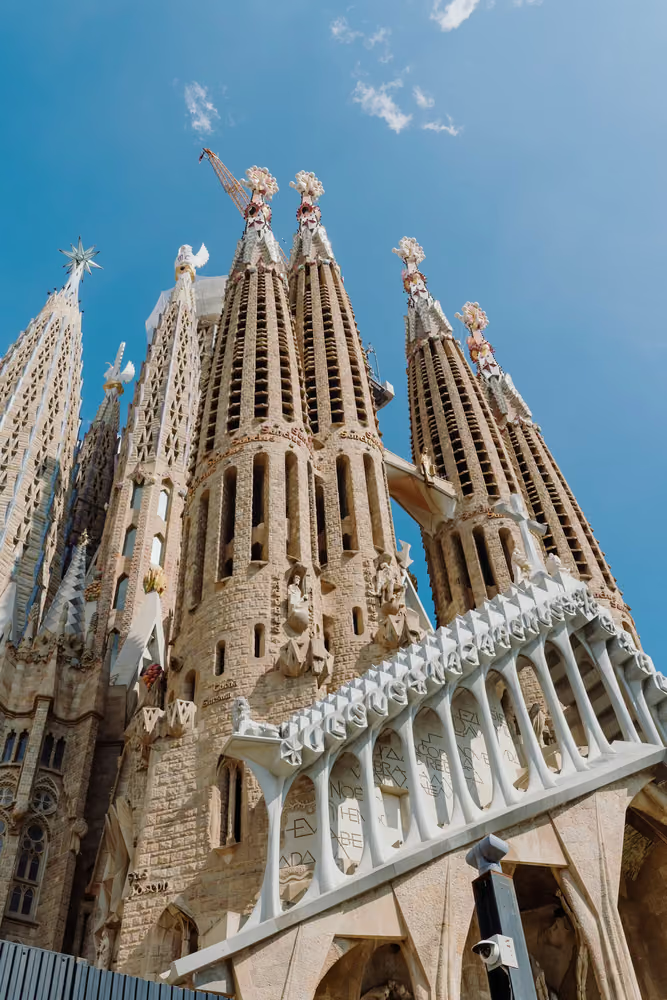
€26Sagrada Família
Area
Eixample
Category
Architecture
“Book online two weeks ahead and go at 09:00 or 16:00 for the best stained-glass light.”
 €10
€10Park Güell
Area
Gràcia
Category
Architecture / Nature
“Book the 08:00–09:30 slot — softer light, far fewer people, and cooler in summer.”
 €35
€35Casa Batlló
Area
Passeig de Gràcia
Category
Architecture
“The evening 'Magic Nights' visit with a rooftop drink is quieter and genuinely magical.”
 €25
€25Casa Milà (La Pedrera)
Area
Passeig de Gràcia
Category
Architecture
“The rooftop 'Night Experience' projection show is the highlight — book a summer evening slot.”
 Free
FreeGothic Quarter
Area
Ciutat Vella
Category
History
“Wander at 08:00–10:00 before the shops open — the medieval lanes are almost yours.”
 Free
FreeLas Ramblas
Area
Ciutat Vella
Category
Promenade
“Walk it early, keep valuables zipped, and eat two streets away — never on the boulevard itself.”
 €12
€12Picasso Museum
Area
El Born
Category
Museum
“Free Thursday evenings (17:00–20:00) and the first Sunday of the month — book the slot online.”
 €12
€12MNAC
Area
Montjuïc
Category
Museum
“Free Saturdays after 15:00. The terrace views over the city are free and spectacular any time.”
 €6
€6CosmoCaixa
Area
Sarrià
Category
Science Museum
“The indoor Amazon rainforest is the star — kids under 16 go free.”
 €14
€14Fundació Joan Miró
Area
Montjuïc
Category
Art Museum
“The sculpture terrace with city and sea views is the museum's quiet highlight.”
 Free
FreeBarceloneta Beach
Area
Barceloneta
Category
Beach
“Arrive before 11:00 for a good spot, or walk 10 min north to Bogatell for calmer sand.”
 Varies
Montjuïc
Area
Montjuïc
Category
Hill / Parks
“Take the cable car up and walk down through the gardens, catching MNAC and the fountain en route.”
 €35
€35Tibidabo
Area
Tibidabo
Category
Amusement / Nature
“Ride the historic Tramvia Blau and funicular up — the journey is half the fun.”
 €22
€22Montserrat
Area
1h northwest
Category
Monastery / Nature
“Take the 08:00 train to hear the boys' choir sing at 13:00 — one of Europe's oldest.”
 €22
€22Palau de la Música Catalana
Area
El Born
Category
Concert Hall
“A short lunchtime guitar or flamenco concert is an affordable way to see the hall in use.”
 €32
€32Camp Nou
Area
Les Corts
Category
Stadium
“Match tickets sell fast — buy via the official club site; tours run best on weekday mornings.”
 Free
FreeEl Born
Area
El Born
Category
District
“Santa Maria del Mar is free in the mornings — a soaring Gothic gem worth planning around.”
 Free
FreeEixample
Area
Eixample
Category
District
“Walk Passeig de Gràcia to string Casa Batlló, Casa Milà and the boutiques into one route.”
 Train €5
Sitges
Area
35 min south
Category
Coastal Town
“Take the R2 Sud train from Sants — 17 beaches, whitewashed lanes and a relaxed, bohemian buzz.”
Barcelona attractions in detail
1.Sagrada Família
Antoni Gaudí's Sagrada Família is the single sight no first-time visitor should miss. Begun in 1882 and still rising toward completion, this UNESCO-listed basilica fuses Gothic ambition with Gaudí's nature-driven Modernisme. The exterior tells the story across the Nativity and Passion façades, but it's the interior that stuns: a forest of tree-like columns branching into the vaults, washed in coloured light pouring through the stained glass — warm reds and oranges to the west, cool blues and greens to the east. Allow 1.5–2 hours, and add the tower lift for close-up views of the city and the intricate spires. Tickets are timed and sell out days ahead in high season, so buy online in advance. Arriving right at opening or in the late afternoon gives you the best light and thinner crowds. It remains a working church, so dress respectfully.
Hours
Mon–Sat 09:00–20:00, Sun 10:30–20:00 (seasonal)
Price
From €26; +€10 for tower access
Getting there
Metro L2/L5 to Sagrada Família (exit at the base of the towers)
Insider tip: Book online two weeks ahead and go at 09:00 or 16:00 for the best stained-glass light.
2.Park Güell
Perched on Carmel Hill, Park Güell is Gaudí's most joyful creation — a would-be garden city reimagined as a surreal public park. The ticketed Monumental Zone holds the icons: the mosaic salamander (El Drac) on the dragon stairway, the Hypostyle Hall of tilted columns, and the undulating trencadís bench that frames one of the best panoramas in Barcelona, out over the city to the Mediterranean. Beyond the paid zone, a large free park of paths and viewpoints rewards a wander. Entry is timed and capped, so book ahead; the earliest morning slots give soft light, cooler temperatures and room to breathe. Getting there is half the fun — take metro L3 to Vallcarca and ride the outdoor escalators up, or catch the 24 bus to the upper entrance to save the climb. Budget around 1.5 hours for the Monumental Zone plus the free viewpoints.
Hours
Daily 09:30–19:30 (seasonal)
Price
€10 Monumental Zone (online); surrounding park free
Getting there
Metro L3 to Vallcarca, then escalators uphill; or bus 24 to the top gate
Insider tip: Book the 08:00–09:30 slot — softer light, far fewer people, and cooler in summer.
3.Casa Batlló
On the elegant Passeig de Gràcia, Casa Batlló is Gaudí at his most playful. Remodelled in 1904–06, the façade shimmers with broken-tile mosaic and glass, its balconies shaped like masks or bones — locals nicknamed it the 'House of Bones'. Inside, straight lines all but vanish: doorways curve like waves, the central light well deepens from pale to deep blue to distribute light evenly, and the loft's catenary arches evoke a ribcage. The rooftop is the finale, a spine of scaly tiles and mushroom-shaped chimneys read by many as St George's dragon. The standard ticket includes an augmented-reality guide that animates the rooms; the evening 'Magic Nights' add live music and a drink on the roof with far smaller crowds. Book online to skip the queue, and pair it with Casa Milà 400 metres up the street for a single Modernisme morning.
Hours
Daily 09:00–20:00 (last entry ~19:00)
Price
From €35 standard; Gold skip-line ~€45
Getting there
Metro L2/L3/L4 to Passeig de Gràcia; the house is a two-minute walk
Insider tip: The evening 'Magic Nights' visit with a rooftop drink is quieter and genuinely magical.
4.Casa Milà (La Pedrera)
Casa Milà, universally known as La Pedrera ('the stone quarry') for its rippling limestone façade, was Gaudí's last civil work before he devoted himself to the Sagrada Família. A UNESCO World Heritage Site, it broke every convention of its day: a self-supporting stone skin, an open-plan interior free of load-bearing walls, and interior courtyards that flood the flats with light. The visit climbs through a restored Modernista apartment furnished in period style and a parabolic-arch attic that once housed the laundry, before opening onto the surreal rooftop — a landscape of helmeted chimneys and vents framing views to the Sagrada Família. After dark, the 'Night Experience' projects light and music across those chimneys, a genuinely memorable way to end a day. It sits 400 metres from Casa Batlló, so most visitors do the two together. Book ahead, especially for the sought-after evening slots.
Hours
Daily 09:00–20:30; night visits after 21:00 (seasonal)
Price
From €25 day; night experience ~€35
Getting there
Metro L3/L5 to Diagonal, 200 m along Passeig de Gràcia
Insider tip: The rooftop 'Night Experience' projection show is the highlight — book a summer evening slot.
5.Gothic Quarter
The Barri Gòtic is Barcelona's atmospheric medieval core, a maze of narrow stone lanes layered over two thousand years of history. At its centre stands the Gothic cathedral, ringed by hidden squares like Plaça del Rei and Plaça Sant Felip Neri, still scarred from the Civil War. Roman columns survive on Carrer del Paradís, sections of the old wall trace the original city, and the medieval Jewish quarter, El Call, threads through some of the tightest alleys. It's free and best experienced on foot with no fixed plan — turn down promising lanes and let them open onto sunlit plazas full of buskers and tapas bars. Come early morning before the boutiques open, or in the evening when the lamplight does the work, to feel the quarter at its most cinematic. Watch your bag around Plaça Reial and the busier arteries, where pickpockets work the crowds. A guided walk (from about €15) helps decode the history.
Hours
Streets always open; cathedral ~09:30–18:30
Price
Free to explore; cathedral ~€9
Getting there
Metro L3/L4 to Liceu or Jaume I; the quarter is fully walkable
Insider tip: Wander at 08:00–10:00 before the shops open — the medieval lanes are almost yours.
6.Las Ramblas
Las Ramblas is the 1.2-kilometre promenade that slices through the old city from Plaça de Catalunya down to the Columbus monument at the harbour. Tree-shaded and always in motion, it's lined with flower kiosks, cafés, human statues and newsstands, and it's the classic first walk for anyone arriving in Barcelona. Halfway down, duck into the Mercat de la Boqueria — one of Europe's most colourful food markets, piled with jamón, seafood and fresh juices — and note the Miró pavement mosaic at Pla de l'Os. The boulevard is unashamedly touristy and its restaurants are overpriced tourist traps, so treat it as a corridor rather than a destination: stroll it, then step into El Raval or the Gothic Quarter for real food and lower prices. It is also the city's number-one spot for pickpockets, so keep your phone and wallet secured, especially in the crowds near the market and the port.
Hours
Always open; La Boqueria market Mon–Sat 08:00–20:30
Price
Free
Getting there
Metro L1/L3 to Catalunya (top) or L3 to Drassanes/Liceu (middle)
Insider tip: Walk it early, keep valuables zipped, and eat two streets away — never on the boulevard itself.
7.Picasso Museum
The Museu Picasso occupies five linked Gothic palaces on Carrer Montcada in El Born, a beautiful setting for a collection of more than 4,000 works. Rather than the famous later masterpieces, it concentrates on Picasso's formative years — his precocious academic training, his Blue Period, and above all his deep ties to Barcelona, where he grew as an artist. The undisputed highlight is the 1957 series of 58 canvases riffing on Velázquez's Las Meninas, a room that shows his restless reinvention at full tilt. Because the galleries are compact and hugely popular, timed online tickets are essential; the free Thursday-evening and first-Sunday slots draw long queues, so reserve ahead and arrive early. Give it 1.5 hours, then linger in the surrounding streets of El Born — home to Santa Maria del Mar and some of the city's best tapas — which reward exploration just as much as the museum itself.
Hours
Tue–Sun 10:00–19:00 (closed Mon)
Price
€12; free Thu 17:00–20:00 and first Sun of month
Getting there
Metro L4 to Jaume I, five-minute walk into El Born
Insider tip: Free Thursday evenings (17:00–20:00) and the first Sunday of the month — book the slot online.
8.MNAC
The Museu Nacional d'Art de Catalunya crowns Montjuïc from the monumental Palau Nacional, built for the 1929 International Exhibition. Its calling card is the world's greatest collection of Romanesque art — vivid twelfth-century frescoes and altar fronts rescued from remote Pyrenean churches and reassembled here in reconstructed apses. Beyond that, the galleries sweep through Gothic, Renaissance and Baroque works to a strong Catalan Modernisme section with pieces by Gaudí's contemporaries. Even if you skip the collection, the building rewards the climb: the domed hall is spectacular, and the front terraces offer one of Barcelona's best free panoramas, straight down the axis past the Magic Fountain to Plaça d'Espanya. Entry is a reasonable €12, free on Saturday afternoons and the first Sunday of each month. Combine it with the fountain's evening light show and the nearby Fundació Joan Miró for a full, culture-rich day on the hill.
Hours
Tue–Sat 10:00–18:00/20:00, Sun 10:00–15:00 (closed Mon)
Price
€12; free Sat after 15:00 and first Sun of month
Getting there
Metro L1/L3 to Espanya, then walk up past the Magic Fountain
Insider tip: Free Saturdays after 15:00. The terrace views over the city are free and spectacular any time.
9.CosmoCaixa
CosmoCaixa is one of Europe's best science museums and a reliable rainy-day winner with families. Its showpiece is the Bosc Inundat — a genuine 1,000-square-metre slice of flooded Amazon rainforest recreated indoors, complete with humidity, tropical fish, caimans and daily simulated downpours you can watch from above and below the waterline. Elsewhere, a towering 'Geological Wall' cross-sections seven distinct rock formations, a Planetarium runs immersive shows, and hall after hall of interactive experiments explains physics, evolution and the cosmos in ways that keep children genuinely absorbed. It sits up in leafy Sarrià near the foot of Tibidabo, easily reached on the FGC train, and entry is a bargain €6 with under-16s free — remarkable value for half a day out of the heat or rain. Allow two to three hours, more if your kids fall for the rainforest, and consider pairing it with a Tibidabo trip since both are on the same side of the city.
Hours
Daily 10:00–20:00
Price
€6; under-16s free
Getting there
FGC line to Avinguda Tibidabo, then a short walk or the 196 bus
Insider tip: The indoor Amazon rainforest is the star — kids under 16 go free.
10.Fundació Joan Miró
The Fundació Joan Miró is both a museum and a gift from the artist to his city, housed in a radiant white building designed by his friend Josep Lluís Sert to bathe the art in natural Mediterranean light. The collection traces Miró's whole career through some 10,000 works — the instantly recognisable biomorphic shapes, primary colours, stars and birds across paintings, drawings, textiles and monumental sculpture. Airy galleries open onto a rooftop sculpture terrace where playful bronzes are set against sweeping views over Barcelona and out to the sea, arguably the loveliest spot in the whole building. Set on Montjuïc, it pairs naturally with MNAC, the Magic Fountain and the 1992 Olympic ring, all within walking distance. Reach it via the funicular from Paral·lel or the cable car up the hill. Entry is €14; give it around 1.5 hours, longer if you linger on the terrace with a coffee.
Hours
Tue–Sun 10:00–18:00/20:00 (closed Mon)
Price
€14
Getting there
Metro L1/L3 to Espanya, then the Montjuïc funicular or 150 bus
Insider tip: The sculpture terrace with city and sea views is the museum's quiet highlight.
11.Barceloneta Beach
Barceloneta is the beach that put Barcelona on the sun-and-city map — a broad, golden 1.1-kilometre stretch just fifteen minutes on foot from the Gothic Quarter. Created for the 1992 Olympics, it's backed by a lively promenade of chiringuitos (beach bars), seafood restaurants and the old fishermen's quarter behind. Expect volleyball nets, paddle-boarders, roving vendors and a festive, crowded buzz, especially on summer weekends. The Mediterranean here warms to a swimmable 24–26°C in high summer. It's the most convenient beach in the city, but also the busiest and most touristy, so serious sun-seekers walk ten minutes north to quieter Bogatell, Nova Icària or Mar Bella. Come before mid-morning to claim space, keep an eye on your belongings while you swim, and finish with paella or a cold vermouth at one of the Barceloneta seafood spots just off the sand. It's free; sunbeds and parasols rent for around €10–15 a day.
Hours
Always open; lifeguards in summer
Price
Free; sunbed + parasol ~€10–15/day
Getting there
Metro L4 to Barceloneta, then a 10-minute walk to the sand
Insider tip: Arrive before 11:00 for a good spot, or walk 10 min north to Bogatell for calmer sand.
12.Montjuïc
Montjuïc is Barcelona's great green hill, a whole day's worth of sights rolled into one leafy massif above the port. At the top sits the seventeenth-century castle, with commanding views over the harbour and city; below spread landscaped gardens, the 1992 Olympic stadium and pool, and a string of major attractions — MNAC, the Fundació Joan Miró, the Poble Espanyol architecture village and the free Magic Fountain, which stages an evening light-and-music show. The smartest way to see it is to ride the Montjuïc cable car up for the panoramas, then wander gently downhill through the gardens, ticking off museums and viewpoints as you go. It's a refreshing, less frantic counterpoint to the dense old town, and much of it — the parks, the viewpoints, the fountain show — costs nothing. Allow half a day, wear comfortable shoes for the slopes, and time your descent to catch the fountain after dark from spring through autumn.
Hours
Park always open; castle ~10:00–20:00; cable car ~10:00–19:00
Price
Park free; castle €5; cable car ~€13.50 return
Getting there
Metro L2/L3 to Paral·lel + funicular, then the Montjuïc cable car
Insider tip: Take the cable car up and walk down through the gardens, catching MNAC and the fountain en route.
13.Tibidabo
At 512 metres, Tibidabo is the peak that closes Barcelona's skyline to the north-west, and on a clear day the views stretch across the whole city to the sea and, occasionally, out toward Mallorca. Two landmarks share the summit: the neo-Gothic Temple del Sagrat Cor, visible from much of the city and free to enter, and a charming amusement park founded in 1901, whose vintage aeroplane ride and Ferris wheel spin against that vast panorama. Half the pleasure is the approach — the restored Tramvia Blau tram and a funicular haul you up the wooded slope in old-world style. It makes a relaxed half-day, combining fairground nostalgia, the church and the viewpoint, and works well alongside nearby CosmoCaixa on the same side of town. Note that the amusement park runs on a seasonal, mainly weekend schedule, so check opening dates before you set out, and go on a clear day for those unforgettable sunset views over Barcelona.
Hours
Weekends & holidays, seasonal (check ahead)
Price
Park from €35; church free; viewpoint ~€6
Getting there
FGC to Avinguda Tibidabo, then Tramvia Blau + funicular, or the T2A bus
Insider tip: Ride the historic Tramvia Blau and funicular up — the journey is half the fun.
14.Montserrat
Montserrat is the day trip most visitors remember longest — a Benedictine monastery clinging to a mountain of strange, saw-toothed rock 725 metres up, an hour north-west of Barcelona. It's the spiritual centre of Catalonia, home to La Moreneta, the revered twelfth-century Black Madonna, and to the Escolania, one of Europe's oldest boys' choirs, which sings in the basilica around 1 pm on most days. Beyond the religious draw, the setting is spectacular: funiculars and marked trails climb to hermitages and to the Sant Jeroni summit for 360-degree views across Catalonia. The classic route is the FGC train from Plaça Espanya to Monistrol, then the rack railway or the Aeri cable car up the cliff — combined tickets run about €22, with all-in packages including lunch and the museum around €42. Take the early train to fit in the choir, the monastery, a short hike and the museum, and pack layers, as it's noticeably cooler up top than in the city.
Hours
Monastery ~09:00–18:30; choir sings ~13:00 (not always daily)
Price
Train + rack railway/cable car ~€22 return; combo packages ~€42
Getting there
FGC R5 from Plaça Espanya to Monistrol, then the rack railway or Aeri cable car
Insider tip: Take the 08:00 train to hear the boys' choir sing at 13:00 — one of Europe's oldest.
15.Palau de la Música Catalana
The Palau de la Música Catalana is Modernisme at its most exuberant — a 1908 concert hall by Lluís Domènech i Montaner and a UNESCO World Heritage Site tucked into the tight streets between El Born and the Gothic Quarter. Where Gaudí worked in curves and stone, here the material is coloured light: the auditorium is topped by an enormous inverted stained-glass skylight in gold and blue that seems to pour sunshine into the room, while the walls bristle with mosaic, sculpted muses and floral ironwork. You can visit on a guided tour that explains the building and the Catalan cultural revival it was built to celebrate, but the real magic is hearing music fill the space. Tickets to full concerts vary widely, yet short lunchtime recitals — classical guitar, flamenco, opera highlights — offer an affordable way to experience the hall alive with sound. Book the tour or a concert ahead, as both sell out, and pair it with nearby Santa Maria del Mar and the Picasso Museum.
Hours
Guided tours daily ~10:00–15:30; concerts in the evening
Price
Tour from €22; concert tickets vary
Getting there
Metro L1/L4 to Urquinaona, a three-minute walk
Insider tip: A short lunchtime guitar or flamenco concert is an affordable way to see the hall in use.
16.Camp Nou
Camp Nou is a pilgrimage for football fans — the vast home of FC Barcelona and, at nearly 100,000 seats, the largest stadium in Europe. The 'Barça Immersive Tour' and museum walk you through the club's trophy-laden history and its 'més que un club' identity, with a self-guided route that normally takes in the changing rooms, the players' tunnel and a pitch-side view of the stands rising around you, plus interactive exhibits and a hall of Ballon d'Or and Champions League silverware. Note that the stadium has been undergoing a major redevelopment, so parts of the tour and the ground itself may be modified or relocated — always check what's open before you travel. Nothing beats seeing an actual match, but tickets go quickly and are best bought through the official club channels to avoid resale mark-ups. If you're touring rather than watching, aim for a weekday morning when it's quietest, and allow around two hours for the full museum-and-stadium experience.
Hours
Daily ~09:30–19:00 (varies; check during renovation)
Price
Tour + museum from €32; match tickets vary
Getting there
Metro L3 to Les Corts or Palau Reial, a short walk to the ground
Insider tip: Match tickets sell fast — buy via the official club site; tours run best on weekday mornings.
17.El Born
El Born is the old city's most fashionable corner, a compact grid of narrow medieval streets that has become the go-to district for independent boutiques, design studios, cocktail bars and low-lit tapas spots. Its spiritual and architectural anchor is Santa Maria del Mar, a pure Catalan Gothic basilica built by the medieval port workers and famous for its soaring, light-filled nave — free to visit in the mornings and quietly breathtaking. Nearby, the Picasso Museum draws the culture crowd, while the El Born Centre de Cultura preserves excavated eighteenth-century streets beneath a handsome iron-and-glass market hall. The real pleasure, though, is simply wandering: Passeig del Born and its tributary lanes are made for aimless drifting, coffee stops and evening tapas-hopping, when the quarter is at its most atmospheric. It's free, central and endlessly photogenic, and slots neatly between the Gothic Quarter and the beach. Give it an unhurried half-day and let dinner run into a nightcap.
Hours
Streets always open; shops ~10:00–21:00
Price
Free to explore
Getting there
Metro L4 to Jaume I, then walk east into the quarter
Insider tip: Santa Maria del Mar is free in the mornings — a soaring Gothic gem worth planning around.
18.Eixample
Eixample ('the Extension') is the vast, orderly grid laid out by Ildefons Cerdà in the nineteenth century to relieve the cramped old town, and it became the showcase for Catalan Modernisme. Its signature is the chamfered octagonal block corner, designed to open up light and sightlines, and its spine is Passeig de Gràcia — the elegant boulevard that lines up Gaudí's Casa Batlló and Casa Milà alongside flagship fashion stores and pavement cafés. Wander a few blocks off the main drag to find the 'Illa de la Discòrdia', where rival Modernista architects built duelling façades side by side, plus quieter design shops, vermouth bars and the odd hidden interior courtyard. It's free simply to stroll, camera in hand, reading the architecture as you go, and it's the natural base for pairing several ticketed sights in a single walk. Split into Dreta and Esquerra halves, Eixample also holds much of the city's best dining, so it rewards both daytime sightseeing and an evening out.
Hours
Always open
Price
Free to explore (attraction tickets extra)
Getting there
Metro L2/L3/L4 to Passeig de Gràcia or L3/L5 to Diagonal
Insider tip: Walk Passeig de Gràcia to string Casa Batlló, Casa Milà and the boutiques into one route.
19.Sitges
Sitges is the easiest and prettiest coastal escape from Barcelona — a whitewashed town of 17 beaches just 35 minutes south on the R2 Sud commuter train. Its landmark is the seventeenth-century church of Sant Bartomeu, perched on a rocky outcrop above the sand and endlessly photographed at sunset. Behind it, a compact old town of narrow lanes, modernista mansions and the Cau Ferrat museum (once the home of painter Santiago Rusiñol) rewards a slow wander between swims. Long famous as a bohemian and LGBTQ+ hub, Sitges has a relaxed, festive atmosphere, good seafood terraces and a nightlife that punches above its size, especially in summer and during its flamboyant Carnival. It makes an ideal half-day or lazy full-day trip: alternate beach time with tapas and a stroll through the galleries, then catch an evening train back. Because it's so accessible and so pleasant, it also works as a calmer base for anyone who wants sea air within commuting distance of the city.
Hours
Always open; museums ~10:00–19:00
Price
R2 Sud train ~€5 each way
Getting there
Rodalies R2 Sud from Barcelona-Sants to Sitges (~35 min)
Insider tip: Take the R2 Sud train from Sants — 17 beaches, whitewashed lanes and a relaxed, bohemian buzz.